Federal prosecutors now say a tightly organized “antifa” cell in Minneapolis stalked immigration agents and ran planned street operations—raising hard questions about where protest ends and politicized policing begins.
Story Snapshot
- A federal grand jury indicted 15 Minnesotans for an alleged conspiracy to attack immigration enforcement operations during “Operation Metro Surge.”[5]
- Prosecutors say members of Direct Action Minnesota and a related collective used encrypted chats, surveillance, and street blockades against federal officers.[5][6]
- Defense lawyers and supporters call the case an assault on civil rights and a warning shot at dissent against immigration crackdowns.[8]
- The Justice Department’s heavy use of the “antifa” label taps into a long-running fight over whether Washington is targeting crime or criminalizing opposition.[6][8]
What The Indictment Says Happened In Minneapolis
Federal officials say 15 people in Minneapolis did far more than hold signs and chant against immigration raids.[5] A grand jury charged them with conspiracy to impede or injure federal officers, along with stalking, interstate threats, solicitation to commit a violent crime, assault on a federal officer, and destruction of government property.[5] Prosecutors say the group’s goal was to use force, not words, to shut down Immigration and Customs Enforcement operations during a crackdown called “Operation Metro Surge.”[5]
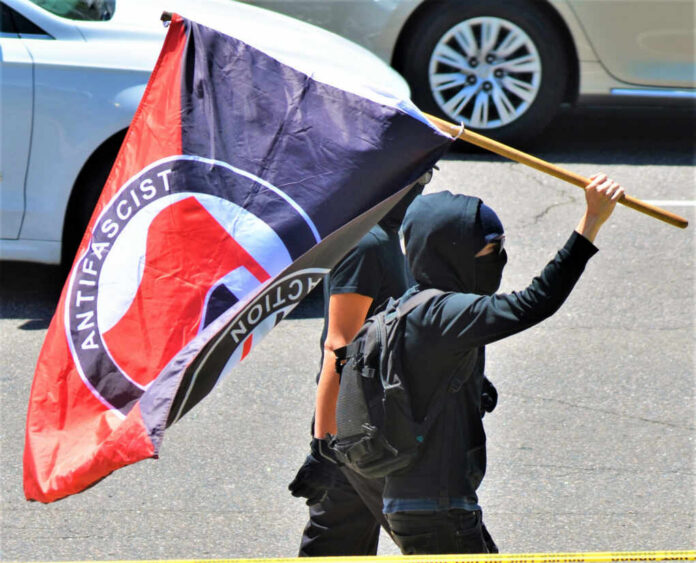
U.S. Attorney Daniel Rosen describes the defendants as members and associates of Direct Action Minnesota and a related collective called the Black Cat or Black Hat Workers Collective, which he links to “antifa” activism.[2][6] According to Rosen, the group trained members on shields, rapid mobilization, and “operational security,” then deployed those skills in the streets.[2][6] Twelve of the fifteen were arrested in coordinated raids, one was already in custody, and two more remain at large, officials say.[6]
Alleged Tactics: Encrypted Chats, Blockades, And Stalking Agents
The 94-page indictment, which reporters have reviewed, paints a picture of a “highly organized” network that blended into larger protests but ran separate operations.[6] Prosecutors say members used encrypted chat apps to plan “hard and soft blockades” outside the Bishop Henry Whipple Federal Building, where immigration officers work.[3][6] The document also claims they kept logs of federal vehicles, trained people to use homemade shields, and tried to “de-arrest” detainees who were already in custody.[3][6]
Officials further allege that some defendants followed and watched law‑enforcement officers away from protest sites.[3] In one case, a defendant is accused of tracking a federal officer from Minnesota into Wisconsin, which forms part of an interstate stalking charge.[3] Rosen says the government has video and eyewitness testimony backing its case, but much of that evidence has not yet been made public.[3] That means the public is still seeing a summary written by prosecutors, not the full record for each event.[6]
“Not For What They Said, But For What They Did”
Facing questions about free speech, Rosen has stressed that the charges are about conduct, not political views.[5] At the press conference, he said the defendants “have been charged not for what they said, but for what they did” and that the alleged conspiracy “was not to interfere by their voice, but to do it by force.”[5] The Justice Department says this is part of a broader push to stop “organized lawless behavior” that targets federal officers and facilities.[1][5]
This case fits a pattern that has grown since earlier anti‑immigration‑enforcement protests around the country.[12] Legal analysts have warned that using conspiracy laws in protest settings risks chilling First Amendment rights, especially when prosecutors lean on social media posts and group chats as proof of a criminal plan.[12] Supporters of these cases respond that planning blockades, stalking officers, and trying to free detainees crosses a bright legal line, even if the motives are political.[3][12]
Defense, Civil Liberties Fears, And A Deep State Echo
Outside the Minneapolis federal courthouse, defense lawyers and supporters have called the charges an attack on civil rights and a warning to anyone who stands up to immigration crackdowns.[8] Groups like the National Lawyers Guild argue that the government is stretching conspiracy law to turn protest organizing into a felony, especially when the evidence list leans on chats and posts instead of clear physical harm.[8] So far, however, public defense statements have focused more on big‑picture rights than on line‑by‑line rebuttals of the indictment.[4][8]
FOR IMMEDIATE RELEASE
June 17, 2026Phillip C. Parrish, Lindell-Parrish Ticket Candidate for Lieutenant Governor, Urges Full Exposure of Minnesota’s Anti-ICE Syndicate Following DOJ Indictments
Kenyon, MN – The Department of Justice’s indictment of 15 Direct Action Minnesota… https://t.co/0NsKINa47Y— Phillip C Parrish (@phillipcparrish) June 17, 2026
For many Americans on both left and right, the case taps into deep mistrust of Washington’s motives. Immigration and Customs Enforcement has faced its own scandals, including deadly shootings in Minneapolis that raised questions about accountability for federal agents.[17] At the same time, people worry about small militant circles hijacking protests and putting officers and bystanders at risk. When the Justice Department leans heavily on charged labels like “antifa,” it can look less like a neutral referee and more like another political player.[6][8]
Why This Matters Beyond Minneapolis
This Minneapolis case arrives at a moment when both conservatives and liberals doubt that the federal government is playing fair. Trump‑era “law and order” supporters see the charges as long‑overdue pushback on street militancy that police and local leaders failed to control.[2][6] Civil liberties advocates see a federal machine that can move faster and hit harder against protesters than against misconduct by its own agents.[16][17] Both sides see elites in Washington making choices that seem to protect their power first.
Past court records from earlier unrest in Minneapolis cut the other way on “antifa,” showing mostly scattered actors instead of a single organized army.[8] That history makes this new case important: if prosecutors can prove a real, coordinated criminal network here, it will mark a shift from past findings. If they cannot, many will view the case as another example of the government stretching its powers against people who challenged it in the streets.[6][8] Either outcome will shape how future protests, and future crackdowns, are handled.
Sources:
[1] Web – DOJ Indictment Details Coordinated Antifa Operations in Minneapolis
[2] Web – DOJ charges 15 in Minnesota with conspiracy to block ICE, claims …
[3] Web – 15 members and associates of Direct Action Minnesota (DAMN …
[4] Web – US Attorney for Minnesota charges 15 anti-ICE protesters, alleging …
[5] YouTube – DOJ charges 15 in Minnesota on anti-ICE conspiracy charges
[6] Web – Federal prosecutors charge 15 people with conspiracy to impede …
[8] Web – Department of Justice | Homepage | United States Department of …
[12] Web – Claiming an Antifa Plot, U.S. Charges 15 in Minneapolis With …
[16] YouTube – DOJ announces charges against ANTIFA groups over anti-ICE protest
[17] Web – DOJ targets anti-ICE demonstrators with conspiracy charges – PBS