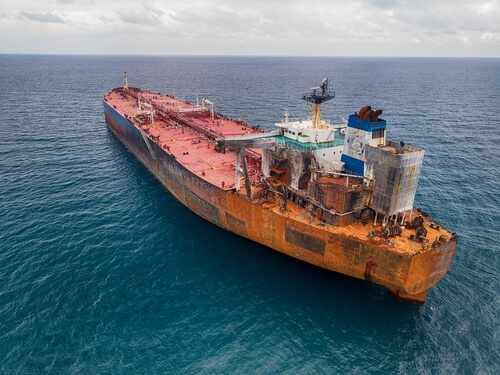
Washington’s Cuba “oil blockade” just blinked—letting a Russian tanker through—right as Americans are paying the price for war-driven energy shocks.
Quick Take
- The Trump administration allowed the Russian-flagged tanker Anatoly Kolodkin to deliver crude oil to Cuba despite a tightened U.S. stance earlier this year.
- Ship-tracking data placed the tanker off Cuba on March 29 with an expected March 31 arrival at the Matanzas terminal, carrying roughly 650,000–730,000 barrels.
- The White House offered no public explanation, even though U.S. Coast Guard assets were positioned to potentially interdict the ship.
- A Treasury sanctions waiver aimed at easing war-driven energy price surges was later amended to explicitly bar Cuba-related transactions, raising questions about timing and enforcement.
A Surprise Passage That Undercuts a Hardline Cuba Posture
U.S. policy shifted after reports said the Trump administration permitted the Russian-flagged oil tanker Anatoly Kolodkin to travel to Cuba, despite a months-long de facto oil blockade. Washington had intensified pressure in January 2026 by effectively prohibiting oil shipments to the island and warning nations against supplying fuel. The tanker, departing from Primorsk, Russia, was tracked off Cuba’s eastern tip on March 29 and was expected to dock by March 31.
Multiple reports said the Kolodkin carried roughly 650,000 to 730,000 barrels of crude oil bound for Cuba’s Matanzas terminal. Those volumes would provide the island weeks of relief, not a permanent fix, but enough to take the edge off immediate shortages. Cuba’s government has described a severe energy crunch, including gasoline rationing and widespread outages, after going months without oil imports, conditions that have rippled into daily life and basic services.
The Iran War, Energy Prices, and Why Sanctions Keep Getting “Adjusted”
The tanker decision landed amid wider market pressure tied to the U.S.-Israeli conflict with Iran, a factor repeatedly cited as driving global energy price surges. On March 12, the U.S. Treasury issued a time-limited sanctions waiver allowing certain Russian crude oil and petroleum products loaded between March 12 and April 11. The stated purpose was to address energy-price shocks, but the carve-out also created political fallout because easing pressure on Russian oil can collide with other U.S. objectives.
Treasury later amended that waiver on March 30 to explicitly prohibit transactions involving Cuba and North Korea. That update appeared to come after the Kolodkin had already been allowed to proceed, producing a confusing sequence: an apparent “go” signal for one delivery and a written “no” for future ones. Treasury also publicly maintained that the Cuba oil embargo remains in place, even as it offered limited flexibility elsewhere to reduce price spikes.
No Clear Explanation, Even With Enforcement Tools in Place
Reports emphasized an unusual gap: no clear public rationale from the White House explaining why the tanker was allowed to pass. That matters because U.S. enforcement capacity was not hypothetical; U.S. Coast Guard assets were described as positioned such that interception was possible. Without an explanation, Americans are left weighing competing interpretations already circulating in mainstream coverage—ranging from a one-time exception to energy-driven pragmatism to a reluctance to risk a direct confrontation with Russia.
Analysts also noted signs Russia has tested the perimeter before. Earlier in March, a Russian tanker reportedly delivered about 190,000 barrels of diesel to Cuba using deceptive routing tactics, described as “spoofing.” Maritime intelligence reporting tracked the Kolodkin’s progress across the Atlantic days before the late-March decision. The pattern suggests Moscow is probing how consistently Washington will enforce a tightened embargo when the global oil market is already strained by wartime realities.
What This Means for Americans Watching Costs, War Policy, and Credibility
For a conservative audience already frustrated with inflation, high energy costs, and “forever war” dynamics, this episode highlights a familiar problem: sanctions policy can turn into a patchwork of exceptions when prices spike. That may stabilize markets in the short run, but it also risks eroding deterrence by signaling that sustained pressure is negotiable under stress. With the U.S. now at war with Iran, voters are intensely focused on whether Washington’s decisions prioritize U.S. energy security and clear, consistent rules.
US To Let Russian Oil Tanker Deliver Fuel To Cuba: Report
A week after Russian tankers loaded with fuel for Cuba were diverted due to a months-long US oil blockade, the US Coast Guard is permitting a Russian vessel carrying an estimated 730,000 barrels of crude oil to reach…
— Jevaughn (@Jevaughn_Brown) March 30, 2026
Europe’s criticism of temporary Russian-oil relief underscores how quickly wartime energy management can create fractures even among partners. At home, the political challenge for the administration is credibility: Cuba sanctions were tightened in January, yet a major Russian cargo still moved. Limited public information makes it hard to judge intent, but the facts point to an administration balancing multiple fronts at once—Cuba pressure, Russia constraints, and the energy shockwaves of a widening Middle East conflict.
Sources:
US allows Russian oil tanker to break blockade, travel to Cuba
Report: US to allow Russian oil tanker to reach Cuba
US Tightens Sanctions Waiver on Russian Oil After Tanker Reportedly Delivers Fuel to Cuba