A mystery drone slipping from Russia into Latvian skies and getting blown out of the air by a French jet is exactly the kind of gray-area incident that makes many Americans wonder who is really in control when war technology starts drifting across borders.
Story Snapshot
- A French Rafale fighter jet, flying for NATO, shot down an unidentified drone inside Latvian airspace after it crossed in from Russia.[1][2][3][4]
- Latvia blamed “Russian electromagnetic warfare” for pushing the drone off course but did not say who actually launched it, and public reports still do not prove its origin.[1][2][3]
- NATO leaders used the shootdown to showcase alliance “deterrence and defense,” even though no one was hurt and no damage on the ground was reported.[1][2]
- The incident fits a growing pattern of stray drones near NATO borders, where governments release bold statements but hold back radar data, logs, and technical proof.[1][2][3][4]
What Happened In Latvian Skies
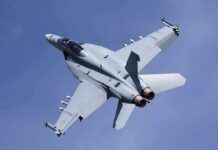
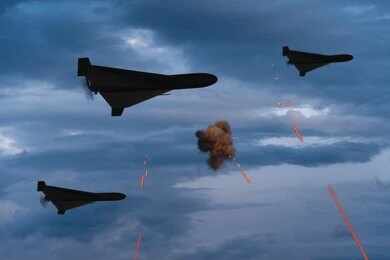
Early on June 8, a French Rafale fighter jet, flying for the NATO Baltic Air Policing mission, shot down an unknown drone over Latvia.[1][2][3][4] Reports say the drone entered Latvian airspace from Russian territory and was intercepted near the village of Berzgale, about eighteen miles from the border.[1][2][3] Latvian authorities said the drone crossed the border “as a result of Russian electromagnetic warfare,” but they did not say who launched it.[1][2][3] No injuries or property damage were reported on the ground.[1][2][3]
The French army confirmed that its warplanes took down an unidentified drone during the mission.[1][2] Latvian officials said NATO command, not just local officers, made the final call to shoot it down.[2][3] Latvia issued alerts telling people to take shelter while the Rafale jets, based in Lithuania for air policing, scrambled to intercept.[3] Latvia’s prime minister later praised the response as “decisive and highly professional,” framing the incident as a successful defense of national security.[3]
Known Facts Versus Open Questions
Public reports agree on a few basic facts: the drone came from Russian airspace, it was unidentified, and it was destroyed by a French jet under NATO command.[1][2][3][4] At the same time, reporters note that it remains unclear whether the drone was Russian, Ukrainian, or something else.[1][2][3] Latvia’s army tied the border crossing to “Russian electromagnetic warfare,” but they have not shared radar tracks, telemetry, or wreckage analysis that would let outsiders test that claim.[1][2][3] No evidence has been released showing the drone was armed or targeting a specific site.[1][2][3]
Officials also have not released the actual engagement order, air-defense logs, or the French sortie report that would show how the decision unfolded minute by minute.[1][2][3] That means the public must rely on short statements instead of detailed records. For people already wary of the “deep state” and foreign entanglements, this kind of secrecy feeds suspicion. Governments highlight how fast they reacted but do not fully explain why destroying the drone, instead of tracking or forcing it away, was the only option.[1][2][3]
Why This Incident Matters Beyond Europe
This drone shootdown is not a one-off fluke; it fits a pattern of drones straying near the borders of the North Atlantic Treaty Organization during the Russia–Ukraine war.[1][2][3] Defense reporting notes similar incidents in other countries, which has raised fears that fighting could spill over into alliance territory by accident or by design.[1][2][3] Each time, leaders talk about resolve and deterrence, while the hard questions about who controlled the drone and what it was doing stay partly unanswered.[1][2][3]
For the second time in three weeks, a NATO jet shot down a drone over Europe. A French Rafale downed it over Latvia after it drifted in from the war next door. No one was hurt, but two shootdowns in 20 days is a pattern. #NATO #Ukraine pic.twitter.com/fhzXKPpcfA
— MS in Germany (@MSinGermanyHQ) June 9, 2026
For Americans watching from home, this hits several nerves at once. Many conservatives see another step toward deeper NATO and European commitments that can drag the United States closer to war, with little say from voters. Many liberals see advanced weapons and drones slipping across borders, while ordinary people are left in the dark about the real risks. Both sides see powerful institutions making life-and-death choices, then asking citizens to simply trust their word.
How Messaging Shapes Public Trust
NATO officials quickly pointed to the shootdown as proof of the alliance’s “determination and ability to deter and defend.”[1][2] Latvia publicly thanked France and NATO for protecting its airspace and stressed that the system worked.[1][3] Yet these strong talking points sit on top of thin public evidence. The path of the drone is described, but its origin, operator, and intent remain unclear.[1][2][3] When governments speak with total certainty while key facts are still missing, they deepen the belief that an elite class manages information on its own terms.
Incidents like this show how modern warfare tools—drones, electronic warfare, and fast-response jets—can trigger cross-border crises in seconds. They also reveal how little ordinary citizens are told, even as these events are used to justify bigger military budgets and more foreign missions. People across the political spectrum worry that Washington listens more to generals, contractors, and global planners than to families trying to pay their bills. A single stray drone over Latvia will not start a world war, but the pattern behind it should push Americans to demand clearer rules, real transparency, and a foreign policy that serves the people, not the permanent war machine.
Sources:
[1] YouTube – French jet shoots down drone in Latvian airspace
[2] Web – French Rafale Shoots Down Unknown Drone Over Latvia
[3] Web – French jet on NATO mission shoots down drone in Latvian airspace
[4] Web – NATO jet shoots down drone violating EU state’s airspace – TVP World