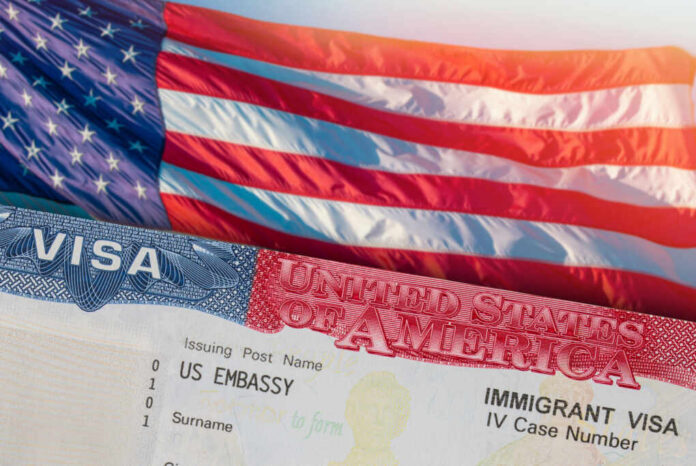
As the Trump–Vance administration launches the largest denaturalization drive in modern history, both conservatives and liberals see a chilling test of whether the federal government can be trusted with the power to take citizenship away from people who played by the rules.
Story Snapshot
- The Justice Department is scaling up denaturalization from a rare remedy into a major enforcement program reviewing hundreds of thousands of files.
- Officials insist they are only targeting serious fraud, crime, and security threats, but policy memos contain open‑ended categories that worry civil liberties advocates.
- Supreme Court precedent says only material fraud can justify revoking citizenship, setting a high legal bar that the administration still must meet case by case.
- The fight reflects a deeper bipartisan fear that an unaccountable federal bureaucracy is quietly redefining what it means to be an American.
What Denaturalization Is – And Why It Was Rare Until Now
Denaturalization is the legal process of stripping a naturalized American of citizenship when the government proves it was obtained illegally or through fraud, usually by concealing deportation orders, criminal histories, or using false identities.[6] Historically, federal officials used this power sparingly, mostly against people who clearly lied about serious conduct like war crimes or past removals.[6] The Supreme Court has held since 1967 that citizenship cannot be revoked for anything other than fraud or mistake in the naturalization process itself.
Because citizenship is supposed to be stable, denaturalization has always carried a stigma more like banishment than routine law enforcement.[3] Even when previous administrations audited naturalization files, only a tiny fraction of cases ever resulted in attempts to revoke citizenship, and many of those were never pursued in court.[5][3] That rarity helped reassure immigrants that once they became Americans, the government would not revisit their status based on politics, later misconduct, or shifting priorities.[5]
Trump officials began changing that posture in the first term, creating a denaturalization task force in the Department of Justice to hunt for cases where people allegedly hid deportation orders or used multiple identities.[5][6] The American Immigration Council notes that this dedicated section sits inside the Office of Immigration Litigation and is tasked with stripping citizenship from people suspected of lying or omitting key facts on their applications.[5] At the same time, agencies started reviewing hundreds of thousands of old immigration files looking for fraud indicators.[6][3]
From Targeted Fraud Cases To A Systemic Campaign
According to Democracy Forward, one of President Trump’s first executive orders in 2025 directed top officials to devote “adequate resources” to identify violations in the naturalization process and act on the denaturalization provisions of immigration law.[2] A June 2025 memo from the Department of Justice’s Civil Division then instructed government attorneys to “prioritize and maximally pursue denaturalization proceedings,” signaling a shift from rare, case‑specific actions to a broader campaign.[2] That memo set priority categories and left a catch‑all bucket for any other cases the division deems “sufficiently important.”[2]
Advocates warn that this open‑ended category could reach far beyond classic fraud, especially if officials treat people’s speech, activism, or associations as reasons to revisit their citizenship.[2] Meanwhile, earlier Department of Homeland Security programs like Operation Janus and Operation Second Look aimed to compare fingerprint records and audit up to 700,000 “alien files” to find naturalization fraud cases.[3][6] The Department of Justice projected at one point that it expected to bring actions to revoke citizenship against approximately 1,600 people, a volume far above historic norms.[6][2]
Media reports during Trump’s first term described field offices being told to generate between 100 and 200 denaturalization referrals per month.[2][4] CBS News and other outlets characterized that as a dramatic escalation, amounting to a twenty‑fold or greater increase over past averages.[2][4] For citizens who followed the rules, the idea of quota‑like targets and mass file reviews feeds a fear shared across the political spectrum: large, unaccountable bureaucracies trawling old paperwork to see who can be kicked out, rather than focusing on today’s pressing problems.[2][3]
Legal Guardrails: What The Government Must Still Prove
Despite the rhetoric, the administration cannot unilaterally erase citizenship by executive order or agency memo; it must convince a federal judge in each case.[6] The American Civil Liberties Union explains that denaturalization can only occur in federal court, where the government bears the burden of showing a recognized ground such as illegal procurement or material misrepresentation, and it must do so with “clear, convincing, and unequivocal evidence.”[6] That standard is significantly higher than the usual civil “preponderance of the evidence” threshold.[6]
Supreme Court precedent in Maslenjak v. United States further limits what counts as fraud serious enough to justify revocation.[5] In that 2017 decision, the Court rejected the Trump administration’s argument that any false statement on a naturalization form—even one that had no effect on the decision—could support denaturalization.[5] The justices held that the government must prove a false statement “sufficiently altered” the naturalization process to influence the grant of citizenship.[5] Put simply, only lies that actually mattered to eligibility or approval can be used to take citizenship away.
This doctrine draws a clear line between fraud during the naturalization process and bad acts that occur after someone is already a citizen.[6] Legal scholars note that later criminal conduct, however serious, cannot by itself be a basis for denaturalization unless the person also lied about that conduct when applying.[6] That distinction is critical in a political climate where leaders regularly conflate crime, immigration, and national security, making it easier for the public to assume that any criminal conviction automatically puts citizenship at risk.[1][6]
Why Both Left And Right See A Deeper Problem
For many conservatives, the denaturalization push looks like overdue enforcement against people who “cut the line” and cheated honest immigrants, especially in cases involving terrorism, gangs, or major fraud.[1][6] For many liberals, it looks like another “America First” tool that can be turned against communities of color, political dissenters, and people with the least ability to fight the government in court.[1][2] Yet advocates and researchers across viewpoints note that the very expansion of this power underscores a shared worry: once Washington normalizes revoking citizenship, the definition of fraud can quietly stretch.[2][3][6]
Studies of earlier denaturalization waves show that what begins as a fraud‑focused initiative can, over time, be used more aggressively when leaders want to display toughness or distract from deeper governance failures.[3][6] When agencies review hundreds of thousands of files under pressure to produce cases, honest paperwork mistakes can get swept together with genuine fraud, especially if resources for defense and judicial oversight lag behind the enforcement build‑up.[2][5] In an era when both the right and the left increasingly see the federal government as serving entrenched elites rather than ordinary citizens, the idea that bureaucrats are combing through old files to decide who still “counts” as American cuts directly to the country’s core promise: that citizenship, once earned in good faith, is not a political bargaining chip.[1][2]
EXCLUSIVE: The Trump administration plans to announce it is seeking to revoke the citizenship of 17 U.S. citizens accused of immigration fraud, expanding its unprecedented denaturalization campaign, CBS News has exclusively learned. https://t.co/dFVDzHXGF6
— CBS News (@CBSNews) June 8, 2026
The Trump–Vance denaturalization campaign is therefore more than a technical legal program; it is a stress test of whether the United States will keep treating naturalized citizens as full equals or as conditional members whose status can be reopened whenever it becomes politically useful.[2][3] The legal framework still requires serious, material fraud proven clearly in court, and that safeguard matters.[5][6] But as enforcement scales up, the real question becomes whether a distrusted federal system can wield such a grave power without confirming the worst suspicions of Americans who already feel their government has stopped working for them.[2][3][6]
Sources:
[1] Web – U.S. launches largest-ever effort to denaturalize citizens accused of …
[2] Web – Trump’s Push to Redefine Who Counts as American
[3] Web – Trump administration ramps up denaturalization campaign, targeting …
[4] Web – Trump’s Denaturalization Push and the Erosion of Legal Immigration
[5] Web – There’s No Need to Panic Over Trump’s New Denaturalization Office
[6] YouTube – Trump Moves to Denaturalize Citizens, End Birthright …