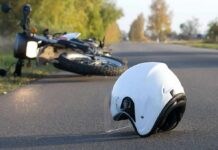
A young American Airlines flight attendant went snorkeling off a Florida beach and ended up dead on the sand with injuries investigators say look like a hit‑and‑run boat strike.
Story Snapshot
- American Airlines flight attendant Kellie Williams, 31, was found dead on a South Florida beach with injuries officials say match a boat strike.[5][6]
- Wildlife officers believe she was snorkeling or diving near a popular tourist shoreline when she was hit, but have not named a vessel or operator.[5][6]
- The case shows how basic safety on the water can fail while agencies hold key records out of public view, feeding distrust across the political spectrum.[6]
- Families and citizens are again left asking whether authorities protect regular people as carefully as they shield powerful interests in tourist economies.
What investigators say happened off a busy Florida beach
Florida officials say American Airlines flight attendant Kellie Melinda Williams, 31, went into the water near Hollywood Beach on June 3 and never came back alive.[5][6] Two fishermen later found her body in the surf that evening, on a stretch of sand that draws many tourists and local families.[5][6][7] Investigators with the Florida Fish and Wildlife Conservation Commission said her injuries were consistent with being struck by a vessel, not a simple drowning.[5][6] That phrase matters, because it hints at blunt force trauma, likely from a hull or propeller.
State wildlife investigators also said their review indicated Williams had likely been snorkeling or diving near Dr. Von D. Mizell–Eula Johnson State Park earlier that day, an area that mixes swimmers and boat traffic.[5][6] Reports say the medical examiner listed blunt force injuries as the cause of death, lining up with the suspected boat impact.[5] Yet, so far, no agency has released a full autopsy report or a detailed scene diagram to the public.[5][6] Officials have not identified any boat, captain, or witnesses who saw the moment of impact, leaving key questions open.
What we still do not know — and why that fuels doubt
News coverage leans heavily on official language like “suspected boat strike” and “injuries consistent with” a vessel hit, but those words describe a theory, not a complete proof.[5][6] The public has not seen the medical examiner’s injury diagrams, toxicology, or photos that would show exactly how the blows were patterned.[6] There is no released police or wildlife report that maps vessel traffic in that time window or ties a specific boat to the scene.[5][6] Without those records, it is hard for outside experts to confirm whether another cause, like impact with rocks or debris, has been ruled out.
Reporters say emergency responders and investigators quickly focused on a possible strike, which is common in sudden deaths on the water.[6] In many such cases, early guesses harden into the final story that the public remembers, even if the full file never becomes public.[6] People who mistrust government—on the right and the left—see this pattern as part of a larger problem. Agencies ask for trust but keep the key evidence behind closed doors, citing ongoing investigations or privacy rules. That gap invites online speculation and weakens confidence in whatever explanation officials give.
Safety, accountability, and a system that feels rigged
This case also highlights a simpler, painful issue: an everyday worker went out to enjoy the ocean in a tourist zone and ended up dead, likely from someone else’s carelessness.[5][6][7] If a boat operator sped too close to snorkelers or ignored no‑wake rules, that would fit a larger pattern of rules on paper but weak enforcement in real life. People see this same pattern on the roads, in the air, and at work: normal citizens pay the price while those with money, lawyers, or political clout often avoid serious consequences.
American Airlines flight attendant Kellie Williams, 31, died in a suspected boat strike near Hollywood Beach on June 3. She was snorkeling near Dr. Von D. Mizell-Eula Johnson State…
Full story ⟶ https://t.co/0R1G5JwGGt
. pic.twitter.com/d3YQGkjBVK— Air Traveler Club (@tiket2) June 9, 2026
Many Americans, conservative and liberal alike, already believe the system favors tourism dollars and wealthy interests over basic safety and truth. When a death like Williams’s happens in a “hot spot,” and months later there is still no named suspect, no detailed public report, and no clear reforms, it confirms fears that regular people are not a real priority.[5][6] The facts we have show a likely boat strike and a life cut short.[5][6] The facts we lack—hidden in unreleased files—keep families and citizens wondering whose interests the system really serves.
Sources:
[5] YouTube – American Airlines flight attendant found dead in Colombia returns to …
[6] Web – American Airlines attendant’s body washes up on Florida beach after …
[7] Web – Florida: American Airlines flight attendant hit and killed by boat …