A politically charged murder case that already shattered public trust is now headed into a key hearing where the evidence against Tyler Robinson looks both powerful and deeply contested.
Story Snapshot
- Prosecutors say DNA, messages, and a family confession tie Tyler Robinson to Charlie Kirk’s assassination.
- Defense lawyers point to an Alcohol, Tobacco, Firearms and Explosives (ATF) report that could not conclusively match the bullet to the rifle.
- The judge has kept the preliminary hearing open to cameras and the public, despite defense efforts to limit access.
- The case reflects a wider rise in political violence that many Americans blame on a failing, self‑interested federal system.
What Prosecutors Claim Happened
Prosecutors in Utah say Tyler Robinson, a 22‑year‑old from southern Utah, carried out a planned sniper attack on conservative activist Charlie Kirk while he was speaking at Utah Valley University in September 2025. Charging documents describe aggravated murder and other serious counts, including using a firearm that caused injury and committing a violent crime in front of children. They also list “aggravating factors,” such as targeting Kirk for his political views and attacking in a crowded campus setting.
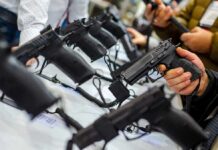
Police and federal agents say they found a bolt‑action.30‑06 rifle, wrapped in a towel, in a wooded area near the university soon after the shooting. Forensic testing reported “DNA consistent with Robinson’s” on the rifle’s trigger, the towel, a fired cartridge casing, and several unfired cartridges. Investigators also point to alleged texts and online messages in which Robinson talked about “having enough of this hatred” and claimed responsibility for the shooting at Utah Valley University.
Inside the Defense Challenge: Ballistics, Process, and Media
Robinson’s lawyers argue that one of the core links in the case—the match between the fatal bullet and the rifle—is far weaker than headlines suggest. They say an Alcohol, Tobacco, Firearms and Explosives (ATF) analysis “could not” connect the bullet fragment recovered during Kirk’s autopsy to the rifle found near the scene, and they have asked for delays to fully study that report. Legal analysts explain this means the ATF did not have enough detail to confirm the bullet came from that gun, not that it proved the gun was unrelated.
The defense also claims that federal agencies have not turned over full DNA data files, despite repeated requests, which they call “crucial electronic data.” They are fighting on process, too. Robinson’s team has sought more secret hearings, tried to seal some evidence, and asked to bar the death penalty because prosecutors spoke to national media outlets about the case. A Utah judge has allowed cameras and livestreaming and kept major hearings open, saying the public has a right to see what happens in court.
The Witness Fight and Questions About Fairness
A key figure in the story is Robinson’s partner and roommate, Lance Twiggs, also known as Luna, who reportedly received incriminating messages and spoke with investigators. Prosecutors plan to use a recorded interview with Twiggs at the preliminary hearing, and the witness has been granted limited immunity. Defense lawyers pushed hard to force Twiggs to testify live in court, arguing they need to question the witness directly in front of the judge and the public.
The judge rejected that request and ruled the recorded statement can be used, which defense attorneys say hurts their ability to test Twiggs’s truthfulness. Defense filings also complain about what they call “extreme recklessness” by prosecutors who discussed the case with outlets like Fox News and TMZ, saying those comments risk poisoning the jury pool before any trial. For many Americans who already believe the system protects insiders more than ordinary citizens, a capital case shaped on television and social media feels like proof that justice has become a media show, not a careful search for truth.
A Case That Mirrors a Deeper National Problem
Charlie Kirk’s killing is one event in a growing pattern of political violence in the United States during a time of intense division. Researchers find that attacks on political figures spike when the political center is weak and people feel shut out of power, especially during heated election periods. Experts say today’s climate of online rage, talk‑radio battles, and conspiracy theories makes it easier for some people to see opponents not as neighbors but as “enemies of the nation.”
🇺🇸 A five-day preliminary hearing begins today for Tyler Robinson, the man accused of murdering Charlie Kirk at Utah Valley University in September 2025.
Prosecutors are expected to present DNA evidence, surveillance footage, witness testimony, and alleged handwritten and… pic.twitter.com/JvBMjDHeEC
— Europa.com (@europa) July 6, 2026
Studies show political assassinations and attempts can ripple far beyond one tragedy, even lowering voter turnout and trust in democracy for years. Many Americans on both the left and the right already think Washington serves rich and connected elites first. When a high‑profile murder case turns into a fight over missing files, sealed hearings, media leaks, and a disputed ballistics report, it reinforces the fear that the justice system is more focused on protecting itself than proving what really happened.
Sources:
foxnews.com, ksl.com, nbcnews.com, nypost.com, cbsnews.com, livenowfox.com, apnews.com, heraldextra.com, fox.com, facebook.com, youtube.com, news.northeastern.edu