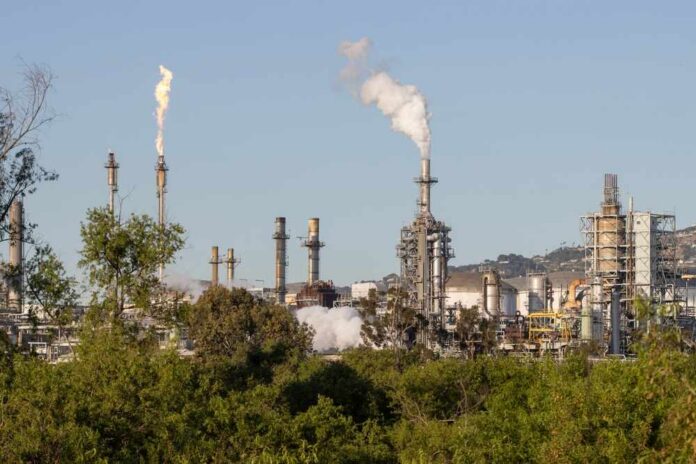
Maryland calls Baltimore’s BRESCO trash burner “clean energy” even though it pollutes more than coal and hits nearby Black neighborhoods with some of the highest health costs in the state.
Story Snapshot
- BRESCO is labeled “Tier 1” renewable energy while emitting more greenhouse gases per unit of power than Maryland coal plants.
- The incinerator is Baltimore’s single largest industrial air polluter and sits next to mostly Black, working-class communities.
- Studies and advocacy groups estimate tens of millions of dollars each year in health damages tied to BRESCO’s emissions.
- City and state plans and long-term contracts mean the plant is likely to run into the mid‑2030s despite public outcry.
How a “Clean Energy” Incinerator Became Baltimore’s Top Polluter
Since 1985, the Baltimore Refuse Energy Systems Company, known as BRESCO, has burned roughly 2,250 to 2,500 tons of trash every day, turning city and county waste into ash and electricity. State and advocacy analyses using Environmental Protection Agency data show that in 2015 BRESCO emitted about twice as much greenhouse gas per unit of energy as each of Maryland’s six largest coal plants, yet Maryland still classifies its power as top‑tier “renewable” energy. That “Tier 1” status puts BRESCO in the same bucket as wind and solar and unlocks millions in subsidies.
Environmental and community groups argue that this “green” label hides how dirty the plant actually is. Research presented to advocates and regulators found BRESCO is one of Maryland’s highest emitters of nitrogen oxides, a key ingredient in ground‑level ozone that worsens asthma and heart and lung disease. One analysis of state and federal data concluded the facility is Baltimore’s number one source of total industrial air pollution, including mercury and sulfur dioxide, and that it is “dirtier than coal” for every unit of electricity produced.
Health Costs and Disputed Science Around BRESCO’s Emissions
Public health advocates say the pollution from BRESCO is not just an abstract climate problem; it shows up in emergency rooms and medical bills. A Chesapeake Bay Foundation‑linked study, cited by Chesapeake Climate Action Network and other groups, estimated that illnesses from BRESCO’s air pollution cost about $55 million a year in health damages for nearby residents. A newer study by University of Maryland and Johns Hopkins researchers, still moving through peer review, estimated that BRESCO alone caused about $53.8 million in medical damages in 2024.
That university study also looked at patterns of smoke and exposure from Baltimore’s incinerators and found large, daily emissions that matched elevated health risks in nearby neighborhoods. The plant’s operator, WIN Waste Innovations, strongly disputes the findings, calling the analysis “fundamentally flawed” and pointing out that its nitrogen oxide emissions are only a small fraction of the national air quality standard. Because the study is still under formal review and detailed methods are not yet widely available, the exact dollar figure for health harm remains contested, even as multiple sources agree that the communities around BRESCO suffer higher asthma and pollution‑related illness than the city and nation as a whole.
Environmental Justice: Who Breathes BRESCO’s Smoke?
The people most exposed to BRESCO’s emissions are not the downtown office workers who use its steam heat; they are residents in nearby South Baltimore neighborhoods like Westport, Mount Winans, Cherry Hill, Brooklyn, Lakeland, and Curtis Bay. A civil rights complaint filed with the Environmental Protection Agency describes these communities as predominantly Black and Hispanic and already burdened by dozens of other industrial sites, including a medical waste incinerator, a landfill, and a coal transfer station. Federal environmental justice screening tools place several of these areas in the nation’s 95th percentile for toxic air quality.
This pattern fits a broader national trend. A 2020 study by the Tishman Environment and Design Center, commissioned by the Global Alliance for Incinerator Alternatives, reported that 79 percent of the remaining municipal solid waste incinerators in the United States are located in low‑income communities and communities of color. In five states with many incinerators, more than 80 percent sit in environmental justice communities and help drive higher exposure to mercury, lead, fine particles, and other pollutants. In Baltimore, a separate analysis of plastic waste found that burning trash, including plastics at BRESCO, causes tens of millions of dollars in health damages each year in communities of color and low income.
Why BRESCO Keeps Running and What Comes Next
Supporters of the plant, including some local officials, point to its role in handling waste and providing energy. BRESCO reduces the volume of incoming trash by roughly 90 percent and recovers metals from the ash for recycling, while supplying steam for downtown buildings and electricity for the grid. WIN Waste says it upgraded emissions controls in 2022 and operates under federal laws like the Clean Air Act and Clean Water Act, arguing that the plant meets current standards and provides needed services.
Yet Baltimore’s own 10‑Year Solid Waste Management Plan, completed in 2023, concludes that BRESCO will likely keep operating into at least the mid‑2030s because of long‑term contracts with private waste haulers and limited alternative infrastructure. The report states that there is “little” city government can do right now to change that future, even as community groups rally for a “zero waste” strategy focused on recycling, composting, and cutting trash generation. For many residents across the political spectrum, the picture is familiar: a powerful operator enjoying “renewable” subsidies, a state policy that calls a high‑emission trash burner clean energy, and frontline neighborhoods that keep paying the price while government moves slowly, if at all, to change course.
Sources:
zerohedge.com, cleanwater.org, cleanairbmore.org, chesapeakeclimate.org, baltimorebrew.com, ccanactionfund.org, wypr.org, epa.gov, no-burn.org, facebook.com, energyjustice.net, ncbi.nlm.nih.gov, wastedive.com