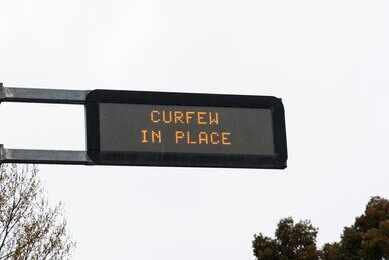
A Massachusetts city just ordered 100,000 people indoors over a soccer game, raising fresh questions about how much control local government should have over everyday life.
Story Snapshot
- Brockton, Massachusetts has imposed a citywide 10 p.m. to 5 a.m. curfew tied to Cape Verde’s World Cup match against Argentina.
- Mayor Moises Rodrigues cites nine shootings, two stabbings, and 75 arrests during the last three World Cup celebrations as the main reason.
- The order shuts down late-night business, tightens alcohol rules, and even affects July 4 holiday plans, sparking anger from residents and bar owners.
- The curfew fits a broader national pattern where officials use emergency rules to manage crowds, deepening distrust among Americans who already feel the government oversteps.
What Brockton’s World Cup Curfew Does
The City of Brockton will enforce a temporary nighttime curfew from 10 p.m. Friday to 5 a.m. Saturday, directly tied to Cape Verde’s World Cup knockout match against Argentina. The mayor’s proclamation orders residents to stay indoors during those hours, with exceptions only for first responders, people going to and from work, emergency medical care, or those with official authorization from the Brockton Police Department. Bars and restaurants that serve alcohol cannot let new customers in after 7 p.m., and must stop selling drinks by 9:30 p.m.
Mayor Moises Rodrigues says he is using state law, Massachusetts General Law Chapter 40 Section 37A, to declare what he calls a “temporary safety curfew.” He frames the move as a way to “protect public safety, reduce criminal activity associated with postgame celebrations, and enable police, fire, and emergency personnel to effectively maintain order and respond to emergencies.” City officials have also requested help from the National Guard, underscoring how serious they view the risk around these celebrations.
Why City Leaders Say the Curfew Is Needed
City officials point to a clear and troubling pattern of violence tied to past Cape Verde World Cup celebrations in Brockton. Local reports say police logged nine shootings, two stabbings, and 75 arrests across the last three World Cup games involving Cape Verde, including four shootings after the most recent match. In one recent incident, several people were injured in a shooting that followed celebrations, pushing officials to conclude that normal policing was not enough to keep the streets safe.
Brockton is home to almost 20,000 Cape Verdean residents and is sometimes called the “11th island” of Cape Verde, so World Cup games feel like major hometown events. Crowds flood certain streets, fireworks and cars fill the night, and celebrations can run late into the evening. National guidance on large sporting events encourages close planning, layered security, and clear rules to manage crowd behavior and prevent violence. Local leaders say the curfew is a direct response to these security pressures, not an attempt to target any one community.
Impact on Daily Life, Business, and Trust
The curfew hits ordinary residents and small businesses at a sensitive moment, right as the city heads into a holiday weekend and a historic match. Bar and restaurant owners warn that the 7 p.m. entry cutoff and 9:30 p.m. last call could cost them a major night of revenue and hurt World Cup watch parties that many planned months in advance. Some residents are angry that the order also affects July 4 plans, seeing it as yet another example of leaders making sweeping rules without public input.
Brockton business owners: Temporary curfew could affect holiday weekend, World Cup watch parties https://t.co/1UkvzTt4VF
— Boston 25 News (@boston25) July 3, 2026
Across the country, many Americans on both the right and the left are already wary of curfews and other emergency rules, which they feel expand government power at the expense of personal freedom. Research on curfews shows they often spark “reactance,” a feeling of anger that can make people less likely to comply and may shift risky behavior into earlier hours instead of stopping it. Brockton’s leaders have not released data showing that curfews clearly reduce violence in the city, which leaves many residents questioning whether such sweeping controls are necessary or effective.
How This Fits a Larger National Pattern
Youth and citywide curfews have spread across many United States cities over the last three decades, often after spikes in violence or unrest. Officials argue these rules help police get control of the streets and prevent crime. Critics respond that curfews have a “dark history,” sometimes used to target certain groups, and can deepen the sense that government treats citizens as problems to manage rather than partners to trust. That long history shapes how both conservatives and liberals today react when they hear the word “curfew.”
Major international sports events, such as the World Cup, now commonly trigger extra policing and security layers, from strict alcohol controls to large National Guard deployments. The Brockton curfew sits inside that global pattern but also taps into growing frustration in the United States with top-down rules from officials who many believe are more focused on keeping control than fixing root problems like poverty, addiction, and inequality. For Brockton’s Cape Verdean community, the question now is whether this curfew makes their city safer—or simply adds one more sign that government does not trust them when they gather to celebrate.
Sources:
foxnews.com, wbur.org, youtube.com, facebook.com, nytimes.com, ojjdp.ojp.gov, un.org, kcl.ac.uk, citymayors.com