President Trump used his Labor Day message to label Democrats “Radical Left Lunatics, Communists, and Dumocrats,” and to warn they are taking “one last shot at ruining America.”
Story Snapshot
- Trump’s Labor Day post attacked Democrats with charged labels and a dire warning.
- The message claimed opponents spent 10 years trying to defeat him and hurt the country.
- Scholars have found Trump’s language is unusually divisive among recent presidents.
- The rhetoric reflects a pattern that fires up loyalists and angers critics.
Labor Day Message And Direct Attack On Democrats
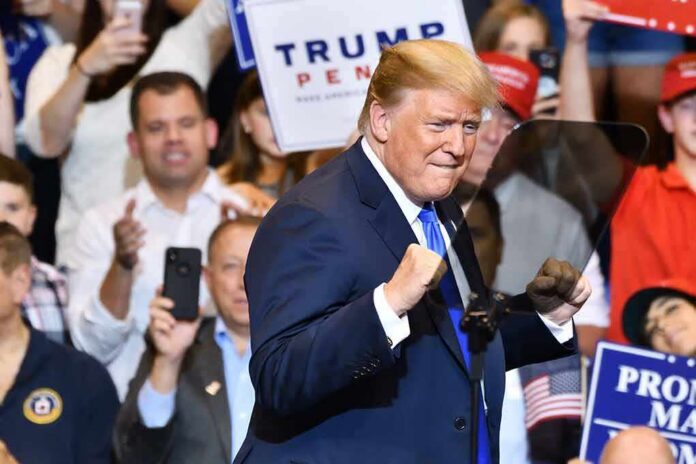
On September 7, President Trump posted a Labor Day message that mixed holiday wishes with sharp attacks on Democrats. The post called his rivals “Radical Left Lunatics, Communists, and Dumocrats,” and warned they were making “one last shot at ruining America.” The message also said his opponents had spent 10 years fighting him and trying to damage the country. The tone fit a familiar style that Trump uses to frame politics as a high-stakes fight with clear enemies.
The choice to issue this warning on a day that honors workers carried political weight. Trump has often linked his brand to hard hats, factories, and trade battles. The White House and campaign events have highlighted policies he argues help workers, like overtime tax changes and reshoring pushes. The Labor Day post did not list policies. It instead focused on threat and resolve. That approach signals a fall push to energize core supporters around a fight-first message.
A Decade-Long Framing Of Conflict
Trump’s line about “10 years” of opposition roots his story in a long feud with Democrats and other critics. He often frames himself as the target of a sustained campaign by political elites and media. This theme connects with people on both sides who feel national leaders protect their own circles. Many Americans believe government insiders look out for themselves and ignore working families. Trump’s message tapped that mood, painting opponents as powerful forces set against the country’s success.
That framing came as Republicans control the House and Senate and Trump leads the executive branch. Even with power, the message cast the moment as urgent and dangerous. The words suggested a last-chance showdown with people who would “do anything” to hurt America. Supporters may hear a call to defend jobs, borders, and order. Critics may see a president using a holiday to vilify rivals. Either way, the language turned a civic observance into a political alarm.
How The Rhetoric Fits Trump’s Established Pattern
Researchers who study presidential language say Trump’s speech stands out from modern peers. Analyses find his words are more distinctive and more divisive when he talks about opponents. The style often uses blunt labels, direct insults, and crisis language. These traits appear more often in Trump’s remarks than in speeches by recent presidents from either party. The pattern helps explain why posts like this keep drawing strong reactions across the political map.
Several studies also track a rise in violent or hostile terms in Trump’s public remarks. One paper found his use of violent vocabulary has increased over time and now exceeds levels seen in other democratic politicians studied. Researchers argue the language can rally backers by naming enemies and promising strength. The same rhetoric can deepen mistrust and anger in people who feel targeted or dismissed by it.
Why It Resonates With Voters Who Feel Failed By Washington
Trump’s Labor Day message echoed a broader belief that the system fails ordinary people. Many conservatives blame elite agendas for job losses, high energy costs, and weak borders. Many liberals see growing inequality, broken safety nets, and unfair treatment of minorities. Both camps share a view that federal leaders protect the powerful first. By saying opponents will “ruin America,” Trump touched that shared frustration and urged voters to pick a side again.
President Trump has a Labor Day message for all. pic.twitter.com/uUyAjkxSxq
— Chuck Tompkins (@ChuckTompkins96) September 7, 2026
The stakes for this style are real. Tough talk can focus attention on problems that many families feel every day. It can also push leaders to harden lines and skip compromise. When that happens, Congress moves slower, and trust falls further. On Labor Day, a holiday built to honor work and common purpose, the president chose words of combat. The choice shows how far our politics have moved from shared symbols to constant conflict.
Sources:
democrats.senate.gov, whitehouse.gov, newsweek.com, cnn.com