A three-story Brooklyn building collapsed into a construction pit, killing at least one person and injuring many others as firefighters pulled victims from the rubble.
Story Highlights
- Firefighters launched a technical rescue within minutes and removed victims from debris.
- Authorities confirmed at least one death and more than 10 injuries, several critical.
- The building fell into an active excavation site, raising safety and oversight questions later.
- Police and fire units worked together while searches continued for possible additional victims.
What Happened at the Flatbush Collapse
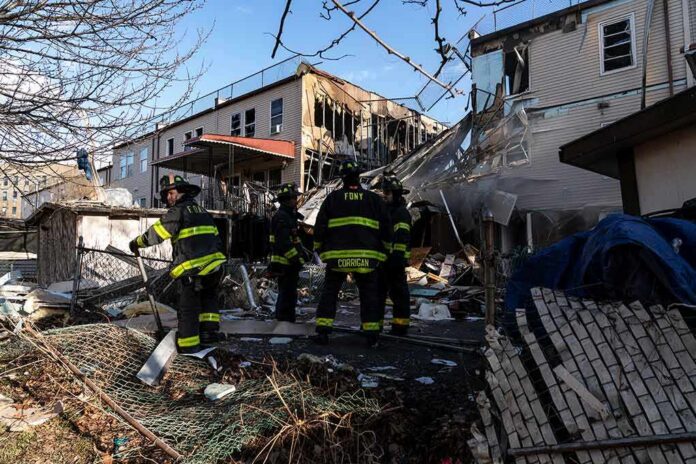
Firefighters rushed to Flatbush after 4 p.m. following reports of people trapped in a collapsed building. Crews found a three-story structure that had fallen into an open construction excavation, with large piles of debris inside a pit. The Fire Department of the City of New York began a technical rescue, entering unstable rubble to locate victims. Two people were removed soon after the rescue started, according to officials on scene, as searches continued under difficult conditions.
New York City police officers supported the fire crews by securing the area and confirming a fatality at the site. Live images showed firefighters working inside the construction pit and using tools to cut through debris. Officials said the collapse created a hazardous scene with shifting materials and narrow access points. The focus in the first hours stayed on life safety: find people, remove them, and stabilize the site enough to allow safer searches for anyone still missing.
Casualties and the Evolving Injury Count
Authorities confirmed at least one person died. Injury reports rose as responders reached more victims and hospitals updated conditions. ABC7 first reported one death and at least 10 injuries. Later, a senior official told NBC New York there were 12 injured, including six in critical condition. These changes reflected the pace of rescue operations and patient tracking as victims moved from the scene to multiple hospitals for treatment.
Officials cautioned that search teams were still accounting for all workers and bystanders who might have been on site. That uncertainty can cause numbers to shift during the first hours of a major incident. Emergency managers often wait for synchronized logs from fire, police, and hospitals before they lock in a final tally. In this case, crews kept combing the debris while investigators planned the next steps after the rescue phase.
Why the Scene Was So Dangerous
The collapse involved a building next to an excavation permitted for new development work. Firefighters described a complex rescue inside a construction pit with heavy rubble and unstable edges. Working below grade reduced escape routes and complicated shoring. This type of failure is especially risky near older structures. City records show repeated problems citywide when excavation and foundation work are not properly supported or sequenced, creating collapse hazards for nearby buildings and job sites.
UPDATE: Firefighters have confirmed that at least five people have been found dead after a Brooklyn building collapse. At least 17 were hospitalized in critical condition.
— News 8 WROC (@News_8) November 12, 2026
New York City’s construction safety reports have tracked serious incidents tied to excavation and underpinning. The 2022 city report counted 11 worker deaths that year, up from nine in 2021, and has urged tighter controls on high-risk activities. While the exact cause in Flatbush had not been stated during the rescue, the setting—an adjacent dig next to an occupied or older building—matches scenarios where small errors can trigger major failures with little warning.
The Broader Stakes for Public Trust
Fast, visible rescue work matters when communities fear that growth comes with hidden risks. Neighbors in cities across the country see cranes, pits, and scaffolds and wonder if safety keeps up with building speed. When a structure fails, people do not worry first about permits. They want to know who was hurt, who is missing, and whether loved ones are safe. Clear updates on rescues and injuries help, especially when counts change as responders learn more.
Both critics of lax oversight and supporters of rapid development share a basic demand: do the job safely and tell the truth fast when things go wrong. That starts with accurate rescue logs, unified casualty numbers, and a thorough cause review. For Flatbush, that means the Fire Department of the City of New York, New York City Police Department, and city building officials aligning records and releasing findings. That follow-through can prevent rumors and guide safer work on the next site.
What to Watch Next
Investigators will examine excavation permits, soil and foundation conditions, and how support systems were planned and installed. They will review incident command logs, patient movements, and the timing of each rescue. If the city publishes an after-action and engineering report, it should explain why the building failed, what worked in the rescue, and what must change. For now, the priority was clear: find survivors, honor the dead, and secure a dangerous site for the community.
Sources:
youtube.com, enr.com, nytimes.com, nbcnewyork.com, brooklyn.news12.com