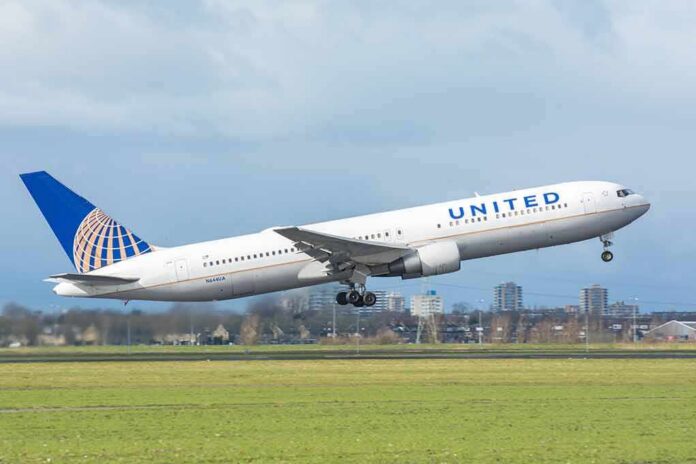
United Flight 2174 landed safely after a passenger claimed he had a bomb and tried to reach the cockpit, and deputies arrested him on felony charges.
Story Snapshot
- United pilots sent a hijack alert after a passenger claimed he had a bomb midflight.
- The plane landed in New Orleans, where deputies arrested the suspect without incident.
- Authorities booked him on charges tied to a false bomb threat and terrorizing.
- The vast majority of aviation bomb threats are false, but airlines must treat them as real.
What Happened Onboard United Flight 2174
United Flight 2174 from Newark to New Orleans reported a serious in-flight disturbance late Monday. Sheriff’s officials said a 34-year-old passenger told crew members he had a bomb and tried to approach the cockpit. Pilots sent an emergency hijack alert as the situation unfolded. The flight carried 46 passengers and six crew. The aircraft continued to New Orleans and touched down safely. No injuries were reported, and law enforcement met the plane at the gate.
Jefferson Parish Sheriff’s Office deputies boarded the aircraft after it reached the gate. Deputies detained the passenger without incident and began a search and investigation. Authorities said the suspect’s claims and behavior triggered the alert and emergency response. Deputies booked him for communicating false information of planned arson and for terrorizing. Officials described the episode as a false report after the aircraft was secured and checked. The criminal case now moves into the local court process.
How Airlines And Crews Respond To Threats
Airlines and pilots treat any bomb claim as real until investigators can rule it out. That standard is built on one goal: protect lives. Crews follow training to secure the cockpit, calm the cabin, and alert authorities. Officials assess the threat level and plan the safest landing. Reuters reporting says the vast majority of bomb threats end up being false alarms, yet each one still triggers full checks and security steps to deter real attacks and avoid deadly mistakes.
The Federal Aviation Administration reported thousands of unruly passenger cases in recent years, and some involve threats or cockpit approaches. These events add strain to crews who must act fast in tight spaces. The agency’s materials note more than one hundred of the most severe threat cases over a decade, including attempts to breach the cockpit door. That is why airlines push firm rules, add barriers, and back strong penalties. Quick, trained action helps end most scares without harm.
Why This Matters Beyond One Flight
This scare came during a wave of threat reports that pulled planes off routes in Europe. Officials there also found no explosives, but the diversions cost time and money. They also fray public trust. Experts warn that hoaxes can mask a real plot or breed complacency if crews let their guard down. The lesson is simple and hard: treat every threat as real, every time, while moving fast to confirm the facts and restore normal operations when safe.
United Airlines Passenger Claims to Have Bomb, Attempts to Enter Cockpit
A passenger aboard a United Airlines flight from Newark to New Orleans reportedly attempted to enter the cockpit while claiming to be carrying a bomb. A hijacking alert was issued following the incident,… pic.twitter.com/kPfdNqRSXa
— AirwayBuzz (@AirwayBuzz) November 11, 2026
For travelers, this shows how fragile air travel feels when one person disrupts a flight. For crews and police, it shows training works when followed step by step. The plane landed. No one was hurt. The suspect was arrested. The legal process will decide guilt and punishment. The bigger system question remains the same: can leaders reduce repeat threats while protecting rights and keeping flights moving on time and safely every day?
Sources:
en.royanews.tv, timesnownews.com, dailymail.com, kpel965.com