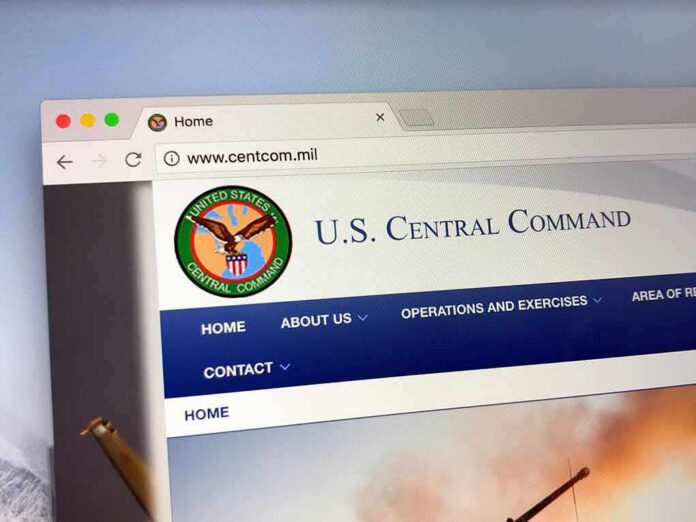
The U.S. military just opened a new front against Iran’s supply networks, this time targeting roads and the Caspian Sea instead of only ships.
Story Snapshot
- U.S. Central Command formed Task Force Iron Gate to choke Iran’s movement of advanced weapons and sanctioned goods.
- The Tampa-based team will work with other U.S. agencies and include about 20 civilian and military staff.
- The mission extends pressure beyond the sea to Iran’s land borders and the Caspian corridor that links to Russia.
- Leaders say the goal is to limit funding, factory rebuilding, and military resupply by Iran.
What CENTCOM Announced And Why It Matters
U.S. Central Command created Task Force Iron Gate to stop Iran from moving advanced weapons, dual-use gear, and other sanctioned items across land borders and the Caspian Sea. The command said the unit will coordinate with other U.S. government agencies to hit illicit revenue and supply chains tied to Iran’s military and proxy forces. Officials framed the effort as part of a larger pressure campaign that has focused on maritime routes but now expands to overland and inland-water corridors.
Reporting said the task force will be based in Tampa, Florida, and staffed by about 20 civilian and military personnel. That small footprint suggests a hub that shares intelligence, links agencies, and guides actions rather than a large field force making arrests. The unit’s design as an interagency tool fits missions that cross borders, banks, and cargo lanes. That structure matches how sanctions work best today: mapping networks, not just stopping one truck or ship.
Shift From Sea To Land And The Caspian Corridor
Central Command’s move points to concern that land routes and the Caspian Sea have become key pathways. Coverage explained that the Caspian links Iran with Russia and nearby states, offering alternative supply lines when sea pressure increases. By widening the map, the United States hopes to make it harder for Iran to move components, cash, and finished systems through neighboring countries and inland ports that are outside normal maritime choke points.
Admiral Brad Cooper tied the effort to clear outcomes: reduce funds for terrorism, block the rebuilding of weapons factories, and slow military resupply. That claim connects interdiction to long-term capacity, not just single seizures. Central Command leadership has also described heavy damage to parts of Iran’s missile, drone, and naval defense industries in recent posture updates. Iron Gate is presented as a way to keep that pressure on and prevent rapid recovery.
How A Small Task Force Can Punch Above Its Weight
Task Force Iron Gate’s scale signals a focus on intelligence sharing, targeted sanctions, and partner action. A lean team can map companies, middlemen, shippers, financiers, and insurance links. It can cue Treasury designations, Justice Department cases, and allied enforcement. That approach links military goals with financial and legal tools. The aim is to raise costs across the whole network that moves parts and money, not just seize one crate at a border crossing.
This model also reflects how Iran has worked around sanctions for decades. Networks often use front firms, third-country hubs, and layered shipping and payment trails. Hitting those webs requires sustained data, trusted partners, and quick action across agencies. An interagency cell can pull those levers in sequence, coordinate messages, and track results over time. Such efforts try to close the “leaks” that appear when pressure in one channel pushes trade into another.
What This Means For Americans Watching Washington
Many Americans on the right and left feel the government misses the big problems and wastes money. This move will draw attention because it tries to use a small, targeted team instead of a huge new program. Supporters will see a practical step to block weapons that can harm U.S. forces and allies. Skeptics will watch to see if a 20-person hub can deliver real results and avoid mission creep or endless spending abroad.
The stakes are wider than one border. If overland and Caspian routes really matter, then closing those gaps could slow missile and drone flows and cut funds to violent groups. If they do not, the effort could shift again. For now, the facts are straightforward: Central Command stood up Task Force Iron Gate in Tampa, tasked it to target land and Caspian movements tied to Iran’s military capacity, and linked it to a broader, network-focused strategy.
CENTCOM (Nov 7): Adm. Brad Cooper stood up Task Force Iron Gate — ~20 staff in Tampa — to choke Iran weapons routes over land and the Caspian. Same release: the naval blockade already blocked >$25B in Iranian crude. Sea worked. Now the land routes.
— Hold the Line West (@HoldTheLineWest) November 7, 2026
Sources:
facebook.com, reuters.com, bloomberg.com, newarab.com