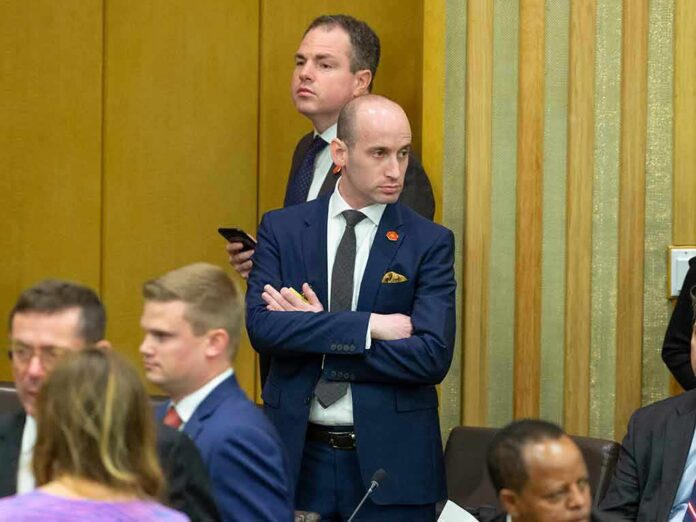
President Trump replaced Chief of Staff Susie Wiles with Stephen Miller, signaling a sharper, more centralized West Wing just days after the midterms.
Story Snapshot
- Trump named Stephen Miller chief of staff effective November 9, 2026.
- Susie Wiles will shift to Trump’s political operation, not leave the orbit.
- Major outlets confirmed the change and the start date on November 6.
- The move follows Republican midterm losses and marks a major staff shakeup.
What The President Announced And When It Takes Effect
President Trump said Stephen Miller, then deputy chief of staff, will become chief of staff on Monday, November 9, 2026. He made the announcement on November 6 and called Miller a trusted advisor. Trump also said Susie Wiles would move to his political operation. This set a clear handoff date and roles for both aides, giving the White House and Congress a short window to adjust access and workflow before the new week begins.
Major newsrooms independently reported the same change and timing. The Wall Street Journal, The Washington Post, and CBS News matched the effective date and the Wiles-to-politics shift. That broad agreement points to a straightforward personnel change with near-term consequences for policy meetings, scheduling, and information flow into the Oval Office. The appointment itself is not in dispute in the reporting that followed the president’s announcement on November 6, 2026.
Who Stephen Miller Is And Why The Role Matters
Stephen Miller is a longtime Trump advisor known for shaping immigration and domestic policy in past years. As chief of staff, he will control the schedule, gatekeep access, set staff priorities, and coordinate policy clears. That role often steers what the president sees first each day and which ideas reach a decision. While titles can seem inside baseball, this job can speed, slow, or redirect the government’s agenda across agencies and with Congress.
Susie Wiles, a veteran political strategist, leaves the West Wing role but stays in Trump’s orbit. Moving to the political operation keeps her close to campaign strategy, fundraising networks, and messaging. That continuity matters as both parties digest the midterm map and plan the next cycle. It also suggests Trump wants Wiles engaged on politics while the West Wing’s daily grind shifts to Miller’s more centralized management style and policy focus.
Why The Timing Raises The Stakes Across Parties
The change came right after Republicans lost ground in the midterm elections, and coverage framed it as the biggest shakeup since those results. That link helps explain why both supporters and critics see high stakes. Supporters expect tighter execution on core issues like border enforcement and inflation. Critics brace for harder lines on immigration and a tougher stance with Democrats in Congress during must-pass budget and oversight fights this winter.
🚨 BREAKING:
President Trump announced that White House Deputy Chief of Staff [Stephen Miller] will officially take over as White House Chief of Staff starting Monday, November 9. Outgoing Chief of Staff Susie Wiles is transitionally moving over to lead the Trump Political…— Bobby (@bobbymorris280) November 6, 2026
Turnover in senior White House jobs is common, and chiefs of staff often rotate as priorities shift. Still, the Miller appointment signals a clear choice on process and tone. Agencies will watch closely for faster directive memos and stricter message discipline. Lawmakers will test whether Miller’s office speeds decisions on spending, energy, and border policy, or if partisan fights stall action. Either way, the new gatekeeper will shape how quickly the administration can move ideas into action.
Sources:
pjmedia.com, nbcnews.com, cleveland.com