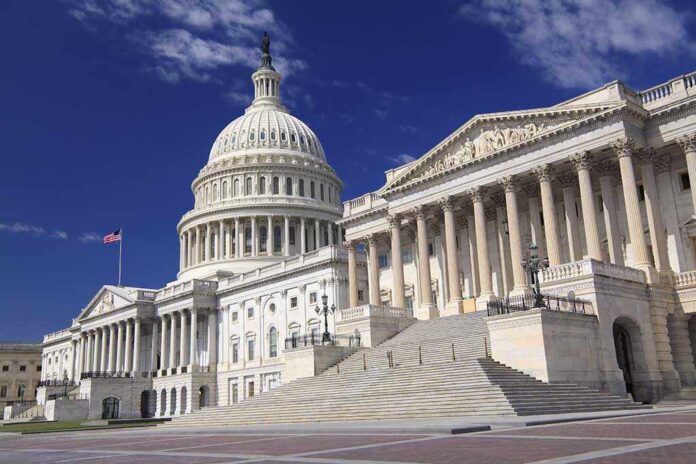
Democrats won control of both the House and the Senate, reshaping power in Washington and confronting President Trump with a divided government.
Story Highlights
- Associated Press reported Democrats reached the House majority threshold and won the chamber.
- Associated Press and The New York Times displayed Democrats crossing the Senate control line with multiple seat flips.
- BBC and NBC News described unified Democratic control of Congress starting in January.
- Some races remained uncalled on election night, but the control outcome was consistent across outlets.
Control Called: What Changed on Election Night
Associated Press election trackers showed Democrats reaching 218 seats in the House, which is the number needed for control. The outlet’s live updates stated Democrats had won the chamber as additional races remained uncalled. On the Senate side, Associated Press displayed Democrats passing the majority threshold and identified several key flips that changed control. The New York Times also showed Democrats with an edge in Senate seats and described multiple flips driving the shift.
BBC live coverage summarized the result as Democrats winning both chambers for the remainder of President Trump’s term. NBC News framed the outcome against the pre-election baseline, noting Republicans went into Election Day with narrow advantages, and projected Democratic control in January when the new Congress is seated. Together, these major outlets aligned on the central fact: Democrats captured the House and the Senate in the 2026 midterms.
Why This Result Matters for Policy and Power
Unified Democratic control of Congress changes the balance of power. President Trump and Vice President JD Vance now face a legislature controlled by the opposition party. House committees can set hearing agendas, issue subpoenas, and shape spending bills. Senate leaders control the floor schedule and confirmation calendar. Even so, Senate rules still give the minority tools to slow or block major items, which can limit sweeping changes even when one party holds nominal control.
For conservatives, this outcome threatens core goals on immigration enforcement, fossil fuel expansion, and deeper spending cuts. For liberals, it opens doors to protect social programs, push consumer and voting measures, and check executive actions they view as harmful. For many Americans across the spectrum, the change raises a familiar worry: leaders may still serve party interests and donors first, while rising prices, high energy costs, border pressures, and local safety concerns grind on without real fixes.
How the Map Shifted and What Is Still Unclear
The New York Times reported seven Democratic Senate flips, signaling a broad map change rather than a single upset. Associated Press trackers also highlighted individual wins, including a Democratic pickup in Iowa, which underscored the scale of the shift. In the House, Associated Press called overall control once Democrats crossed 218 seats, even as many districts remained uncalled. That approach is standard when the combination of called races makes the majority mathematically secure.
Democrats picked up a Republican Senate seat in North Carolina and are gaining ground in Florida House races, signalling they could wrestle control of Congress from Trump's party in the midterms. #World #T24News pic.twitter.com/eteHa73Gfj
— T24 Network (@T24_Network) November 4, 2026
Several counts were still moving when control was declared. Different outlets showed varying interim totals as more votes came in. That does not change the core outcome, but it does mean the final seat margin will be set after certifications and any recounts finish. Major outlets were careful to describe control as decided, while noting that more calls were pending and exact majorities could shift slightly as late votes are counted.
What Divided Government Means for Your Wallet and Community
Expect harder bargaining over spending, taxes, and energy rules. House and Senate leaders will press their priorities into funding bills, while President Trump will weigh veto threats or deal-making. Investors watch for debt-limit deadlines and shutdown risks. Families watch for changes to health and drug costs. Drivers care about gas and electricity prices. Communities focus on border and crime policy. Divided government often slows big swings, but brinkmanship can raise uncertainty that hits households first.
Historical Pattern: Midterms Often Punish the Party in Power
Modern history shows the president’s party usually loses seats in midterm elections. Analysts count frequent losses in the House and smaller but common losses in the Senate. That pattern helps explain how Democrats gained ground this year, even if the exact margins varied by state and district. The broader lesson is steady: midterms act as a check on the White House, and they often shift Congress toward the party out of power.
Bottom Line
Democrats won control of both chambers, giving them the gavels and forcing President Trump to confront a fully opposition Congress. The seat totals will settle in the weeks ahead, but the power shift is clear. Voters who feel Washington serves elites more than families will now judge whether new leaders can deliver stable prices, secure borders, safer streets, and fair opportunity. The test starts now, in the must-pass bills and confirmation fights to come.
Just in: Democrats win US House to secure control of Congress in midterms, Cointelegraph reports.
Published at 07:50 UTC.
Every headline as it lands: https://t.co/1vhGgFXxZU pic.twitter.com/HGwvzfGvaO
— Void App (@hellovoidapp) November 4, 2026
Sources:
youtube.com, apnews.com, bbc.com, nytimes.com, academic.oup.com, poynter.org, washington.edu, cambridge.org