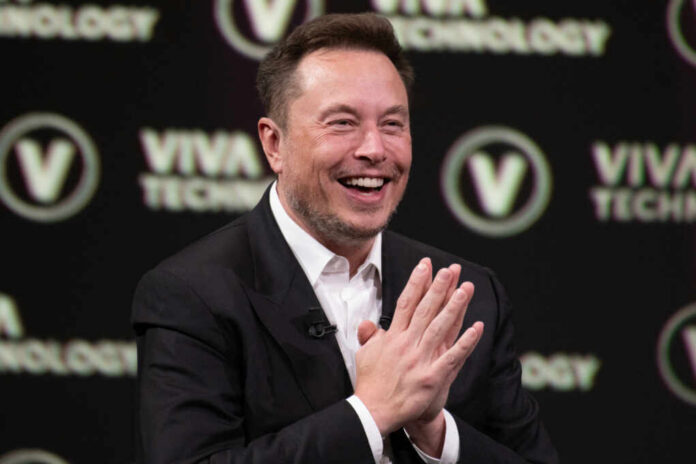
Elon Musk now says death is just bad “human programming” that advanced artificial intelligence can rewrite, raising the stunning possibility that today’s broken system might let the rich live far longer while everyone else struggles to get basic care.
Story Snapshot
- Musk calls human aging a “very solvable” programming problem and says semi‑immortality is “not particularly hard.”
- He predicts artificial general intelligence by 2026 and AI smarter than all humans by 2030, which he believes will help crack aging.
- He thinks human lifespans could jump sharply in the next decade, echoing other tech leaders’ forecasts of near‑doubling.
- Musk’s ideas remain speculative and have not been demonstrated in peer-reviewed human research.
Musk’s Bold Claim: Death As A Software Bug
On Peter Diamandis’s Moonshots podcast, Elon Musk said he has “long thought” that human longevity and even semi‑immortality are “extremely solvable” problems. Musk argued that aging functions like a software program that could eventually be rewritten. Musk claimed humans are “programmed to die,” and that if you “change the program, you will live longer,” suggesting the fix will seem obvious in hindsight. He pointed out that most parts of the body age in sync, which he takes as evidence that there is a single internal “clock” or root cause that can be found and rewritten.
In later comments highlighted by outlets like Fortune and India Today, Musk doubled down, calling aging a “very solvable problem” and saying it is “not particularly hard” once scientists find that central mechanism. He did not present specific genes, pathways, or trial data tied to his theory, and no Musk company has yet shown peer‑reviewed proof of reversed aging in humans. For many Americans, especially those angry about a health system that already feels rigged for elites, the idea that death itself might become optional for the rich sounds like the ultimate upgrade for the few and another broken promise for everyone else.
AI Timelines And The Promise Of Longer Lives
Musk links his optimism about beating aging to his aggressive predictions for artificial intelligence. In the same January 2026 discussion, he said he expects artificial general intelligence, meaning AI with human‑level thinking skills, to arrive in 2026. He further claimed that by 2030, AI systems will be smarter than all humans combined, with “intelligence density” rising by a factor of ten every year. Musk argues that this explosion in computing power and AI problem‑solving will let scientists quickly map the root causes of aging and design new biological tools to change the “program” in our cells.
When asked about Anthropic chief executive Dario Amodei’s prediction that human lifespans could double in the next decade thanks to AI, Musk answered that this is “probably correct,” though he hedged slightly on exact numbers. He suggested at least a “significant increase” in how long people can live once AI is deeply involved in medical research. Other tech billionaires, from Jeff Bezos to Bryan Johnson, have poured billions into similar dreams of radical lifespan extension, often promising breakthroughs within 10 to 20 years that have not yet arrived. That repeated pattern feeds public doubt, especially among families who see drug prices rising and hospital bills crushing them while billionaires talk about living to 200.
Social Risks, Skepticism, And The Deep State Fear
At the World Economic Forum meeting in Davos, Musk admitted that very long lifespans could have “serious downsides” for society even if the science works. He has warned in the past that extreme longevity might lock in power for the same small group of wealthy and connected people, leading to political and cultural stagnation. Those concerns echo complaints from both conservatives and liberals who already feel the system is run by an unaccountable elite “deep state” that protects itself first and leaves ordinary citizens fighting over shrinking chances at the American Dream.
Researchers generally view aging as involving many interacting biological processes rather than a single confirmed “master program,” and there is currently no scientific consensus supporting Musk’s proposed mechanism. Instead, the pushback comes mostly as skepticism: journalists note his history of overly optimistic forecasts for technologies like self‑driving cars and robot surgeons, and some online commentators call current AI‑based progress on longevity “basically zero.” Critics argue that calling aging a mere software bug is simplistic and risks pulling attention away from real, slower work on cancer, heart disease, and basic care that could help millions now.
Immortality For Whom? Power, Inequality, And Trust
Musk has long floated ideas for “digital immortality,” including hints that tools like Neuralink might someday upload human consciousness, and recent promotion of Grokipedia, an AI archive that promises to keep people’s stories alive forever. Media coverage often blends these digital dreams with his newer talk about biological semi‑immortality, which can blur the line between being remembered and actually staying alive. That confusion makes it harder for the public to judge what is truly on the table and what is mostly marketing and speculation.
For Americans watching their government fight over budgets while health costs climb, Musk’s vision hits a nerve: if aging really is close to “solved,” who will get the cure first, and who will be left behind. Critics argue that if effective longevity treatments are eventually developed, affordability and access could become major public policy issues. Until there is hard evidence and transparent policy, his promise that “you won’t need to save for retirement” because death itself will be delayed sounds less like a shared national victory and more like another elite project built on the backs of a tired, mistrustful public.
Sources:
zerohedge.com, fortune.com, indiatoday.in, instagram.com, startuparchive.org, facebook.com, reddit.com, youtube.com