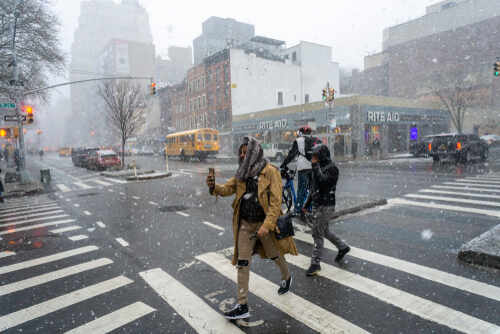
New York City is bracing for torrents of rain and dangerous flash flooding that could again expose how fragile its basic infrastructure has become.
Story Snapshot
- A National Weather Service flood watch warns of 2–4 inches of rain and life‑threatening flash flooding across all five boroughs.
- City officials say they are prepared, but past storms show basements, subways, and roads routinely fail when rain hits about 2 inches per hour.
- Confusing social media posts and repeated emergency alerts risk “warning fatigue” just as residents need clear, trusted information.
- Both left and right see these floods as one more sign that basic public safety and infrastructure have been neglected by political elites.
Heavy Rainfall Forecast Brings Elevated Threat to Life
The National Weather Service forecast for New York City calls for widespread rainfall totals of two to three inches, with some spots seeing more than four inches and downpours of one to two inches per hour. Forecasters say this will create scattered to numerous cases of flash flooding in urban and low‑lying areas, and they explicitly warn of an “elevated threat to life” from fast‑rising water. A formal flood watch is in effect from Sunday afternoon through early Tuesday morning, covering multiple rounds of heavy rain and thunderstorms.
The flood watch issued for all five boroughs runs from midday Sunday to 6:00 a.m. Tuesday, signaling that dangerous conditions may last overnight and into the commute. The city’s severe weather page repeats the National Weather Service projection of two to three inches of rain and urges residents to avoid flooded areas and subway stations. Weather outlets and local television warn that the heaviest rain could occur in bursts, making it harder for drains and sewers to keep up and turning familiar streets into temporary rivers.
City Officials Promise Preparedness Amid Past Failures
New York City Mayor Zohran Mamdani has said the city is prepared for Monday’s storm, noting the risk from heavy rain, strong winds, downed trees, and flash flooding. The city’s Office of Emergency Management and transit agencies have promoted flood plans, including measures to keep subway tunnels and stations dry and to protect people living in basement apartments, which have repeatedly flooded in past storms. After prior events like Hurricane Ida and the September 2023 floods, official reports admitted that stormwater systems were overwhelmed and that basement residents faced deadly risks from fast‑moving water.
Those earlier disasters showed what happens when intense rain hits a city built on paved surfaces, filled with aging drains and millions of people living in low‑lying areas. In 2021, the National Weather Service issued its first‑ever flash flood emergency for New York City, a rare alert reserved for times when a severe threat to human life and catastrophic damage are imminent. Central Park saw more than three inches of rain in a single hour during that event, and at least 16 people died across the region. In September 2023, parts of the city recorded nearly 10 inches of rain, causing subway shutdowns, road closures, and millions of dollars in damage.
Confusing Messaging and Warning Fatigue Undermine Trust
While official sources are clear about the current flood watch window, social media posts have shared conflicting dates, with some mentioning warnings that run only on July 25 or mixing up July 5–7 with other events. This kind of noise makes it harder for residents to know which alerts are current and which are old or false, especially when they rely on quick glimpses of posts instead of detailed forecasts. Repeated high‑severity alerts, sometimes for storms that end up less damaging than feared, can also lead to “warning fatigue,” where people start to tune out even accurate warnings.
At the same time, mainstream outlets and government agencies now present a nearly united front when they describe these storms, stressing “life‑threatening” risks and historic rainfall. For many New Yorkers, this “wall of agreement” feeds a familiar worry: the sense that powerful institutions speak with one voice but rarely accept blame when infrastructure fails or poor neighborhoods bear the brunt of flooding. Residents remember past promises to upgrade sewers and protect vulnerable housing that still have not delivered visible improvements.
Floods Highlight Deeper Infrastructure and Inequality Problems
Research on New York City’s drainage system shows that many parts of the network were designed for far weaker storms than the city now routinely faces. Engineers note that typical stormwater rules are based on older data and “five‑year storms,” even as climate change brings more frequent downpours of two inches per hour or more. Studies of areas like the Tallman Island sewer shed find that sewers and outfalls struggle under modern flash flood patterns, causing water to back up into streets, homes, and transit systems.
Heavy rain and thunderstorms are expected across New York City through early Tuesday with an increased risk of flash flooding.
We urge everyone to take precautions, have a plan and NEVER drive or walk through flooded roadways. pic.twitter.com/2DBUyZa63K
— FDNY (@FDNY) July 6, 2026
These failures do not fall evenly. Hazard mitigation reports show that basement and cellar apartments, often occupied by lower‑income residents and immigrants, suffer the worst damage and most of the deaths in extreme floods. When warnings say “elevated threat to life,” many people hear a hard truth: the risk is highest for those who live in cheaper, more vulnerable housing and rely on public transit that shuts down when tunnels fill with water. For both conservatives and liberals frustrated with elites, every new flood watch feels like proof that leaders talk about safety but ignore the basic systems that keep ordinary people safe.
What Residents Can Do When the Government Falls Short
City emergency guides urge simple but important steps when a flood watch is in place. Residents are told to stay tuned to local forecasts, avoid walking or driving through water, and keep away from flooded subway stations and downed power lines. People living in basement units are advised to know exit routes, watch for rising water, and move to higher floors if it becomes unsafe to leave. Officials also recommend bringing loose outdoor items inside and checking the area around homes for objects that could become hazards in high winds.
Many New Yorkers feel these tips shift too much responsibility onto individuals when the real problem is years of neglect in infrastructure and planning. But until elected leaders and agencies actually rebuild systems to handle modern storms, personal preparation remains a vital line of defense. Taking flood watches seriously, even when they feel routine, can save lives in a city where a single blocked drain or overwhelmed subway entrance can turn a normal commute into a dangerous emergency.
Sources:
nypost.com, weather.gov, cbs6albany.com, instagram.com, nyc.gov, youtube.com, facebook.com, abc7ny.com, nychazardmitigation.com, nytimes.com, preventionweb.net