California quietly stretched some sheriffs’ terms from four to six years, and now Chad Bianco is telling voters that move was really about people like him — raising fresh questions about whether election rules are being engineered from the top down instead of by the people they govern.
Story Snapshot
- Chad Bianco says California lawmakers changed sheriff election timing because of his rise and others like him.
- A 2022 state law did give sheriffs and district attorneys elected that year two extra years in office.
- No public record so far shows legislators naming Bianco or explicitly targeting specific sheriffs.
- The dispute lands amid intense backlash over Bianco’s ballot seizure and broader distrust of California election rules.[1][2][3][4]
What Bianco Is Claiming About California’s Election Law Shift
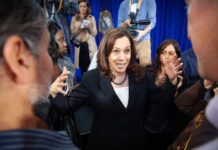
Riverside County Sheriff Chad Bianco, now a leading Republican candidate for California governor, has started telling voters that Sacramento politicians changed sheriff election rules because of him and like-minded sheriffs.[1][4] Bianco rose to prominence as a tough-on-crime conservative allied with former President Donald Trump’s agenda, drawing both support from law-and-order voters and intense criticism from progressives.[1] In short video clips and campaign appearances, he frames the election-timing change as proof that state elites fear independent sheriffs who challenge their power.[4]
Bianco’s message resonates with conservatives who already suspect California’s political class of manipulating the system to protect its own.[1] At the same time, many liberals angry over his policies and rhetoric see his claim as another example of a controversial sheriff portraying himself as a victim while ignoring his own record.[1][2] Because he remains in office while running statewide, any change to sheriff election timing directly affects how long he holds local power if his governor bid fails, making the claim more than a symbolic talking point.
What the Law Actually Did — And What We Know It Did Not Say
Reporting shows California enacted a little-noticed law that shifted the election dates for county sheriffs and district attorneys, moving some contests from 2026 to 2028 and effectively granting officials elected in 2022 six-year terms instead of the usual four. Analysts describe the move as part of a broader pattern where legislatures consolidate or retime local elections, sometimes to align with higher-turnout presidential years or streamline administration. Such changes almost always carry political consequences, even when the legal language looks neutral.
Crucially, the available public reporting on this timing law does not show any bill text, committee analysis, or floor debate that mentions Bianco by name or clearly identifies specific sheriffs as targets. Coverage of the law focuses on its impact in counties like San Mateo and on the unusual “perk” of extended terms, rather than on any explicit legislative intent to check conservative sheriffs. That absence does not prove lawmakers were neutral, but it does mean Bianco’s claim about being the driving cause rests on inference rather than documented motive in the legislative record currently available to the public.
Why Suspicion Runs High Across the Political Spectrum
Public distrust of election rules in California did not start with this law, and Bianco himself sits at the center of some of the most heated controversies. As sheriff, he seized more than 600,000 ballots from Riverside County’s registrar based on unproven fraud allegations pushed by election-denial activists, triggering lawsuits and national criticism.[1][2][3][4] The California Supreme Court stepped in to halt his investigation while it reviews the legal issues, and state lawmakers quickly passed a new law banning law enforcement from taking cast ballots from election officials.[2][3]
For many liberals, that ballot seizure confirmed fears that law enforcement could be weaponized against election administrators, so they view Bianco’s complaints about “rigged” rules with skepticism.[2][3][4] For many conservatives, the same episode reinforced a different story: that when an elected sheriff questions the system, the political and legal establishment rushes to shut him down instead of investigating irregularities.[1][2] In this climate, a technical shift in election timing can easily look like part of a larger pattern of political insiders — whether in Sacramento or Washington — changing the rules whenever outsiders gain ground.[1]
What Remains Unproven — And What Voters Should Watch For Next
The strongest established facts are that Bianco is an elected sheriff and active 2026 gubernatorial candidate, that California changed sheriff and district attorney election dates after his 2022 race, and that this gave some incumbents two additional years in office.[1] What remains unproven is the heart of his allegation: that lawmakers made this timing change because of him, to either hamper his future or clear the way for his statewide run. No cited statute, committee report, or court opinion currently confirms that theory.
Gavin Newsom signs bill, spurred by Chad Bianco, to block ballot seizures by law enforcement
California Gov. Gavin Newsom (D) signed a new law that bans anyone from unlawfully seizing ballots, voter rolls or other election materials — including federal or local law enforcement.
— Anita fellows (@An3ita50) May 29, 2026
To move this debate from suspicion to evidence, voters on both the right and left would need to see the underlying bill, committee analyses, and any internal communications that explained why the calendar was changed and how legislators expected it to affect sheriffs. Until those records are scrutinized, Bianco’s claim remains a politically potent story set against a real but opaque law change. In a moment when many Americans believe the system is being adjusted from above to keep ordinary citizens in their place, demands for sunlight on election rules are likely to grow louder, regardless of party.
Sources:
[1] YouTube – Chad Bianco Says California Tried to CHANGE ELECTION LAWS Because of …
[2] Web – How MAGA Sheriff Chad Bianco is shaking up the 2026 California …
[3] Web – Emails show what drove Chad Bianco’s CA election investigation
[4] Web – Defending Against the Unlawful Seizure of Ballots (Cervantes v …