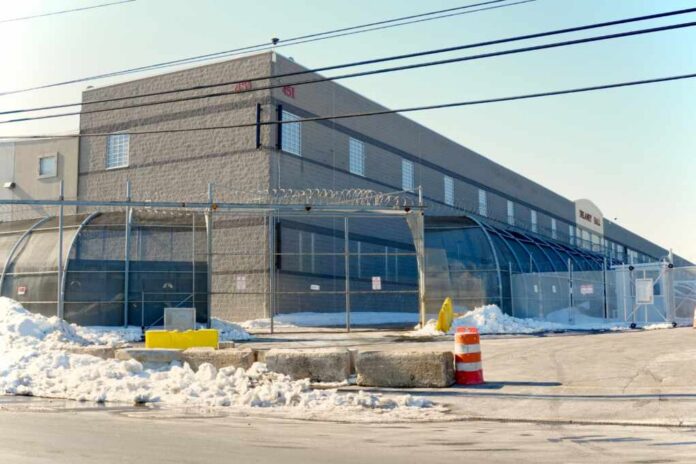
When a sitting governor has to beg federal jailers just to see what is happening inside a detention center on her own state’s soil, it exposes how little control voters really have over what is done in their name.
Story Snapshot
- New Jersey Governor Mikie Sherrill is demanding access to Delaney Hall, a federal immigration detention facility in Newark, after reports of harsh conditions and protests outside the site.[1][3][5]
- Detainees, families, and advocates describe inhumane treatment, while federal immigration authorities and the private operator, the GEO Group, tightly control who can enter the facility.[2][4]
- The standoff highlights a deeper fight over who actually governs immigration jails: elected state leaders answerable to voters, or a distant federal‑corporate network shielded from public scrutiny.[2][3][4]
- Both conservatives and liberals who distrust “the system” see Delaney Hall as another example of a closed, unaccountable bureaucracy operating behind locked doors and legal fine print.
Governor’s push for access and claims of poor conditions
New Jersey Governor Mikie Sherrill said she has contacted federal Immigration and Customs Enforcement to gain access to Delaney Hall after receiving multiple reports of poor and possibly inhumane conditions inside the Newark detention center.[1][3][5] In a formal statement, she said she was “deeply disturbed” by what detainees and advocates have described and pledged to monitor the situation closely alongside the state’s federal delegation and community groups.[3] Detainees participating in a strike have directly called on her to visit, hoping a high‑profile visit might force changes.[5]
Families and advocates protesting outside Delaney Hall say detainees are enduring horrible conditions, including overcrowding, cold temperatures, and inadequate medical care, according to accounts amplified by civil liberties groups and local organizers.[2][5] The American Civil Liberties Union of New Jersey has long opposed the use of Delaney Hall for immigration detention, criticizing the renewed federal contract and warning that private detention profits from keeping beds full rather than ensuring humane treatment.[2] Protesters argue that without outside eyes, such facilities become “black boxes” shielded from meaningful oversight.
Federal control, private operators, and limits on state power
Delaney Hall is run by the GEO Group, a national private prison company, under contract with United States Immigration and Customs Enforcement, which is listed as the facility’s client on the company’s own site.[4] The GEO Group’s public information explains that people seeking entry must follow procedures set by federal immigration authorities, including contacting a supervisory deportation officer by email and complying with strict visitor rules.[4] That structure underscores that Delaney Hall is part of a federally directed system, not a state‑run facility that the governor can walk into at will.
Federal officials and private operators often argue that these procedures protect security and detainee privacy, which they say can be compromised by unscheduled political visits or media tours.[2][4] Access decisions are made inside a chain of command that runs from Washington through federal field offices to contractors like the GEO Group, with no formal role for state governments.[2][4] That setup leaves governors in both parties with limited legal leverage, even when facilities sit in their backyards. The resulting gap between federal authority and local responsibility fuels public frustration across the political spectrum.
History of controversy and the bipartisan anger it feeds
Delaney Hall has already been a flashpoint in New Jersey’s immigration politics, drawing criticism from civil liberties groups and community advocates whenever federal contracts were renewed or expanded.[2] Activists have documented stories of people forced to sleep on floors, eat inedible food, endure freezing temperatures, and struggle to obtain medical care at facilities like Delaney Hall and the nearby Elizabeth Detention Center, using those accounts to call for closing these sites altogether. These allegations fit a national pattern where detainees’ testimonies clash with official assurances that standards are being met.
For many conservatives, Delaney Hall embodies a different grievance: a distant federal bureaucracy that has failed to secure the border yet still spends billions on a detention system run by big contractors, while ordinary taxpayers see little accountability or improvement.[4] Many liberals see the same system as brutal and dehumanizing, trapping migrants in limbo while corporations profit from human confinement.[2] Both sides recognize a familiar theme: decisions are being made by federal agencies and private firms far removed from the communities that live with the consequences.
What the Delaney Hall fight reveals about transparency and power
The very fact that a governor must negotiate for permission just to inspect conditions inside a facility in her own state reinforces the perception that immigration detention operates under its own opaque rules.[1][3][4] Because records, access, and information are tightly controlled by federal agencies and contractors, the public usually learns about problems only after detainees or whistleblowers take risks to speak out. That structural secrecy, not any one scandal, is what fuels deep mistrust of “the system” among voters who feel leaders of both parties have allowed unaccountable institutions to grow too powerful.
For Americans on the right and left who believe the country has drifted away from basic constitutional principles of limited government and accountability, Delaney Hall is not just a story about immigration policy. It is a reminder that when government authority is pooled with corporate interests behind locked doors, ordinary citizens and even elected officials struggle to get straight answers. Whether one’s priority is border security, human rights, or simply responsible use of tax dollars, the demand for real transparency at facilities like Delaney Hall reflects a shared conviction that the public has a right to see what is being done in its name.
Sources:
[1] YouTube – N.J. governor requests access to Delaney Hall ICE facility …
[2] Web – ACLU-NJ Statement on ICE Contracting Delaney Hall for …
[3] Web – Statement by Governor Sherrill on Delaney Hall – NJ.gov
[4] Web – Delaney Hall – The GEO Group
[5] Web – N.J. governor requests access to Delaney Hall ICE facility amid …