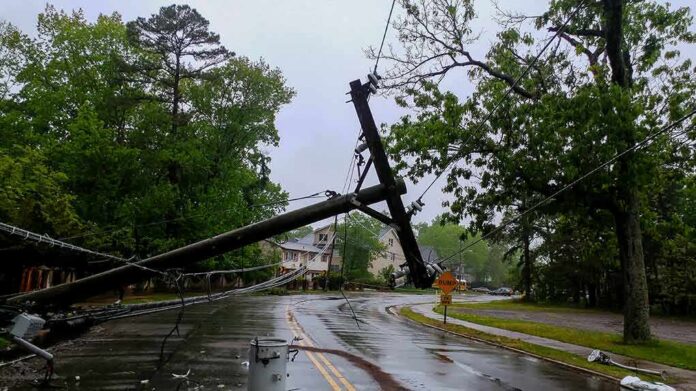
More than 836,000 customers lost power on Thanksgiving as fierce winds and flooding pummeled major East Coast states.
Story Highlights
- Wind gusts up to 70 miles per hour toppled trees and power lines, cutting power across several states.
- Officials postponed the Macy’s Thanksgiving Day Parade due to wind, rain, and flooding risks.
- Air travel saw hundreds of cancellations and widespread delays along the East Coast.
- Outages and snow also hit parts of the Midwest, including Missouri and Illinois.
Severe Winds And Flooding Drive Widespread Outages
Reporters cited PowerOutage.us data showing more than 836,000 customers without electricity as of late afternoon on Thanksgiving, with the largest totals in Virginia, Maryland, and Pennsylvania. Strong winds and saturated ground made trees and limbs more likely to fall. Reuters reported gusts reaching 70 miles per hour, a force that can down lines and block roads. Local television forecasts in New York warned of 60 to 70 mile per hour coastal gusts that could snap branches and produce scattered outages.
The East Coast bore the brunt of wind and rain, and many communities also faced coastal flooding. The New York Times described power losses from North Carolina to New Jersey and noted street flooding in low-lying areas. Flooded shore roads, dangerous crosswinds, and debris slowed first responders. These conditions complicated utility repairs, which often require bucket trucks and safe access. Officials urged residents to avoid downed lines and to use generators outdoors to prevent carbon monoxide poisoning.
Macy’s Parade Postponed And Travel Disrupted
Organizers postponed the Macy’s Thanksgiving Day Parade for the first time in its century-long history, pointing to high winds, heavy rain, and flood risk. The decision followed safety rules that limit balloon flights in strong winds. New York City agencies warned about flying debris and tree damage, and they prepared for street closures. Families who planned to line the route instead stayed inside as crews secured barriers and cleared drains to reduce ponding on key avenues.
Air travelers faced a rough holiday. The New York Times reported hundreds of canceled flights and more than 1,000 delays as the storm swept airports from the Mid-Atlantic to New England. Reuters said airlines and airport operators worked to de-ice planes and space out departures during wind bursts. Rail and road travel also slowed. Drivers dealt with ponding on highways and lane closures from fallen branches. These ripple effects extended well into the evening as schedules reset.
Impacts Beyond The Coast And What The Numbers Mean
The storm’s reach went beyond the East Coast. The New York Times cited about 120,000 customers out in Missouri and thousands more in Illinois, where heavy, wet snow strained trees and wires. Local outlets described slushy roads and reduced visibility, which led to minor crashes and spinouts. These Midwest effects underscored how one system can produce very different hazards across regions: rain and coastal flooding in the East, but snow and power issues inland.
NJ TRANSIT has tracked a storm system that brought periods of heavy rain and gusty winds to New Jersey, Thursday into Friday. NJ TRANSIT rail tickets and passes will be cross honored by NJ TRANSIT Bus through Friday, November 27, 2026. Saturday Macy’s Thanksgiving Day Parade…
— Raritan Valley Line (@NJTRANSIT_RVL) November 27, 2026
Power outage totals are often snapshots, not final counts. The 836,000 figure reflected one moment during the afternoon and came from a private tracker, not a consolidated utility or federal ledger. Still, the pattern fits a broader trend: weather drives most major outages, and the number of weather-related disruptions has risen in recent decades. That backdrop helps explain why a single storm can rattle power, transit, and public events at once, especially during a peak travel holiday.
Sources:
facebook.com, nytimes.com, newsobserver.com, wthitv.com, lbc.co.uk, amp.dw.com