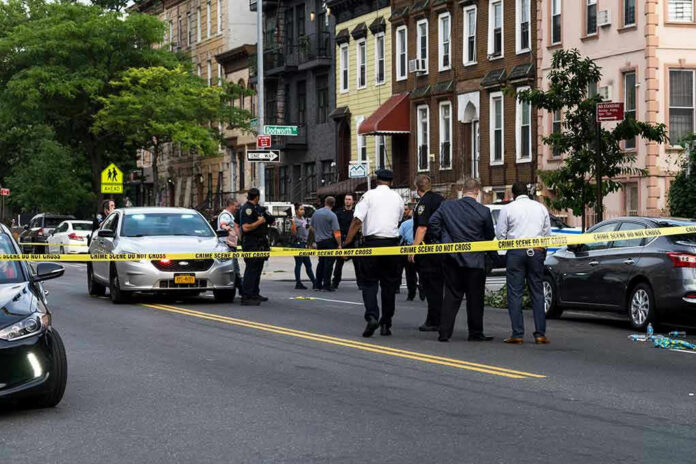
Police say a 10-year-old girl was struck in the head with a wooden stick on a Queens subway, and a 67-year-old man was arrested minutes later.
Story Snapshot
- Police arrested James Livingston, 67, after a 10-year-old was struck with a stick on the No. 7 line.
- The girl was taken to a hospital in stable condition with a reported head injury.
- Charges include assault, endangering the welfare of a child, and weapon possession.
- Officials said an added charge applies because the victim is under 11 years old.
What Police Say Happened on the No. 7 Line
New York City police said a 10-year-old girl was struck with a wooden stick around midday Sunday near the 33rd Street–Rawson Street station in Queens. Officers arrested James Livingston, age 67, at or near the scene shortly after the alleged assault. Local reports said the girl was on a Manhattan-bound No. 7 train when the strike occurred. Police reported the arrest and identified Livingston by name and age in statements carried by local outlets.
Another account said the incident unfolded at about 12:27 p.m. on the station platform area, showing some variation in how the location is described. Both accounts agree on the suspect’s name, the use of a wooden stick, and the child’s age. Those core details match across several outlets that cited police as their source. Police have not released video or detailed witness statements in the coverage reviewed, which is common in early reports.
Injuries, Charges, and What the Law Allows
Police and local reports said the child suffered a head injury and was taken to a nearby hospital in stable condition. One outlet identified NewYork-Presbyterian Queens as the facility. Officials described the child as conscious and complaining of head pain at the time. Police said Livingston faces charges that include assault, endangering the welfare of a child, and criminal possession of a weapon, tied to the alleged use of a stick in the incident.
Officials also said the case includes an added charge because the victim is under 11 years old, which can allow enhanced penalties in New York for assaults against young children. New York’s criminal code includes specific provisions that increase seriousness when a victim is under a certain age. Police statements to local media linked the added charge to the child’s age, consistent with those provisions as applied by prosecutors in similar cases.
Why This Case Struck a Nerve Across Ideological Lines
Parents on every side worry when a child is hurt in a public place. Riders want fast, safe trips, not fear on a platform or in a car. This single case does not stand for the whole transit system, yet its details feed a larger view that public safety feels uneven. Many Americans see leaders talk past each other while families absorb the risk. They see government fight over budgets while police, courts, and mental health systems strain to work together.
Transit officials point to broader safety gains across recent years. City and state updates reported that major crimes in the subway system declined in 2025 compared with 2024, with crime per million rides also down, making 2025 one of the safest years since 2009 outside the pandemic period. A violent act against a child can be both rare in the data and still deeply important to riders and families who expect better protection every day.
What We Know, What Comes Next
Police named the suspect, reported the arrest, and listed charges, which anchor the public record so far. Reporters have not published a criminal complaint or court docket in the coverage reviewed, so specific evidence like video, witness names, or medical reports remains to be filed in court. Next steps often include arraignment, any bail or release order, and discovery, where prosecutors and defense exchange evidence that will clarify what the state can prove in court.
Policy Questions That Readers Keep Asking
New Yorkers ask whether police presence, station design, mental health outreach, and prosecution choices can prevent these cases. They also ask whether leaders are honest about both progress and gaps. When a 10-year-old is hurt, arguments over talking points ring hollow. Riders want clear plans that match the stakes: put help where it matters, act fast when danger appears, and back front-line workers with tools that actually reduce harm while protecting civil rights.
Sources:
townhall.com, 6abc.com, yahoo.com, bigny.com, governor.ny.gov, nyc.gov, mta.info