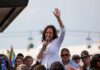
A lifelong Democrat from Michigan said on television she will vote for Republican Senate candidate Mike Rogers, citing shared priorities and a broader “for everyone” message.
Story Snapshot
- Melanie Rutherford, a Democrat and former Pontiac official, said she will vote for Mike Rogers.
- Rutherford said her views align with Rogers and that he represents a wide range of people.
- The on-air remarks came amid Rogers’s push to win Democratic support in Michigan.
- Cross-party endorsements can signal coalition breadth but do not prove a wider voter shift.
Voter Says She Will Cross Party Lines in Michigan Senate Race
Melanie Rutherford, described as a Democrat and former Pontiac city council member, said she plans to vote for Republican Mike Rogers in Michigan’s United States Senate race. She said she researched Rogers and believes her policy views line up with his. She also said he represents a wide group, not a narrow slice. Her comments aired during a televised segment that featured Michigan voters discussing the race and Democratic support for Rogers.
The broadcast identified Rutherford by name and placed her remarks in the context of the fall campaign. The clip highlighted Democratic voters who are open to Rogers, who is trying to expand his coalition. The segment also discussed challenges facing Democrat Abdul El-Sayed with parts of his own party’s base. The exchange gave a real-time look at how some voters weigh party identity against candidate fit in a close, high-stakes contest.
Why This Matters in a Close, High-Stakes Contest
Mike Rogers has worked for months to attract Democratic supporters in a state where swing voters often decide outcomes. Reporting this summer said Rogers launched a group of Democratic backers, part of a bid to show broad appeal beyond the Republican base. National coverage also framed the Michigan race as competitive, with both sides fighting over independents and disaffected voters who feel left out by the major parties.
Endorsements like Rutherford’s can help candidates claim momentum, reach new audiences, and blunt attacks that they serve only one side. Political research and past campaigns show these signals can matter, especially when the endorser seems informed and aligned with local interests. But a single endorsement is a cue, not proof of a larger realignment. It offers a story that campaigns amplify, while the true test comes when voters cast ballots.
Shared Frustrations Are Driving Cross-Party Choices
Voters across the spectrum say they are worn down by rising costs, a sense of unfairness, and gridlock in Washington. Many think the federal government serves insiders first. In that climate, some voters judge candidates on practical promises more than party labels. Rutherford’s focus on “the conglomerate of people” fits this theme. It shows a search for leaders who claim they will serve workers, seniors, small businesses, and neighborhoods together, not just favored groups.
🚨 BREAKING: BLACK DEMOCRAT STUNS THE PARTY & ENDORSES MIKE ROGERS! 🔥😱
Former Pontiac City Councilwoman Melanie Rutherford — a lifelong, self-described staunch Democrat — just went on national TV and dropped a BOMBSHELL that is sending shockwaves through Michigan politics!
She… pic.twitter.com/xved1n527P— CONSTITUTION X 🇺🇸 (@ConstitustionX) October 16, 2026
Campaigns see this mood as both risk and chance. Republicans see openings with union families worried about inflation and energy costs. Democrats court suburban moderates who want abortion rights and steady governance. Rogers’s outreach to Democrats, and El-Sayed’s push to shore up the base, both respond to these cross-pressures. Each side knows that a few thousand crossover votes in metro Detroit, Grand Rapids, or the Tri-Cities could decide the seat.
Sources:
thegatewaypundit.com, fox.com, yahoo.com, dropsitenews.com