Claim and counterclaim now collide as unrest across France and into Italy is cast as either a “red‑green” alliance or a cost‑of‑living revolt, with big numbers and few hard links to prove coordination.
Story Snapshot
- Spencer Pratt warned of “Communislam” as riots hit France and touched Italy, but proof of a command structure is missing.
- Reports cite arrests, injuries, school closures, and leftist participation in France’s unrest.
- Other outlets say protests began over teacher shortages and rising prices, not an Islamist-left plot.
- Evidence tying Muslim groups to directing violence, or linking events across borders, remains thin.
What Sparked The Claims And Why They Matter
On October 17, 2026, Spencer Pratt warned that “Communislam” was behind European riots and urged Democrats to reject any alliance. His comments followed reports of broad unrest in France and claims that violence spread into Italy. The message tapped a shared fear: that elites ignore rising disorder while political extremes join hands. Pratt’s post framed the unrest as an organized left‑Islamist drive, but it did not present documents or named groups proving a joint chain of command.
Coverage describing a “red‑green” pattern said far‑left parties and labor groups joined demonstrations in France. It listed La France Insoumise and the French Communist Party among the actors and described Muslim advocacy groups as part of the same protest space. Those accounts pointed to a mix of marches and street clashes across several cities. But they stopped short of proving that leaders from these groups planned or directed the violence together as one operation.
What We Know About The Scale Of Disorder
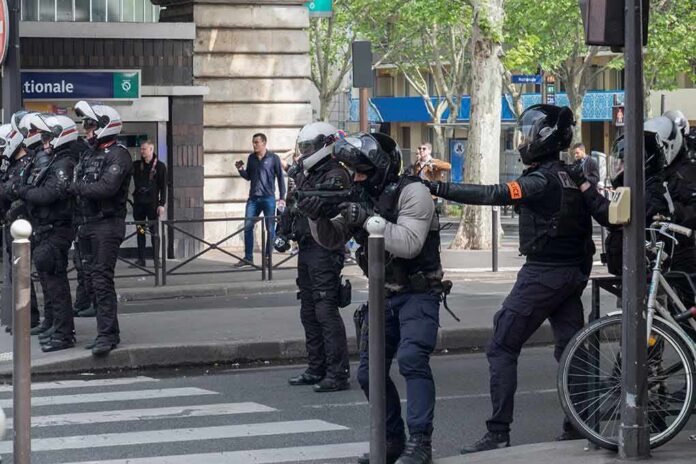
Reports cited concrete numbers to show the scale. One summary said violence spread to 40 French cities and led to 7,000 arrests. It counted hundreds of injured police, dozens of schools closed, and cases of arson or vandalism at schools. These figures paint a picture of serious breakdowns in order and public services. They also explain why many citizens on both the right and left feel the system is failing to keep streets safe and classrooms open.
Several outlets said the unrest widened beyond France. They mentioned Italy and other European countries, with some describing clashes and spillover protests. Yet the Italy record in these accounts lacked detailed police data. It did not list locations, charges, or named organizers tied back to French networks. That gap makes it hard to prove a cross‑border command or a shared plan moving people and money between countries.
The Counter-Story: Costs, Schools, And Strain
Other reporting traced the unrest to daily economic pressure. One account said protests began in high schools in working‑class areas of Paris over teacher shortages and poor facilities. It said the movement grew into anger over inequality, public spending, and living standards as prices rose and services lagged. In Italy, a march against high living costs in Milan reportedly turned disorderly, with police using tear gas to clear the square.
Commentary on youth frustration pointed to high unemployment, weak job paths after graduation, and distrust in leaders. It argued that students and young workers faced rising rents, tight budgets, and crowded campuses. That story sees the street as a last resort when normal politics feels closed. It rejects the idea of a single hidden hand joining far‑left groups and Islamist actors behind the scenes across borders.
Testing The “Alliance” Claim Against The Record
The “Communislam” label blends many claims at once: who joined protests, who used violence, whether groups coordinated, and whether Western culture is at risk. Some reports show left‑wing participation and mention Muslim advocacy groups. None show messages, funding records, or joint orders that prove a shared command for the riots. Without arrest data by affiliation or court evidence, the label stays a frame, not a verified network map.
Broader research also warns against simple links between migration from Muslim‑majority states and crime or terror. Studies in Europe have not found a clear tie between more migration and more terrorist attacks or ideological crimes. Those findings do not excuse violence. They do show why hard evidence matters when claims connect unrest to migrants or Islamist groups as prime movers.
Why This Debate Hits A Nerve In America
Americans see a pattern they know: rising costs, fraying public services, and leaders who seem distant. Conservatives fear radical politics and lax policing. Liberals fear inequality and a rigged system. Both worry that elites protect themselves while neighborhoods bear the risk. Europe’s unrest, whatever its exact cause, signals stress that any government must manage with facts, transparency, and the courage to face both crime and cost pressures head‑on.
Sources:
pjmedia.com, gatestoneinstitute.org, alexjoneslive.com, hotair.com, washingtonexaminer.com, alto.gab.com