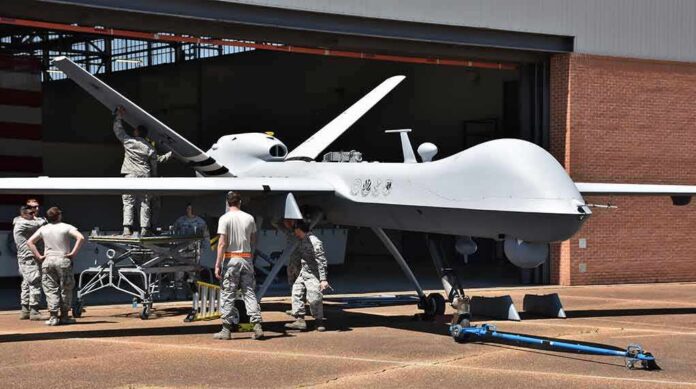
Ukraine publicly flew a stretcher-lifting rescue drone and sent it to a frontline brigade for real-world testing, signaling how war is reshaping medical evacuation.
Story Highlights
- Associated Press filmed StarGate lifting a weighted stretcher and deploying a protective net.
- Developers transferred the drone to a combat brigade for evaluation near the front.
- SkyFall says StarGate can carry up to 150 kilograms and prepare for flight in about 10 minutes.
- Ukraine’s fast, unit-level testing reflects a wider wartime push to speed new tech to troops.
What The Demonstration Showed
Associated Press reporters recorded a live field demo at an undisclosed site on October 14, 2026. Video showed six rotors lifting a stretcher-sized load that stood in for a wounded soldier. The drone also deployed a net meant to counter threats from above. The event confirmed controlled lift, flight, and net release in a real outdoor setting, though it did not include a medical pickup under fire or a delivery to a clinic or field hospital.
SkyFall, the Ukrainian developer, presented the system as a rapid rescue tool for areas too dangerous or blocked for ground vehicles. The company outlined key figures: a 150-kilogram payload, a one-way range near 15 kilometers, a cruising speed near 65 kilometers per hour, and a top speed near 105 kilometers per hour. It also cited about 10 minutes to prepare for flight. These specifications were reported as company claims in Associated Press coverage.
Frontline Evaluation And Why It Matters
Following the demo, SkyFall transferred the drone, called StarGate, to a combat brigade for evaluation near the front. That step moves the system beyond lab tests or showroom demos and into unit hands for trial missions. The evaluation status means reliability, mission success, and medical outcomes will depend on what soldiers and medics see in the field. Results were not disclosed in the initial reporting.
Ukraine’s medical evacuation problem has grown harder as drones and sensors watch every road. Studies describe a “hyper transparent” battlefield where strike threats slow or block ground rescue. That delay can cost lives. Faster extraction can raise survival odds, especially when bleeding control faces strict time limits. This context explains the push to try aerial evacuation platforms that can move a casualty without risking a large crewed vehicle.
How The System Is Built For A Jammed Battlefield
StarGate’s design aims at common war-zone hurdles. The company describes artificial intelligence support to fly when satellite navigation is jammed. It also uses two links for control and data, including Starlink and a proprietary channel. The test flight included a protective net meant to counter aerial threats. These features target real risks from enemy drones and electronic warfare, which now shape almost every frontline move in Ukraine.
SkyFall Sends Its $50,000 StarGate Medevac Drone to the Front Line: https://t.co/puJEIRhfKW https://t.co/uPUsPVegAS
— DronesLanding (@droneslanding) October 16, 2026
The developers’ claims on payload, range, and jam resistance will be judged in combat trials. Weather, terrain, and enemy adaptation can stress any new platform. Wartime Ukraine has built a fast lane from workshop to unit testing, which helps troops get tools sooner but also blurs the line between a promising prototype and a proven capability. That is why unit feedback and documented outcomes will be the key next steps for StarGate.
Why This Fits A Bigger Shift In Wartime Innovation
Ukraine’s defense ecosystem now mixes centralized buying with direct unit-level trials. Civilian tech companies build fast, hand gear to brigades, and refine designs based on frontline use. Government changes have tried to shrink the path from idea to deployment. This model speeds learning and can save lives sooner, but it also puts pressure on public claims to match field results. StarGate sits squarely inside that rapid, feedback-driven cycle.
Sources:
youtube.com, apnews.com, us.headtopics.com, thetelegraph.com, winnipegfreepress.com, csis.org, independent.co.uk, kmu.gov.ua, dgap.org