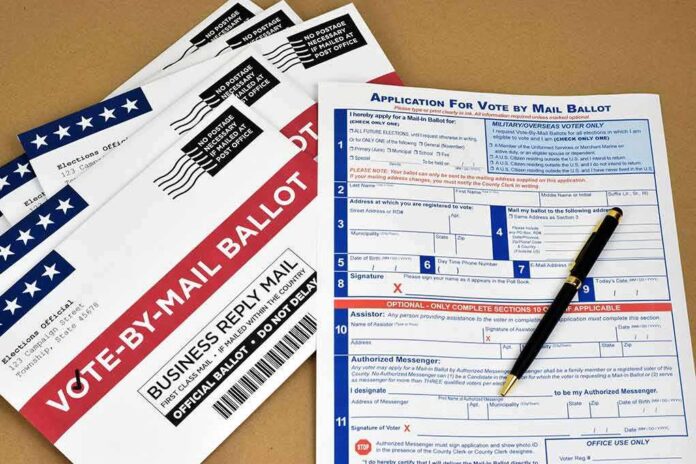
The Justice Department is threatening to criminally prosecute California election officials if they count mail-in ballots tied to more than 20,000 people the federal government calls “likely noncitizens.”
Story Snapshot
- The Justice Department sued California on October 15, seeking to block tabulation of ballots linked to over 20,000 flagged voters.
- Officials gave the state 48 hours to check the list, delivered on a password-protected thumb drive.
- California’s top election official says the federal government never handed over the actual list or proof behind it.
- Los Angeles County’s registrar refused to open the drive, citing data-privacy rules.
- Past federal efforts to flag noncitizen voters in other states have often turned out wrong.
Federal Lawsuit Targets Ballots Days Before an Election
The Justice Department filed a federal lawsuit against California, asking a judge to stop the state from counting mail-in ballots connected to people it believes are noncitizens. The agency says it worked with the Department of Homeland Security to build the list and wants citizenship confirmed before any of those ballots get tabulated in the upcoming federal election.
Federal law bars noncitizens from voting in federal elections, and the Justice Department says the people on its list either registered or actually voted. The lawsuit names California Secretary of State Shirley Weber and Los Angeles County Registrar-Recorder Dean Logan directly, arguing the state had a chance to fix the problem and failed to act.
A 48-Hour Deadline and a Locked Thumb Drive
Acting Deputy Attorney General Trent McCotter sent a letter ordering state and county officials to review the list and set aside any matching ballots. The list reportedly arrived on a password-protected thumb drive, with officials given just 48 hours to check more than 20,000 names before the election.
That tight window left little room for checking individual records, confirming naturalized citizens, or fixing outdated data. The public case materials do not show that any of the 20,000 people received personal notice or a chance to correct the federal government’s classification before their ballots could be set aside.
California Officials Push Back Hard
Weber said the Justice Department never actually gave her office the list of names, despite demanding she act on it. She also said the administration lacked the legal authority to make the request and had failed to produce evidence when she first asked for it back in July.
Los Angeles County Registrar Dean Logan said his office never plugged in the thumb drive, because doing so would break established data-privacy and security rules. That decision left the underlying list unopened and unverified by county staff.
A History of Shaky Noncitizen Lists
This is not the first time a federal noncitizen-voter list has run into trouble. Nevada officials once faced a similar claim involving nearly 16,000 names, and many of those people turned out to be registered legally. Reuters also found that states may have added more than 30,000 noncitizens to voter rolls since 2000 through clerical errors and software glitches, not intentional fraud, and it remains unclear how many of those people ever cast a ballot.
President Donald Trump promised jail for California officials who don’t heed the Department of Justice’s warning that they will be criminally charged if they include the mail-in ballots of the some 200,000 people reportedly identified as potential noncitizens in their midterm…
— Patricia (@Patrici04211472) October 18, 2026
Court records also show the federal government has lost most of the 31 lawsuits it has filed against states over voter rolls in recent years, with judges across the political spectrum rejecting the claims because the records didn’t meet the legal bar required to prove someone was ineligible. That track record raises real questions about how reliable this new list actually is, even as the underlying law against noncitizen voting is not in dispute.
Why This Fight Matters Beyond California
Both sides of the aisle have reason to watch this case closely. Conservatives worried about election integrity see a federal government finally enforcing a law everyone agrees exists. Liberals worried about government overreach see a 48-hour ultimatum, a locked thumb drive, and threats of prosecution aimed at state officials before a single name has been independently verified. Neither side is being unreasonable, and the outcome will likely shape how much Americans trust the next election’s results, no matter who they voted for.
Sources:
pjmedia.com, politico.com, usnews.com, justice.gov, usatoday.com, cnn.com