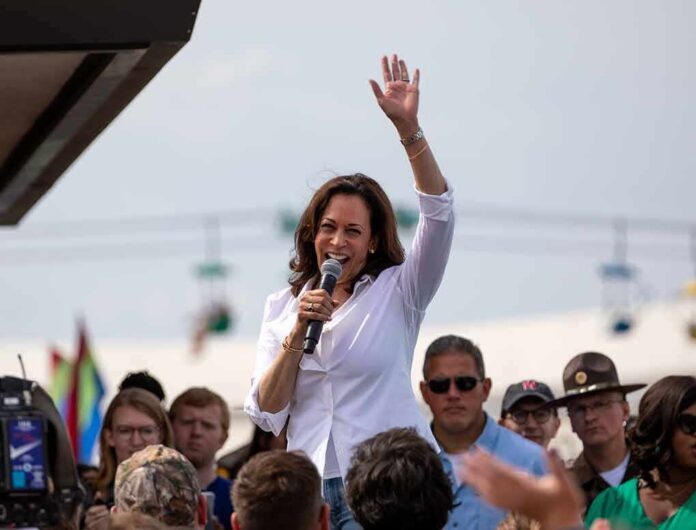
Kamala Harris scheduled a late-October push across multiple states to boost Democratic candidates, signaling a focused midterm sprint with national overtones.
Story Snapshot
- Harris planned October 21–30 travel supporting Democrats in at least five states, plus a Florida virtual stop.
- The itinerary paired her with named candidates and specific events, not just rallies.
- She launched the effort after a Michigan stop for Senate nominee Abdul El-Sayed.
- Harris said her focus is “midterms, midterms, midterms,” while 2028 questions linger.
What Harris Scheduled And Where She Planned To Go
The Associated Press and other outlets reported a schedule from October 21–30 that placed Kamala Harris in Nevada, Mississippi, New Hampshire, Wisconsin, and Georgia, with a virtual event in Florida. The plan listed named Democrats and event purposes, suggesting a structured push, not a loose swing. The schedule came from her office, according to the reporting. One caveat: coverage describes a multistate tour, but counts differ if Florida’s virtual stop is included.
Reported pairings included Nevada gubernatorial candidate Aaron Ford on October 21, Mississippi Senate candidate Scott Colom on October 22, New Hampshire Senate nominee Chris Pappas on October 24, Wisconsin gubernatorial nominee David Crowley on October 26, and Georgia Senator Jon Ossoff starting October 28. The tour also slotted specialized stops such as labor meetings, voter-protection sessions, and a county party gala. That mix ties traditional rallies to ground-game tasks that often decide close races.
How The Push Began And What Harris Said About Her Aim
Harris kicked off her midterm activity with a trip to Michigan to support Senate nominee Abdul El-Sayed, then looked to Nevada and Georgia rallies later in the stretch, according to the Associated Press. When pressed on 2028, Harris kept the focus on the near term, saying, “Right now – midterms, midterms, midterms”. That line underscored a standard playbook: help party candidates now, keep options open later. The outlets framed the travel as both support and a visibility move.
The planned events went beyond speeches. The reported schedule included a Culinary Workers Union meeting in Nevada, a reproductive-care and abortion-rights discussion in New Hampshire, voter-protection events in Georgia, and the Fulton County Democratic Party gala on October 30. Those choices tracked with core Democratic messages in 2026: union engagement, abortion policy, and ballot access. The itinerary aimed to energize local networks that convert attention into turnout when margins are thin.
Why This Matters In A Polarized, High-Stakes Midterm Year
Both parties understand that trusted messengers can lift enthusiasm, but research on surrogates shows mixed impact on actual votes. Some studies find positive shifts in attitudes or turnout; others show little or even negative effects, depending on the audience and context. Harris’s tour, therefore, fits a known pattern: national figures try to shape energy and media coverage, while results hinge on local conditions, field work, and the economy more than on any one surrogate’s presence.
Vice President Kamala Harris is embarking on a 2026 midterm campaign tour from October 21 to October 30 to support Democratic candidates.
Here's her schedule so far: pic.twitter.com/bXxaLCdata
— Fabi 🪷 (@kamala_things) October 14, 2026
For voters frustrated with Washington, the take-away is simple. This tour shows Democrats pushing hard in states that decide Senate and governor races, while Republicans press their own advantages under unified control in Washington. Campaigns invest in unions, voter protection, and issue messaging because they believe ground effort still matters. The open question is not whether the travel occurred, but how much it moved money, volunteers, and turnout compared to the daily pressures families face.
Sources:
twitchy.com, santacruzsentinel.com, unb.com.bd, economictimes.indiatimes.com, washingtonexaminer.com, act.kamalaharris.com