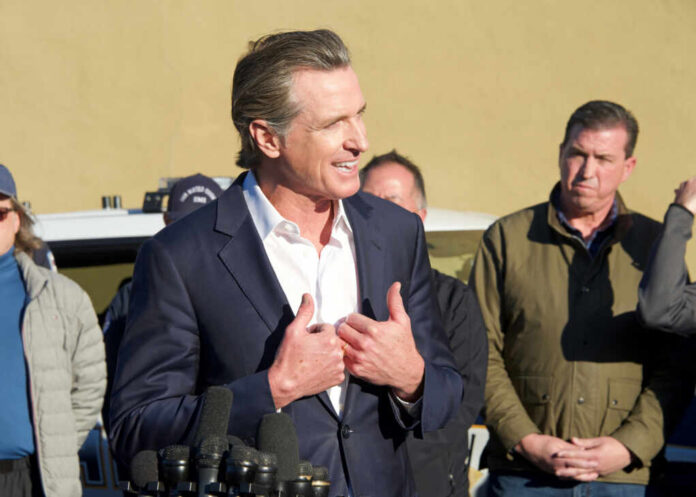
Federal agents flipped a Sacramento insider who secretly recorded calls as a corruption probe closed in on Governor Gavin Newsom’s former chief of staff.
Story Snapshot
- Alexis Podesta, a longtime Newsom ally, wore a wire during the probe, stunning Capitol insiders.
- Dana Williamson pleaded guilty to a scheme tied to Xavier Becerra’s dormant campaign fund, not Newsom’s accounts.
- Williamson’s lawyer says agents asked about Newsom; she denied any knowledge of his wrongdoing.
- Newsom’s office says there is no sign he is a target, but headlines keep the pressure on.
What Investigators Did And Why It Shocked Sacramento
Federal investigators used Alexis Podesta, a Newsom ally, to secretly record calls tied to a corruption probe. The move explained why many lobbyists and insiders later got letters saying their calls were intercepted, which spread fear across the Capitol. The targets were connected to Dana Williamson, Governor Newsom’s former chief of staff. Agents used the recordings to track how aides talked about money, records, and sensitive state matters during the period under scrutiny.
Records say Williamson discussed public records strategy with Podesta while the case was active. That detail, plus the covert taping, raised alarms about how official information was handled inside the governor’s orbit. Many see this as a sign that power players treat rules like a game. Critics on the right call it proof of a club that protects itself. Critics on the left say it shows a system that hides truth from voters. Both sides worry insiders face different rules than the public.
What The Charges Actually Cover
Court filings show Williamson pleaded guilty to conspiring to commit bank and wire fraud. The scheme moved about two hundred twenty five thousand dollars from a dormant campaign account for Xavier Becerra, not from Newsom’s personal or official accounts. Two associates, Greg Campbell and Sean McCluskie, also pleaded guilty and agreed to help investigators. Prosecutors have not accused Newsom or Becerra of wrongdoing in the case described so far. These facts point to a plot among political aides rather than a broader plan.
Williamson’s lawyer says the Federal Bureau of Investigation (FBI) asked her to help with a separate, pending probe into Newsom. He says she told agents she had no knowledge of any wrongdoing by the governor. Newsom’s office says it placed Williamson on leave after learning of the case and has no sign that the governor is a target. That mix of facts drives the gap between legal risk and political damage. The law points to aides. The headlines still land on the boss.
Why Podesta’s Role Matters Now
Lawyers say Podesta is an unindicted co-conspirator who cooperated with the probe and was not charged. Her recordings helped officials map out how the network worked. But her full testimony and records have not been made public. That secrecy fuels new questions. What did Podesta hear? Who knew what, and when? Until the files and tapes are released, the public will not see the full picture of how the scheme ran or how far influence reached.
Some reporting says Williamson shared confidential state information with Podesta about the Activision Blizzard court fight while she was chief of staff. Newsom’s office says it did not know about that sharing. A Newsom representative also voiced doubt about a Department of Justice run by a political rival, which raises claims of motive from both parties. The facts do not prove a larger cover up. But they do show sloppy guardrails around sensitive work that should serve the public, not insiders.
What Both Sides Of The Aisle Should Watch
Voters have seen this pattern before. A top aide pleads to fraud. The leader is not charged. Yet the scandal hurts trust anyway. Past cases show that legal lines can be narrow, while the public’s duty-of-care test is much broader. People ask basic questions. Who hired these aides? Who set the rules? Who checked the books? Until those answers are clear, suspicion grows, and faith in government shrinks. That is the cost of weak oversight, not just bad actors.
🚨 FBI infiltrated Gavin Newsom’s inner circle. Longtime Dem ally & Newsom appointee Alexis Podesta secretly wore a wire for federal investigators, recording conversations with his former Chief of Staff Dana Williamson as early as June 2024.
Williamson pleaded guilty May 14,… https://t.co/gxtqvILI2t
— chris 🇺🇸 (@microfire21) July 3, 2026
Three steps could bring clarity. First, release the wire recordings and related transcripts, with proper redactions, so people can judge the context. Second, review all official and political communications between Williamson, Campbell, McCluskie, Podesta, and the governor’s office during the key years to spot gaps or patterns. Third, publish a plain-language report on internal controls over campaign and public records. Sunlight will not fix past acts, but it can stop the next one before it starts.
Sources:
redstate.com, sacbee.com, facebook.com