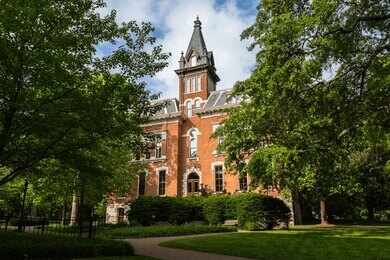
When a major Vanderbilt–Washington University report says politics are replacing truth in the humanities, and the very scholars it criticizes fire back that their work has been distorted, it exposes a deeper crisis of trust in higher education itself.
Story Snapshot
- A chancellor-commissioned Vanderbilt–Washington University report says many humanities fields now judge scholarship by politics instead of evidence.
- The report claims a “toxic” climate where dissenting views on hot-button issues are routinely suppressed and punished.
- Cited professors and critics insist the report cherry-picks, misreads their work, and ignores real problems like funding cuts and contingent labor.
- The fight over the report taps a wider worry on left and right that universities serve ideological and elite interests instead of open inquiry and the common good.
What the Vanderbilt–Washington Report Says Is Going Wrong
The Vanderbilt–Washington University report, led by senior philosophers including Paul Boghossian and Kwame Anthony Appiah, argues that many humanities disciplines have shifted from seeking understanding of the human world to chasing political goals linked to progressive social justice. The authors say standards for judging scholarship are being “distorted” to favor work seen as useful to social justice and to block “politically unacceptable” research from being published, taught, or rewarded. They claim this change is rooted in a broad rejection of scholarly objectivity in favor of judging knowledge on political grounds.
In the report and in a follow-up public discussion, the committee says every field they examined—philosophy, anthropology, sociology, history, literary studies, and music studies—shows “warning signs” of declining standards. They describe four patterns: treating controversial questions as settled to shut down debate, openly endorsing political goals as the point of research, marking some lines of inquiry as off-limits with backlash for those who cross them, and rejecting the very idea that evidence can be weighed apart from politics. In their view, this adds up to an ecosystem where knowledge is often subordinated to activism, and where scholars feel they must conform to dominant views to survive.
Why Faculty and Critics Say the Report Gets the Humanities Wrong
Humanities professors named in the report responded with sharp public criticism, saying it misrepresents their scholarship and strips it of nuance. In Inside Higher Ed, cited scholars argued the authors built sweeping claims on a handful of provocative lines, ignoring the broader context of their work and the field. Independent critics, including Paul D. F. on Substack and Paul Tiyambe Zeleza on LinkedIn, describe the report as part of a familiar “alarm” genre that conflates diverse scholarship—on topics like decolonization, feminism, and antiracism—with mere political bias. They say the authors’ own ideological worries about social justice shape what they see as “bad” scholarship.
These critics also stress what the report leaves out. Zeleza and others argue that real damage to the humanities comes from deep structural forces: years of funding cuts, the rise of poorly paid adjunct teaching, and pressure to make research “relevant” to lawmakers and donors. Opinion pieces in Inside Higher Ed note that the report pays little attention to these economic and institutional drivers and instead treats politics inside the disciplines as the main culprit. For many faculty, that looks backwards: they see right-wing political attacks on teaching about race and gender, and state laws that restrict what can be said in classrooms, as the more urgent threat to academic freedom.
How This Clash Reflects a Larger Crisis of Trust in Universities
This fight over the Vanderbilt report is landing in a country already deeply split over higher education. Surveys and commentary show public confidence in colleges has dropped sharply, with “political agendas” often cited as a top worry. Research on faculty politics finds that humanities and many social science departments lean heavily to the left, with a growing share of professors identifying as liberal or far left. Some studies and essays argue this imbalance has helped fuel hiring discrimination against non-left scholars and encouraged classroom approaches that center activism. That feeds long-standing conservative fears that universities promote progressive politics rather than neutral scholarship.
At the same time, many faculty and groups like the American Association of University Professors see a different danger: direct political interference from conservative legislatures. They point to “divisive concepts” bills, attacks on diversity, equity, and inclusion programs, and efforts to weaken tenure as attempts to force campuses to serve partisan aims. Washington University in St. Louis’s chancellor has warned about “creeping politicization” from all sides and called for universities to recommit to institutional neutrality and excellence “free of political criteria.” In that context, the Vanderbilt report can look to some like a needed wake-up call about internal ideological drift, and to others like an elite document that distracts from external power plays and economic neglect.
What Both Sides Reveal About the Deep State of Higher Education
For many Americans watching this fight, the details of anthropology or literary theory are less important than what the clash signals. On one side, a high-level committee backed by wealthy private universities says some scholarship has become “agitprop” and “jargon-laden nonsense,” and warns of a toxic climate that punishes dissent. On the other side, working scholars say the committee itself cherry-picks and misreads their work, and that the real crisis is a system that treats both students and faculty as disposable while elites argue over ideology. Both stories point to a university system that too often feels answerable to donors, administrators, and political activists rather than to ordinary citizens and the shared search for truth.
Higher education's public trust has collapsed. A decade ago nearly 60% of Americans had high confidence in it. Last year that fell to 42%, with 70% saying the sector is moving in the wrong direction (Horowitch, 2026).
Reports from Yale University, Vanderbilt University and…
— Adam Hall (@longlanellc) June 28, 2026
For conservative readers angry about left-wing campus culture, the report validates long-standing worries that many departments now reward activism over accuracy and shut out different views. For liberal readers alarmed by book bans and gag orders, the backlash to the report looks like yet another move to paint social justice work as illegitimate, while real threats—like state interference and shrinking budgets—go unaddressed. Yet behind these differences sits a concern shared across the spectrum: higher education is drifting away from its basic mission of free inquiry and honest debate. Whether the Vanderbilt report is seen as a cure or a symptom, the fight around it makes clear that many Americans no longer trust universities to stand above politics at all.
Sources:
washingtontimes.com, paulddf.substack.com, vanderbilt.edu, youtube.com, insidehighered.com, vanderbilthustler.com, reddit.com, hawaii.edu, linkedin.com, chronicle.com, gisreportsonline.com, independent.org, phys.org, aaup.org