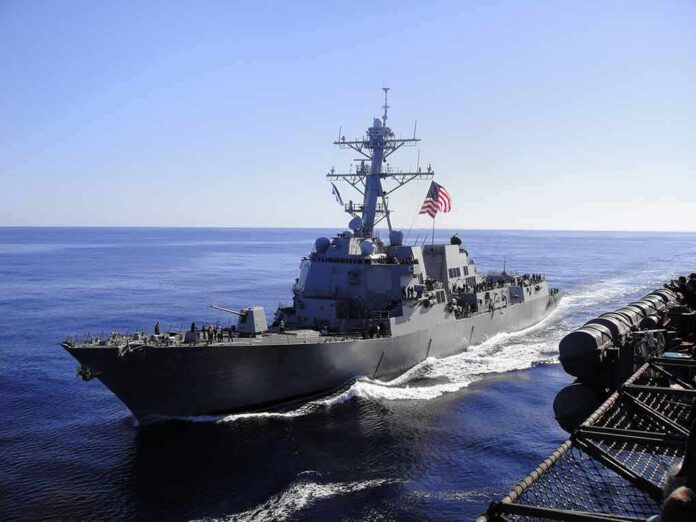
President Trump warned that the United States would bomb Oman if it obstructs efforts to keep the Strait of Hormuz open and free, signaling a hard line to protect global energy routes and American interests.
Story Highlights
- Trump said Oman must not block U.S. plans to reopen the Strait of Hormuz or face bombing.
- Reports tied the warning to talks about tolls or joint control over the vital waterway.
- The strait is a key global oil route where international transit passage norms apply.
- Scholars say threats work when seen as credible, consistent, and forceful.
Trump’s Warning Focused On Keeping Hormuz Open
President Trump stated that Oman must not “get in the way” of U.S. efforts to reopen the Strait of Hormuz and end the fight with Iran, or the United States would bomb the country, according to reporting sourced to Fox News and carried by a major network live blog. He previously said Oman would “behave” or the United States would “blow them up,” during on-camera remarks at the White House, underscoring that no country will control the strait or charge tolls over this key sea route.
Officials and media accounts linked the comments to concerns about Iran and Oman discussing joint control or tolls over shipping lanes, which would raise costs and risk for oil and goods moving through the chokepoint. Trump framed the U.S. stance as simple: the strait must stay open to all lawful traffic, without new fees or vetoes that could throttle supply lines and spike energy costs for American families. The message was direct pressure to deter any interference along that corridor.
Why The Strait Of Hormuz Matters To Americans
The Strait of Hormuz is one of the world’s most critical energy passages. Policy experts argue any postwar plan should protect “transit passage” rules, restore safe use of the original shipping routes, and reject mandatory fees or permanent control ploys by regional actors. When the flow of oil and goods slows, fuel prices climb, shipping insurance jumps, and families feel it at the pump. Trump’s warning sought to shield Americans from more pain caused by foreign tolls or blockades.
Energy disruptions hit fixed-income seniors, truckers, and small businesses first. High fuel costs spread into groceries, heating, and every shipped product. Conservatives know this cycle well after years of price shocks tied to weak policies and global chaos. By drawing a red line at Hormuz, the administration aimed to keep markets steady and stop bad actors from holding U.S. consumers hostage. That approach tracks with a security-first posture that prizes deterrence over endless concessions.
Coercive Diplomacy And The Question Of Credibility
Defense scholars say threats can change behavior when the target sees real risk and clear intent. Research identifies four key factors for success: relative menace, credibility, consistency, and cumulative pressure. Trump’s public warning attempted to stack those factors by pairing strong language with a visible national interest: free transit for a strategic waterway. The theory is simple: make the costs of obstruction higher than any benefit.
Experts also stress that international rules back open passage through Hormuz. Analyses emphasize maintaining transit norms, rejecting tolls, and ensuring safe return to standard routes after conflict. In that context, the United States asserted it would not accept side deals that tax global shipping or hand out veto power over traffic. The administration’s stance told allies and rivals that America will defend free movement and the economic lifelines tied to it.
What Comes Next For Oman, Iran, And U.S. Policy
Next steps depend on whether Oman pursues any plan that limits passage or joins Iranian efforts to tax or throttle the strait. Trump’s language signaled the line he will enforce if talks fail or if new barriers appear. The aim is to prevent a slow squeeze on shipping that could fuel price spikes at home. That is why the message centered on a simple goal: keep the sea lanes open, stop new tolls, and block coercion over a global energy artery.
It's an uphill battle to stop the madness unless we blue tsunami the entire country. Vote the MAGA GOP out.
Congressional Democrats plan Oman war powers push after Trump threatens bombing
https://t.co/GbZyfxGuf5— Thomas Reich (@gollum1419_g) August 18, 2026
If Oman stays out of Iran’s push, pressure drops and commercial traffic can normalize sooner. If it does not, Washington has framed the response as swift and forceful. For conservatives, the calculus is about peace through strength, not endless drift. Clear red lines protect American wallets, deter regional adventurism, and defend a rules-based passage that keeps fuel flowing and families working without another preventable hit to their budgets.
Sources:
theguardian.com, foxnews.com, politico.com