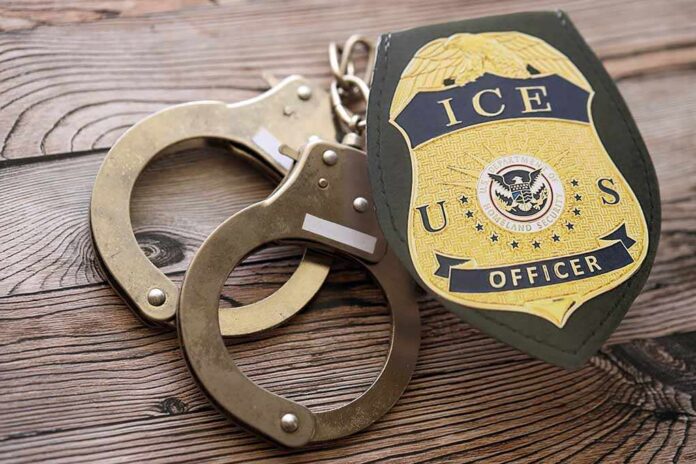
Homeland Security says a new nationwide push has begun to arrest people who entered the country unlawfully and then illegally tapped food aid meant for Americans.
Story Snapshot
- Homeland Security confirmed a national Immigration and Customs Enforcement operation focused on alleged food aid fraud tied to unlawful presence.
- Officials named several arrestees and called this the first wave of a larger crackdown.
- The effort targets misuse of the Supplemental Nutrition Assistance Program benefits, not routine payment errors.
- Recent federal cases show real schemes involving identity theft and skimming also hit this program.
What DHS Says Is Happening Now
The Department of Homeland Security said Immigration and Customs Enforcement began a large, nationwide operation that aims at people who entered the United States unlawfully and then obtained Supplemental Nutrition Assistance Program benefits through fraud. Officials described the first arrests as an opening step in a larger, sustained push. The public release named several people arrested and tied the action to protecting taxpayer funds and program integrity.
Coverage in national and ethnic media echoed the announcement and listed several arrestees by name, including individuals from Haiti and Cuba. Reports said the operation would expand, and highlighted that some named arrestees also had prior arrests for other offenses, according to summaries of the agency’s information shared with reporters.
Who Is Eligible For SNAP And Why That Matters
Federal law sets strict rules on who can receive Supplemental Nutrition Assistance Program help. United States citizens and many lawful residents may qualify, while people who are unlawfully present are not eligible. The United States Department of Agriculture tracks payment errors, but it warns those rates are not fraud rates. Payment errors also include mistakes by applicants and by state agencies that run the program.
The Department of Homeland Security’s message separates unlawful presence from criminal fraud by stressing alleged intentional misuse. That framing matters because the numbers that appear in public debate often mix categories. Payment errors can show up even when no one tried to cheat. Fraud cases, by contrast, involve knowing deception to gain benefits. The new operation focuses on that smaller but serious slice that can erode public trust and drain funds.
Why This Crackdown Fits A Wider Pattern
Recent Justice Department cases show that real Supplemental Nutrition Assistance Program crimes occur and can be complex. In one update, federal prosecutors described schemes that used skimming devices to steal benefits from families’ electronic cards. These cases require cross-agency work and show how criminals exploit gaps in payment systems. Officials argue that stronger enforcement helps deter copycats and protects help for those who qualify under the law.
The Department of Homeland Security also links this operation to other recent arrests of noncitizens with criminal records, arguing that focused enforcement protects communities and taxpayers. While those earlier arrests were not only about benefits, they show how the agency stacks priorities: remove people who both lack legal status and, in its view, harm public safety or public programs. That layered approach is central to the current enforcement message.
What Comes Next For Taxpayers And Families
Officials signaled this will not be a one-week sweep but a longer campaign. That means more identity checks, more coordination with state benefit offices, and more referrals to federal prosecutors when evidence supports fraud charges. The goal, as stated, is to close off theft and keep food aid flowing to eligible households. People who disagree on immigration policy often still agree that public benefits should go to those who meet the rules.
🚨 NEWS UPDATE: DHS launches nationwide operation targeting illegal immigrants accused of SNAP fraud.
ICE has confirmed multiple arrests in the crackdown so far, including four Haitian nationals and one Cuban national.
Homeland Security Secretary Markwayne Mullin pic.twitter.com/jlw3m8jpVt— Worldwide AJ (@WorldwideAJ611) October 21, 2026
For families on tight budgets, accurate screening and faster fraud detection help keep stores paid and cards working. For taxpayers, the line between errors and fraud matters because it shapes how success is measured. Federal reviews track improper payments as a broad category, but they do not all signal crimes. Clearer reporting can help the public judge whether enforcement hits the real problem and whether it respects due process for those accused.
Sources:
redstate.com, forth.news, justice.gov, dhs.gov, streamlinefeed.co.ke, us.headtopics.com