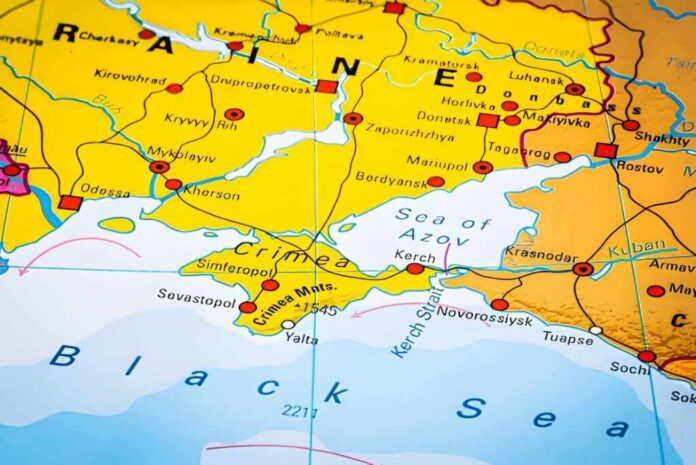
Russia’s shutdown of key Azov Sea routes after Ukrainian drone strikes is choking civilian shipping and spotlighting how wars now hit everyday trade.
Story Snapshot
- Ukraine used sea drones to hit dozens of Russia-linked ships near Crimea and the Sea of Azov.
- Russia halted traffic on vital Azov routes, stopping new passage requests near the Crimean Bridge.
- Claims of “78 ships hit” remain unverified; confirmed tallies are lower and vary by source.
- Both sides frame the fight as lawful; proof on cargo types and targets is still thin.
What triggered Russia’s closures
Ukrainian forces launched a rapid series of drone strikes on Russia-linked vessels near Crimea and in the Sea of Azov. Ukraine’s Defense Ministry said it hit at least 36 ships in four days, including 32 tankers tied to the so-called “shadow fleet” that it claims carry fuel to Crimea. Maritime analysts also reported 21 Russian-flagged vessels hit within 72 hours. These attacks focused on tankers and bulkers, striking bridges and crew areas to disable ships rather than sink them.
Russia responded by curbing maritime movement where it feels most exposed. Reporting indicated Russia temporarily closed navigation on the canal between the Don River and the Sea of Azov and stopped accepting new transit applications through the Crimean Bridge approaches. That action slowed or halted exports moving through those chokepoints. The move aimed to shield energy flows to Crimea and reduce the risk from drone swarms that can reach ships in shallow, narrow waters.
Conflicting tallies and what we can verify
Some commentators and social posts claim 70-plus ships were hit. The available, sourced figures are smaller and inconsistent. One account cites 21 attacks over three days; another cites 36 in four days, with most labeled as “shadow fleet” tankers. We do not have an official Russian notice detailing the closures or a ship-by-ship public list confirming all strikes. That gap leaves room for inflated or lowballed numbers by each side’s media allies.
Ukraine’s case rests on the idea that sanction-busting tankers are lawful targets because they fund Russia’s war. Ukraine’s Security Service and Defense Ministry have both pushed that view in past statements and operations against “shadow fleet” vessels. Critics argue many of these ships are still civilian-owned and move commercial fuel, even if under sanctions, so attacks and broad closures risk civilian trade. Independent maritime security firms have not released comprehensive public tallies for the latest strikes to settle the dispute.
How the closures hit everyday trade
Shutting the Don–Azov link and limiting passage near the Crimean Bridge strands ships, adds wait times, and raises costs. Small delays ripple through ports and railheads that supply these routes. Energy and grain flows are sensitive to such chokepoints. Past research on maritime chokepoints shows geopolitical conflict is a leading cause of shipping disruption. When routes close, insurers raise rates, and shippers reroute, which can lift prices for fuel and food far from the war zone.
Daily Ukraine map thread for Saturday 11th July 2026
Strikes on Russian shipping (high-resolution images of two of the vessels struck are below) across the Sea of Azov have prompted Russia to temporarily halt transit through the Kerch Strait. The closure will significantly… pic.twitter.com/oFD3d47kkC
— Ukraine Control Map (@UAControlMap) July 12, 2026
Americans on the left and right know who pays in the end: families, farmers, and small businesses. Higher marine insurance, longer voyages, and port backlogs show up in freight bills and at the pump. Leaders often talk about “security” and “sanctions,” but the bill lands on people who already face high costs. This closure fits a pattern seen in the Red Sea and elsewhere, where drones and cheap weapons force expensive detours that global companies pass to consumers.
Why both narratives leave key gaps
Russia points to security and sabotage risks but has not shown a public, detailed decree laying out zones, dates, and legal basis for stopping civilian traffic. Ukraine argues the tankers are part of a war economy, but public evidence on each ship’s cargo and ownership is thin. The sharpest claims on either side need better proof. Satellite tracking, port records, and insurer filings could verify how many ships were hit and which cargoes they carried.
Until independent data is released, two facts stand: drones now give weaker forces a long reach at sea, and chokepoint closures punish civilian trade first. That should worry anyone who remembers how supply shocks feed inflation. Voters see elites and agencies manage crises after the damage is done. They want practical steps that harden ports, protect shipping lanes, and keep basic goods moving without political spin or information fog.
What to watch next
Watch for an official notice from Russia’s maritime agency detailing the closure scope and duration. Look for third-party maritime security reports that list specific ships, damage levels, and cargo types during the July strikes. Track satellite Automatic Identification System data for vessel slowdowns or rerouting around the Azov and Black Sea. If closures spread or persist, expect higher freight rates and fresh pressure on energy prices into the fall.
Sources:
redstate.com, youtube.com, pravda.com.ua, upstreamonline.com, facebook.com, czapp.com