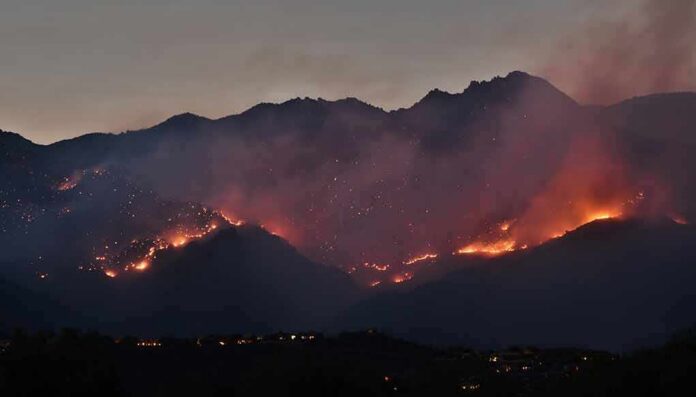
As Utah’s Cottonwood Fire wipes out a ski resort and more than 100 properties in a blaze officials say was human-caused, many Americans see yet another sign that those in power can’t or won’t protect basic public safety.
Story Snapshot
- Investigators say the massive Cottonwood Fire is human-caused, though the exact trigger is still under review.
- Governor Spencer Cox warns the blaze may be the most destructive wildfire in Utah history based on homes lost.
- Eagle Point Resort, a key local ski and tourism hub, was destroyed along with scores of nearby properties.
- Federal emergency officials approved major cost-sharing for firefighting as damage assessments slowly come in.
How the Cottonwood Fire Started and Why Officials Blame People
Utah fire officials have classified the Cottonwood Fire as human-caused, saying lightning and other natural causes have been ruled out, even as they continue to investigate the exact spark. The fire exploded across Beaver and Piute counties, racing through dry fuels and strong winds, and quickly grew past 59,000 acres with no containment early on. One social media post claimed an unattended brush pile started the blaze, but official channels say the precise ignition source remains under review, which has fueled public confusion.
National fire investigators say this pattern is common: they can usually tell early if people, not nature, started a wildfire, based on burn patterns and weather data, even when they do not yet know whether it was a vehicle, a campfire, or debris burning that lit the first flame. Across the West, most wildfires are human-caused, and Utah’s own governor has warned that more than three out of four recent fires in the state trace back to people’s actions. That base reality turns every loose burn pile, spark, or speeding truck into a potential disaster.
The Damage: A Ski Resort Lost and a Community Changed
As the Cottonwood Fire raced through the mountains, it destroyed Eagle Point Resort, a major ski area and year-round gathering spot for locals and visitors. Cabins and homes around the resort burned, with state leaders reporting that more than 100 properties have been damaged or destroyed so far. Property assessment crews only began full on-the-ground counts after flames passed, so those numbers are still early and may rise as teams reach more remote structures. For many families, years of savings and work vanished in a single day.
Governor Spencer Cox has said that, based on homes lost, this fire has a “very good chance” of being the most destructive in Utah’s history, though he is careful to call that judgment “potential” until official tallies are complete. That cautious wording reflects the tension between what people can see with their own eyes and what the government will formally put on paper. Residents watch videos of cabins burning and hear from friends who lost everything, while agencies insist the final damage count could take weeks. Both can be true, but the delay feeds distrust that many already feel.
Money, Federal Help, and the Sense Government Shows Up Late
As flames surged, the Federal Emergency Management Agency (FEMA) approved a Fire Management Assistance Grant that will cover about 75 percent of Utah’s eligible firefighting costs for the Cottonwood Fire. That decision confirms Washington sees the fire as severe, but it also highlights a gap. Federal money usually flows faster to cover suppression—the planes, crews, and bulldozers—than it does to rebuild homes, small businesses, and local water systems that fires damage. People whose cabins and trailers turned to ash often end up fighting insurance companies and loan officers alone.
Tourism cancellations have already begun near the burn area as visitors see the smoke and dramatic aerial footage online and decide to stay away. For rural Utah, that means the fire’s impact could last years: fewer ski trips, fewer summer rentals, less income to keep small shops open. Many locals on both the right and left look at this and see a pattern they know too well. Elites in big cities talk about climate policy and forest plans. But when a fire hits, it is regular families who lose homes, while governments argue over budgets, grants, and liability.
Shared Frustration: Human-Caused Fire in a System That Does Not Learn
The Cottonwood Fire also fits into a broader story about how modern wildfires are changing. Scientists and federal agencies say hotter, drier conditions are making “fire weather” more common, and human activity is the main driver of that shift. At the same time, land managers note that most specific ignitions still come down to everyday human behavior on the ground—vehicles dragging chains, equipment throwing sparks, unsafe debris burns, or careless recreation. In other words, the system is more fragile, and small mistakes now carry bigger costs.
For many Americans, that mix of factors deepens anger at a government they already see as captured by special interests. Conservatives ask why federal and state leaders push costly global climate agendas yet struggle to clear dead fuel, manage forests, or hold careless people accountable when fires are proven human-caused. Liberals ask why safety rules, rural infrastructure, and social support lag while wealthy landowners rebuild faster. The Cottonwood Fire, with its human-caused label, destroyed resort, and slow official damage count, lands right in the middle of that distrust.
Sources:
science.nasa.gov, kutv.com, youtube.com, ksl.com, facebook.com, forestwatch.org, attheu.utah.edu