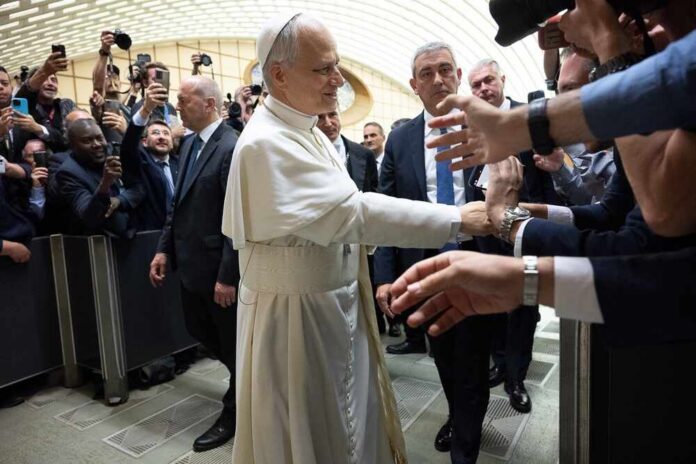
Pope Leo XIV’s first-ever papal visit to Algeria is doubling as a pointed warning to a world sliding from diplomacy into retaliation and wider war.
Quick Take
- Pope Leo XIV opened his first apostolic tour of Africa on April 13, 2026, landing in Algeria—marking the first papal visit to the country.
- Leo’s message centered on peace rooted in justice, forgiveness, and breaking cycles of retaliation amid conflicts tied to Iran, Gaza, Lebanon, and Ukraine.
- The Vatican framed the trip as “A pilgrim in Africa,” spanning Algeria, Cameroon, Angola, and Equatorial Guinea with about 25 speeches across multiple languages.
- The tour spotlights Africa’s rapidly growing Catholic population alongside ongoing concerns about persecution and instability in parts of the continent.
Algeria Visit Signals a New Vatican Focus on Africa’s Growing Church
Pope Leo XIV arrived in Algiers on April 13 to begin his first apostolic journey to Africa, a trip the Vatican is presenting as “A pilgrim in Africa.” Multiple reports describe the visit as historic because Algeria has never hosted a pope before. The itinerary begins with major public remarks and interfaith events, then moves on to Cameroon, Angola, and Equatorial Guinea over roughly 10 to 11 days.
Leo’s Africa schedule is also built to reflect the Church’s shifting center of gravity. Coverage notes that Africa now represents a significant and fast-growing share of the world’s Catholics, a long-term demographic trend that increasingly shapes Vatican priorities. For many believers, that growth is occurring alongside political volatility, poverty, and religious pressure in certain regions—conditions that make a pope’s personal presence more than ceremonial.
Peace Message Targets Retaliation Cycles in Today’s Flashpoint Wars
Leo used the opening of the trip to renew calls for peace, describing peace as more than a pause in violence. Reports from his early speeches emphasize themes of justice, mercy, and forgiveness, with language aimed at stopping tit-for-tat retaliation. The public framing matters because it places moral pressure on leaders who justify escalation as necessary payback, and it challenges societies to choose restraint even when anger is politically profitable.
Several accounts link the pope’s remarks to multiple live conflicts, including violence connected to Iran as well as the wars and tensions involving Gaza, Lebanon, and Ukraine. Because the Vatican does not command armies or economic sanctions, its influence is primarily rhetorical and diplomatic. Even so, the pope’s words can shape elite opinion, give cover to negotiators seeking off-ramps, and remind the public that “winning” a cycle of vengeance can still mean losing a generation.
“Neocolonial Tendencies” and the Risk of Elite Politics Over Local Sovereignty
Leo’s early messages in Algeria also included criticism of “neocolonial tendencies,” a phrase that resonates across Africa where resource extraction and outside influence are perennial issues. While the language is broad, the underlying warning is straightforward: powerful governments, multinational institutions, and corporate interests can pressure weaker states in ways that hollow out sovereignty and fuel resentment. In practical terms, that resentment can destabilize governments and intensify migration pressures.
For U.S. readers, the takeaway is not that America should withdraw from the world, but that foreign policy is judged by results on the ground. When Western engagement looks like moralizing from afar, funding favored factions, or enriching connected players, it can feed the same anti-elite anger Americans feel at home. Leo’s emphasis on justice and dignity aligns with a basic principle: local communities should not be treated as collateral for global agendas.
Interfaith Outreach in a Muslim-Majority Country Meets Security and Minority Realities
Algeria’s role in the trip is symbolic and strategic. Reports describe a visit to Algiers’ Great Mosque as part of an interfaith outreach effort in a Muslim-majority nation where Catholics are a small minority. That kind of engagement can lower tensions and reduce the risk of religious conflict being exploited by political actors. It also signals that the Vatican sees dialogue as essential where coexistence is fragile and suspicion spreads quickly online.
At the same time, the trip is unfolding amid broader concerns about Christian persecution in parts of Africa. Reporting tied to the tour references lethal attacks against Christians, underscoring why Vatican visibility matters to communities that feel forgotten by international institutions. The pope can highlight these realities without claiming to solve them, but public attention can pressure governments to improve protection and discourage media blackouts that let violence continue quietly.
Sources:
Pope Leo XIV renews call for peace ahead of Africa trip
Pope Leo XIV visit fastest-growing Catholic continent during 4-nation Africa trip
Pope Leo XIV’s African pilgrimage centers on peace, forgiveness, and mission