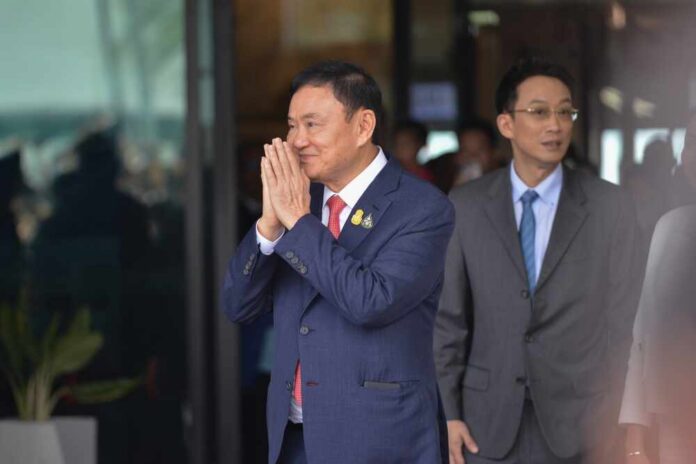
Thailand’s former Prime Minister Thaksin Shinawatra walked free from a Bangkok prison after serving just eight months of a one-year corruption sentence, raising questions about whether powerful elites play by different rules than ordinary citizens.
Story Snapshot
- Thaksin Shinawatra released on parole May 11, 2026 after serving two-thirds of a one-year corruption sentence
- The 76-year-old political dynasty patriarch will wear an electronic ankle monitor until September 2026
- Release comes as his family’s Pheu Thai Party takes reduced role in conservative-led government coalition
- 858 other inmates received parole under same two-thirds policy, yet scrutiny focuses on preferential treatment allegations
Elite Justice or Standard Procedure
Thaksin Shinawatra departed a Bangkok prison on the morning of May 11, 2026, greeted by hundreds of supporters and family members amid tight security. The telecom tycoon-turned-politician served approximately eight months of a one-year sentence for corruption convictions stemming from his tenure as Prime Minister from 2001-2006. Thailand’s Department of Corrections approved parole based on standard policy allowing release after serving two-thirds of a sentence. Yet critics question whether Thailand’s justice system operates equally for all citizens or provides preferential treatment to the politically connected.
From Exile to Incarceration to Freedom
The former prime minister’s journey back to freedom follows a tumultuous path. Ousted in a 2006 military coup, Thaksin spent 17 years in self-imposed exile facing multiple convictions for abuse of power and conflicts of interest. He returned to Thailand in August 2024 and was immediately detained. A controversial royal pardon reduced his original eight-year sentence to just one year in September 2024. This compressed timeline allowed Thaksin to qualify for parole after serving only months behind bars, a stark contrast to the years many convicted officials serve.
Political Dynasty Maintains Influence
Thaksin’s release occurs against a backdrop of shifting political alliances that highlight the entrenched power of Thailand’s political elite. His daughter Paetongtarn Shinawatra previously served as Prime Minister and currently leads the Pheu Thai Party, the family’s political vehicle. The party now occupies a junior role in a coalition dominated by military-backed conservative factions, the very forces that orchestrated coups against both Thaksin and his sister Yingluck, who served as PM from 2011-2014. This arrangement raises concerns about backroom deals between establishment powers prioritizing their own interests over accountability to voters.
Populism Versus Establishment Control
Thaksin built a devoted following among Thailand’s rural poor through populist policies including universal healthcare and agricultural subsidies. His supporters, known as Red Shirts, view him as a champion fighting entrenched royalist and military interests. The massive crowd that gathered at the prison demonstrates this enduring loyalty. However, his opponents point to corruption allegations and authoritarian tendencies as evidence that his populism masked self-serving governance. This divide reflects a broader pattern familiar to Americans: establishment elites versus grassroots movements, with ordinary citizens caught between competing factions that often prioritize power over principle.
Probation Limits and Political Future
Thaksin will complete his sentence under electronic monitoring until September 2026, theoretically restricting his movements and political activities. His legal team insists the parole follows standard procedures applied to 858 inmates released under the same criteria. Whether he returns to active politics remains uncertain, though analysts suggest his influence through family members could continue shaping Thai governance. The situation underscores a frustrating reality for citizens across the political spectrum: those with wealth and connections navigate legal systems differently than average people, undermining faith in equal justice and democratic institutions meant to serve all citizens equally.
Thailand's former PM Thaksin Shinawatra released from prison https://t.co/KljlZ3b5EW
— Reuters Asia (@ReutersAsia) May 11, 2026
Thailand’s complex political landscape reflects tensions between traditional power structures and demands for accountability that resonate globally. Thaksin’s release may energize his base while reigniting concerns about elite impunity. As coalition dynamics remain fragile, ordinary Thais watching this spectacle might reasonably wonder whether their government serves the people or perpetuates a system where the powerful write their own rules. The ankle monitor Thaksin wears symbolizes limited accountability, but full freedom awaits in just months for a man whose convictions would have kept less connected individuals imprisoned far longer.
Sources:
Thailand’s former Prime Minister Thaksin Shinawatra released on parole – Anadolu Agency
Video: Former Thailand PM Thaksin Shinawatra freed from prison – LiveTube
Thai PM Thaksin parole prison – The Japan Times