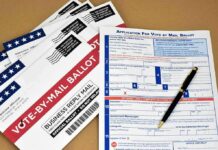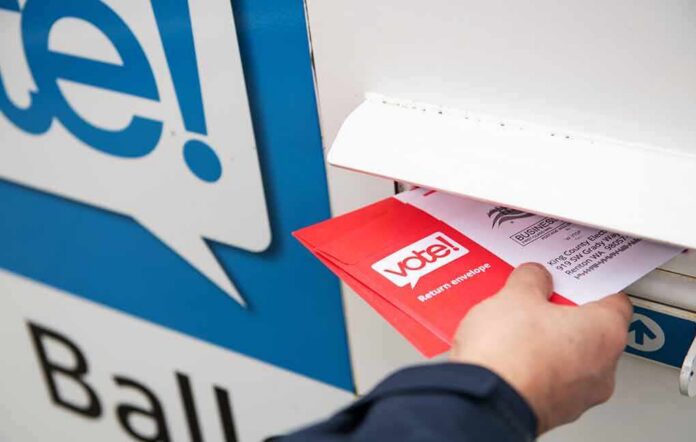
The Supreme Court stopped new federal mail-ballot limits from taking effect before the midterms, keeping existing voting rules in place while legal fights continue.
Story Snapshot
- The Supreme Court left in place lower-court orders blocking the Postal Service’s new ballot rule for 2026.
- The ruling affects November’s elections but does not decide if the rule is legal long term.
- A federal appeals court also refused to revive the rule during the challenge.
- States and advocacy groups argue the federal government cannot set voting rules through the mail system.
What The Supreme Court Actually Did
The Supreme Court issued a short order that keeps a lower-court block on the Postal Service’s ballot rule in place for now. The order means the agency cannot enforce new design and rejection standards for ballot mail before the midterm elections. The justices did not decide who is right under the law. They only decided the rule should not take effect before November, while the case moves forward in lower courts.
Earlier in the cycle, the Court allowed parts of President Trump’s order to proceed in a different dispute, which prompted new hearings below. After those hearings, a district judge in Boston blocked core parts of the Postal Service’s final rule, and kept that block in place following fuller briefing. Monday’s order restores the legal status quo before the midterms, to avoid last-minute changes to how mailed ballots are handled.
How We Got Here And What Is In Dispute
President Trump directed the Postal Service to set national standards for ballot envelopes and to reject noncompliant mailings. The agency then issued a final rule in June. Democratic-led states and voting-rights groups sued, saying the Constitution gives states and Congress, not the executive branch or the Postal Service, authority over election rules. They argued that forcing states to meet new federal mail standards would block lawful ballots and confuse voters close to Election Day.
The administration argued that the Postal Service was only setting mail-handling requirements, not deciding who can vote or what ballots count. Government lawyers said the agency has broad power over mail processing and security, especially for sensitive items like ballots. But the First Circuit Court of Appeals declined to let the rule take effect while the case proceeds, leaving the district court’s injunction in place. That appellate posture set the stage for the Supreme Court’s latest stop-gap ruling.
Why This Matters For Voters And Trust
The order reduces the chance of sudden changes that could cause lost ballots or mixed instructions in the final weeks. Election experts often warn courts against late shifts to voting rules because they can confuse both voters and local officials. Keeping the status quo also eases pressure on election offices that would have needed to redesign envelopes, retrain staff, and resubmit materials for federal review under the blocked rule.
Both sides raise issues that hit a nerve with many Americans. Supporters of the rule say strong, uniform standards protect election integrity. Opponents say a federal agency should not control state voting practices through the mail system. The Court’s move shows a familiar pattern: close to elections, judges often freeze major changes and leave the bigger constitutional questions for later, after votes are cast and counted.
What Comes Next In The Courts
youtube.com, scotusblog.com, congress.gov, cnbc.com, npr.org, cnn.com, reuters.com, aclu.org, votebeat.org, supremecourt.gov