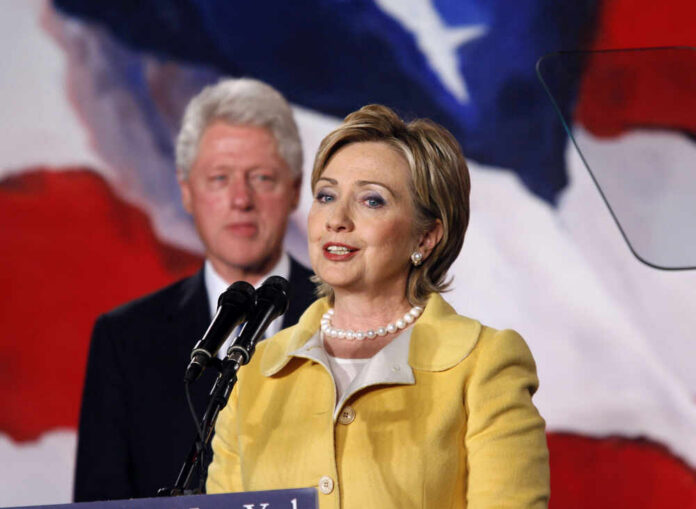
Hillary Clinton’s attack on Trump over detained migrant children is colliding with a paper trail showing similar—or higher—juvenile detention numbers under her husband’s administration.
Quick Take
- Hillary Clinton cited reporting that more than 6,200 migrant children have been detained under Trump’s second term, averaging about 226 per day.
- Fox News highlighted a DOJ inspector general report showing 4,136 unaccompanied juveniles were detained for more than 72 hours in FY 2000 under President Bill Clinton, with daily averages reported in the 400–500 range.
- DHS pushed back on Hillary Clinton’s criticism, saying children are not being “targeted” and arguing current practices are consistent with prior administrations.
- The dispute revives a central fault line in immigration politics: enforcement is popular in theory, but the humanitarian tradeoffs of detention are unpopular in practice.
Clinton’s post spotlights Trump’s numbers, but the comparison cuts both ways
Hillary Clinton’s criticism centered on the claim that the Trump administration has detained more than 6,200 migrant children, which she described as “terrible damage … done in our name,” citing data she attributed to the Marshall Project. Fox News framed that criticism as politically convenient, because records from the Clinton years describe significant detention of unaccompanied juveniles as well. The immediate result is a public numbers war over which party “owns” tough enforcement.
The key comparison in the reporting is not simply that children were detained in both eras, but that the daily averages cited for FY 2000 appear higher than the daily average Hillary Clinton highlighted under Trump’s second term. Fox News referenced a DOJ Office of the Inspector General report describing 4,136 unaccompanied juveniles detained longer than 72 hours in FY 2000, with daily averages in the 400–500 range. Those figures complicate any clean partisan narrative.
Why the 1990s enforcement framework still shapes today’s border debate
The argument is also about laws, not only personalities. The reporting points back to 1996, when President Bill Clinton signed major enforcement measures that expanded detention and accelerated removals. Those statutes helped build a modern enforcement architecture that later presidents—Republican and Democrat—have operated within, often while blaming each other for outcomes. For voters frustrated by “politics as performance,” this episode is a reminder that Washington’s incentives reward outrage more than durable fixes.
Hillary Clinton has also defended the broader Democratic record in public remarks, arguing that more deportations occurred under Bill Clinton and Barack Obama without the same kind of headline-grabbing controversies she associates with Trump. That claim reflects a familiar Democratic strategy: separating “orderly” enforcement from what they describe as Republican harshness. The available research here shows an important limitation, though: deportation totals and detention conditions are different measurements, and the sources don’t provide a full apples-to-apples comparison.
DHS rebuttal emphasizes family options and a Biden-era child placement problem
In response to Hillary Clinton’s post, DHS argued that its approach does not “target” children and said families can choose between removal together or placement options involving sponsors. DHS also pointed to a major unresolved controversy from the prior administration: locating large numbers of unaccompanied children who entered during the Biden years and were later difficult to track. According to the Fox News account, the Trump administration says it has located more than 145,000 of those children and stopped hundreds of thousands of potential exploitations.
The real policy dilemma: enforcement vs. humanitarian risk, and the public’s trust gap
Immigration enforcement is one of the clearest places where Americans see government failure from multiple angles at once. Border communities want control and capacity, taxpayers want accountability, and families—both migrant and American—expect basic standards of care. The research also underscores why the topic remains emotionally charged: the first Trump term’s 2018 “zero tolerance” period produced documented trauma claims tied to family separation, creating lasting skepticism when any administration says detention is temporary or benign.
Politically, Hillary Clinton’s criticism lands in a country where Republicans hold the federal government and Democrats are looking for vulnerabilities. Yet the comparison to the 1990s and 2000s also feeds a broader public suspicion: leaders across parties use selective facts to score points while leaving the underlying system intact. For conservative readers focused on sovereignty and rule of law, the durable takeaway is that enforcement debates will remain chaotic until Congress and the executive branch align on clear standards that protect children while ending incentives for illegal entry.
Hillary Clinton rips Trump on migrant child detentions, but Bill Clinton’s own record cuts deephttps://t.co/agqHRlLS8E
— BREAKING NEWZ Alert (@MustReadNewz) April 17, 2026
For now, the two truths at once. First, child detention is happening under Trump’s second term and remains a legitimate subject of scrutiny. Second, the historical record under Bill Clinton shows that Democratic administrations also detained large numbers of unaccompanied juveniles after enforcement laws tightened. Americans looking for straight answers may be disappointed, but the numbers dispute does reveal something real: the political class often argues over optics while relying on the same enforcement machinery year after year.
Sources:
Hillary Clinton rips Trump on migrant child detentions, but Bill Clinton’s own record cuts deep
Hillary Clinton immigration reform