Fox News quietly aired President Trump’s explosive election-fraud speech—then all but buried it, revealing how scared even his favorite network now seems of the fight over America’s elections.
Story Snapshot
- Trump’s primetime speech declassified real election security concerns but did not prove votes were changed.
- Fox News aired the address live, then minimized follow-up coverage and stressed it had not verified Trump’s “evidence.”
- Fox is still dealing with billion‑dollar lawsuits over past false fraud claims, pushing it to distance itself from new ones.
- Both Trump and Fox now sit at the center of a deeper crisis of trust in elections and in the media itself.
Trump’s speech: alarming vulnerabilities, missing proof
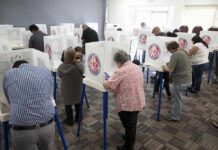
President Trump used his July 16 primetime address from the White House to claim that newly declassified intelligence shows U.S. elections are dangerously exposed to foreign hackers and fraud. He highlighted a National Intelligence Council memo saying China, Russia, Iran, and North Korea have the capability to compromise election infrastructure, and he described voting machines as “extremely exposed to attack.” He also cited a Department of Homeland Security review claiming about 278,000 non‑citizens were registered to vote in federal elections.
Trump further alleged that China obtained more than 200 million American voter registration files between 2020 and 2024 and pointed to Federal Bureau of Investigation files about suspected voter registration fraud linked to a Democratic get‑out‑the‑vote effort in Michigan. These claims sound dramatic and match long‑standing fears on both the right and left that powerful outsiders can rig the system. Yet before the speech, White House officials and outside experts admitted the documents do not show that any foreign government actually changed vote totals in a U.S. election, or hacked machines in a way that altered results.
What the documents really say — and what they don’t
The declassified materials do confirm serious threats. Intelligence assessments warn that hostile governments are probing election systems and could try to disrupt or influence future votes. One report even says Venezuela’s Maduro regime developed methods to change digital vote totals in undetectable ways, raising obvious worries about similar techniques spreading. For many Americans, this feeds a broader sense that elites have built fragile systems, then failed to secure them, whether in banking, borders, or elections. It feels like the people are always the ones left exposed.
At the same time, several outlets reviewing the documents say they mostly restate known risks instead of revealing a hidden plot. One posted assessment bluntly states that vote‑tabulation systems “would be difficult to manipulate on a wide enough scale to compromise election results.” Reporting from CNN and others notes that the 278,000 non‑citizen registration figure comes from private data and lacks proof that large numbers of those people actually voted. Past research has found only about 100 cases of non‑citizens voting over two decades. So the records show vulnerability and sloppy systems, but not a clear stolen election.
Fox News airs the speech, then backs away
Fox News, long seen as Trump’s media home, carried the address live with the chyron “Trump delivers address on election integrity.” Yet during and after the speech, Fox anchors made clear the network had not vetted his evidence. One host told viewers that “Fox News has not seen that evidence yet and is not in a position to evaluate the accuracy of the president’s statements at this time.” In the hours that followed, Fox’s coverage grew very quiet. Media critics noted that Fox & Friends did not mention the speech at all the next morning, a sharp break from its usual promotion of Trump’s big events.
This silence was not accidental. Internal messages revealed during Dominion Voting Systems’ defamation case showed Fox hosts and executives privately rejecting many 2020 fraud claims as “outlandish” and “wackadoodle,” even as some programs aired them. The network later agreed to pay Dominion about $787 million to settle a lawsuit over those false stolen‑election stories. Another voting technology company, Smartmatic, is now seeking $2.7 billion in damages over similar allegations. With that legal and financial pressure still hanging over it, Fox has strong reasons to treat any new election‑fraud push with extreme caution.
Why Fox is caught between Trump, viewers, and the courts
Evidence from court filings paints Fox as a business terrified of losing its audience if it fully breaks with Trump’s fraud narrative. After the 2020 election, its internal “Brain Room” research team concluded that major claims about Dominion voting machines rigging votes were false. Yet those claims still went on air, in part because executives feared viewers would switch to more hard‑line outlets if Fox called them out clearly. That choice keeps haunting the network. Now, when Trump brings forward new material about election threats, any response Fox makes could anger either Trump’s base or its lawyers.
DHS chief Markwayne Mullin blasts ABC, NBC over ‘shameful’ decision to skip Trump election speech | CJ Womack, Fox News
Homeland Security Secretary Markwayne Mullin blasted ABC and NBC on Friday for declining to air President Donald Trump's election-security address on their… pic.twitter.com/v8hsnOHHS8
— Owen Gregorian (@OwenGregorian) July 18, 2026
Fox’s current strategy seems to be a middle path: air the president because he is newsworthy, but quickly add distance and avoid heavy promotion. The network stresses that it has not independently checked his data and often highlights that dozens of investigations and court cases found no proof of widespread fraud in key states. This approach may protect Fox in court, but it deepens the feeling among many viewers that they are not getting the full story from anyone—that both government and media are managing information instead of leveling with the public.
Growing public distrust and the need for real answers
Academic research shows that unproven fraud claims repeatedly raised by political leaders can sharply reduce public confidence in elections, even when they do not change outcomes. Many Americans now believe some version of “the system is rigged,” whether they blame illegal immigration, foreign hackers, big corporations, or partisan insiders. The handling of Trump’s speech fits that wider pattern: real vulnerabilities, incomplete data, intense spin, and no trusted referee. Both Trump and Fox are responding to those fears, but each is also part of the trust problem.
Concrete steps could help. Congress could demand full unredacted versions of the intelligence reports Trump cited and require independent cybersecurity tests of voting machines. A thorough audit of non‑citizen voter registration across all states could show whether the 278,000 figure reflects a serious breakdown or mostly paperwork errors. These actions would not settle every political argument. But they would shift the focus from talking points and chyrons to hard facts—something citizens on the right and left are desperate to see from a government and media class they increasingly view as serving itself first.
Sources:
pjmedia.com, npr.org, cnn.com, whitehouse.gov, usatoday.com, bbc.com, abc17news.com, youtube.com, yahoo.com