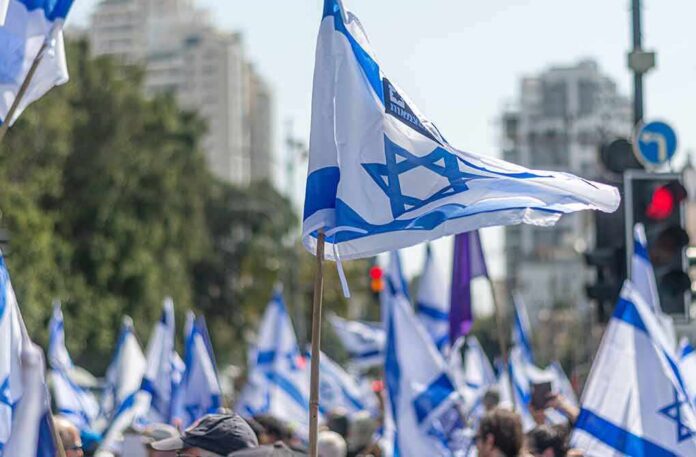
Israelis headed to the polls in a national election widely cast as a verdict on Prime Minister Benjamin Netanyahu’s leadership.
Story Highlights
- Israel held a national Knesset election seen as a referendum on Netanyahu.
- Former military chief Gadi Eisenkot emerged as the main challenger.
- Parties compete for 120 Knesset seats before any coalition forms a government.
- A close race could force prolonged coalition talks before a new government is set.
Election Day Framed Around Netanyahu’s Future
Major outlets reported that Israelis voted on October 27, 2026, in a contest widely described as a referendum on Prime Minister Benjamin Netanyahu. Coverage by the Associated Press and Reuters said the vote could decide whether Netanyahu continues in office, after years shaped by security crises and political stalemates. Reports described a high-stakes choice for voters weighing leadership, war, and domestic strains. That framing echoed prior election cycles that centered on Netanyahu’s rule.
Reuters said Netanyahu’s political survival was on the line, and that the outcome might hinge on how blocs perform and whether they can strike deals to govern. The New York Times live coverage identified active polling across the country and tracked developments as parties fought for an edge. The Associated Press emphasized how many voters viewed the race through the lens of security and leadership, which drove the “referendum” label across much of the day’s reporting.
How Israel’s Parliamentary System Turns Votes Into Power
Israelis vote for party lists, not individual candidates for prime minister. Those votes are converted into seats in the 120-member Knesset. Any government must secure a majority of at least 61 seats through coalition agreements among parties. No single party has ever won a solo majority, so bargaining after the vote is standard. That coalition math can stretch on and delay a final outcome even after ballots are counted.
Because coalition talks decide who can actually govern, a party’s seat total is only step one. The president tasks a party leader with trying to form a coalition, and rivals negotiate for ministries and policy pledges. Reuters warned that, in a tight race, the winner may not be clear on election night. Netanyahu could lead as caretaker if coalition talks stall, or a rival could assemble a majority and claim the prime minister’s post.
The Challenger and the Stakes Voters Weighed
The Associated Press and the New York Times identified former military chief of staff Gadi Eisenkot as Netanyahu’s leading challenger. His camp pressed security competence and change after years of war and political strain. That matchup sharpened the focus on leadership and national direction. Analysts and past scholarship noted that recent Israeli elections have often turned into personal tests of Netanyahu, blending policy debate with judgments about his long tenure.
ELECTION DAY: Israel heads to the polls Tuesday in its most consequential vote in a generation — the first national election since the Oct. 7 Hamas massacre that killed over 1,200 people and shattered the country's sense of security.
Prime Minister Benjamin Netanyahu is fighting… pic.twitter.com/fgWMRAiRAR
— Fox News World (@FNCGlobalNews) October 27, 2026
The “referendum” frame simplifies a system that remains coalition-based, yet it captures how many voters approached the choice. Media and experts pointed to unresolved security threats, the legacy of the October 7, 2023 attack, and questions about governance. Those pressures made the vote feel like a verdict on stability versus change. Still, the final say rests with coalition deals inside the Knesset, not a direct up-or-down vote on any single leader.
Why This Matters Beyond Israel’s Borders
Israel’s government choices affect regional security, energy flows, and defense ties with the United States. A stable coalition can speed decisions on war and diplomacy; a fragile one can slow them. For Americans watching from afar, this is a reminder that big outcomes can hinge on a few seats and tough talks. Many readers on the left and right see familiar themes here: hard trade-offs, political gridlock, and leaders who struggle to deliver clear results in a high-risk world.
Sources:
youtube.com, heraldbulletin.com, reuters.com, apnews.com, indianexpress.com, boston25news.com, sbs.com.au, rmb.reuters.com