Six Flags shut nine similar roller coasters nationwide after a man died in a fall at its Georgia park, underscoring how a single failure can shake trust in everyday safety.
Story Snapshot
- Police said one person died and several were hurt after a roller coaster incident near 4 p.m. in Georgia.
- Six Flags expressed condolences, said teams and authorities responded at once, and pledged cooperation.
- Six Flags temporarily closed nine rides across the country following the death.
- Industry data show fixed-site rides are very safe, but rare severe incidents demand full answers.
What Happened At Six Flags Over Georgia
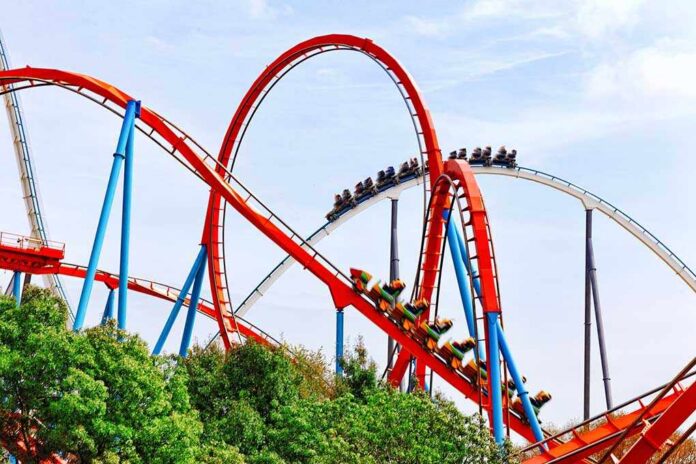
Cobb County police reported one person died and several others were injured after an incident involving a roller coaster at Six Flags Over Georgia on Monday, shortly before 4 p.m. The ride stopped, and a train sat at the top of the structure during the response, according to local reports. Witnesses described a fall from the Goliath roller coaster, though investigators have not released a cause. Police confirmed the death and said officers assigned to the park assisted on scene.
Six Flags issued a statement offering condolences to the victim’s family and friends. The park said its team and local authorities responded immediately and that it is cooperating fully with the investigation. The company paused operations on some attractions while officials reviewed safety checks and procedures. Park leaders emphasized support for guests and staff affected by the event and said updates would follow through formal channels as facts become clear.
Company Response And Nationwide Precaution
Six Flags temporarily closed nine rides of similar type across multiple parks after the fatal fall, a step meant to allow further inspection and review. The company did not release a detailed technical explanation tied to a root cause. The closures suggest a systemwide caution approach while authorities and engineers assess equipment, restraints, operations, and training. The company framed the action as a safety-first measure while cooperating with local investigators in Georgia.
News outlets reported that several guests were treated for injuries related to the incident and the abrupt stop of the ride. Local television and national outlets showed emergency crews at the park and guests evacuating from elevated positions. Officials have not released the victim’s name as authorities work through next of kin notifications. Police and park officials urged the public to rely on official updates rather than speculation while the inquiry proceeds.
How Rare Events Still Demand Strong Oversight
Trade group data show fixed-site amusement rides are very safe. The International Association of Amusement Parks and Attractions estimates more than 1.7 billion rides are taken in North America in a typical year, with a very low risk of serious injury per ride. Those figures help frame the risk for families. They do not answer what failed in Georgia. That is why clear, public findings on causes and fixes matter after any severe incident, even when the overall record is strong.
A Georgia man fell to his death from a roller coaster at the Six Flags Over Georgia theme park on Monday, injuring four other riders during the incident.
Eyewitnesses reported that the fatal fall from the Goliath roller coaster was captured in souvenir photographs taken on the… pic.twitter.com/qSUIoLonjh
— GDN Online (@GDNonline) October 13, 2026
Government roles in ride safety vary. The United States Consumer Product Safety Commission oversees mobile rides, but states and localities typically handle fixed-site parks through inspections and standards that draw on national testing norms. That patchwork means swift transparency from both companies and local authorities is key after an incident. People across the political spectrum want proof that safety rules are enforced and that no one is “too big” to face tough questions when something goes wrong.
Why This Hits A Nerve Beyond The Park
Families go to theme parks to escape daily stress. They expect the basics to work: clear rules, working restraints, trained staff, and honest answers when tragedy strikes. When a rare failure turns deadly, it taps into broader anger that institutions are slow to fix problems and quick to issue polished statements. Real trust comes from facts on what failed, what will change, and when rides will reopen only after those fixes are verified by independent authorities or regulators.
Sources:
wsbtv.com, waff.com, abcnews.com, iaapa.org, cpsc.gov