Americans rushed to Costco for generators, water, and shelf-stable food after a series of tech outages, lifting sales and exposing how fragile daily life now feels.
Story Highlights
- Analyst data linked a late-October sales jump to emergency-prep buying at Costco.
- Costco’s finance chief confirmed higher demand for rice, canned goods, water, and generators.
- Twenty-one of 26 online high-ticket generators showed sold out status on November 15.
- Shoppers cited anxiety after email failures, grounded flights, and viral outage rumors.
What Sparked The Rush And What Sold Fast
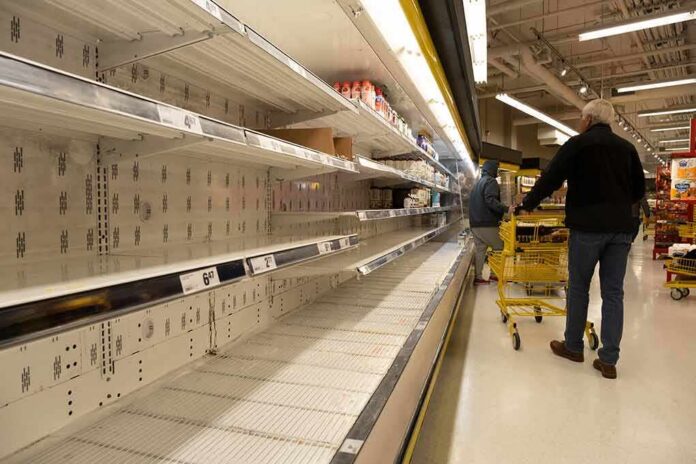
Mizuho Securities reported that Costco saw a pickup in emergency-prep demand after a Microsoft Outlook email failure and a halt of United States airline flights. The analyst said the trend showed up in sales of backup-power gear and pantry staples. Twenty-one of 26 high-ticket generators listed online were sold out by November 15. The analyst described “pantry-loading,” with shoppers favoring nonperishables and batteries as people discussed outages and doomsday posts on social media.
Costco’s finance chief Gary Millerchip said the chain saw higher buying of rice, canned goods, water, paper products, generators, batteries, and similar items. He tied the change to a range of concerns being shared on social platforms. His statement did not include dollar amounts or regional details. But it backed the picture of a short burst of preparedness shopping across a familiar set of items that households turn to during uncertainty and rumor cycles.
How Much Sales Climbed In The Final Week
Mizuho estimated that United States comparable sales excluding gasoline rose about 11 to 12 percent year over year in the final week of October. That compared with about 6 to 7 percent over the first three weeks. The firm linked the late-month jump to demand for backup power and essentials after the outages. The estimate framed a clear timing link between the technology troubles and stronger week-over-week store performance at Costco locations nationwide.
MarketWatch summarized the firm’s talks with Costco management. Those conversations suggested that same-store sales trends in the first three weeks of October looked similar to prior months. An end-of-month lift tied to emergency-prep categories pushed October same-store sales growth to 8.1 percent. This breakdown fits a pattern seen during storms and other shocks, when demand moves fast and clusters in predictable categories such as water, shelf-stable food, and generators.
Why This Moment Resonates With Shoppers Across Parties
Recent disruptions tapped a common worry: complex systems can fail without warning. People who distrust big tech, airlines, and government readiness do not want to be caught short. Conservatives point to rising costs, power grid strain, and supply chain fragility. Liberals point to widening inequality and the risk that the vulnerable suffer most when services go down. Both sides see a system that often feels unaccountable, so families hedge by keeping extra food, water, and power at home.
Costco sits at the center of that response. The warehouse model sells bulk staples, backup power, and paper goods at known value. That makes it a first stop when fear spreads. Social media chatter can raise perceived risk and speed up buying, even among people who would have restocked later. Research from the pandemic era found that “crisis stockpiling” often reflects planned preparation, not pure panic. Households act when they think others will too, which can quickly empty shelves.
What To Watch Next: Supply, Prices, And Messaging
Retailers may raise orders for generators, batteries, and shelf-stable foods if outages keep making news. That can help keep items in stock but can also push up prices if suppliers face constraints. Costco can soften shocks with buying power and limits if needed. Clear store signs, purchase limits in hot categories, and steady restocking can keep more members supplied. That playbook worked during past runs on toilet paper, water, and baby formula in many regions.
Officials Said Stay Calm. Then 21 of Costco's 26 Generators Sold Out.
The receipts are in on the outage anxiety, and they are Wall Street's. Mizuho Securities estimates Costco's US comparable sales accelerated to 11 to 12 percent growth in the final week of October, nearly… pic.twitter.com/9YaBbRgqHK
— Abandoned Nation (@AbandNation) November 19, 2026
For households, a calm plan beats a last-minute rush. Experts often suggest one to two weeks of water, food, medicine, flashlights, and a safe power option if needed. Generators require care and proper ventilation. Portable battery stations can power essentials but may not run a whole house. People should match gear to real needs and budgets. That keeps families safer without adding to panic. Responsible planning also reduces stress when headlines turn alarming.
The Bigger Picture: Fragility In A High-Tech Era
The United States runs on code, clouds, and just-in-time logistics. When any link fails, daily life can slow or stop. The Costco surge shows how quickly citizens move to self-reliance when they sense risk. It also shows how online rumors can push real-world behavior. That is not a sign of national weakness by itself. It is a reminder that resilience starts at home and in local communities, while leaders work to harden systems, improve alerts, and earn back public trust.
Sources:
marketwatch.com, cbsnews.com, economictimes.com, cnbc.com