Thailand agreed to drop tariffs on about 99 percent of goods sold by American companies, while the United States will keep a 19 percent tariff on most Thai imports.
Story Snapshot
- The U.S. and Thailand signed a trade framework on October 26, 2025, during President Trump’s Asia trip.
- Thailand committed to scrap tariffs on nearly all U.S. industrial and farm goods.
- The U.S. will still charge a 19 percent reciprocal tariff on most Thai imports, with some products getting zero percent.
- The deal also covers digital trade rules, data transfers, and Thailand’s telecom ownership limits.
- Officials say they still need weeks of talks to finish the full agreement.
What The Two Countries Signed
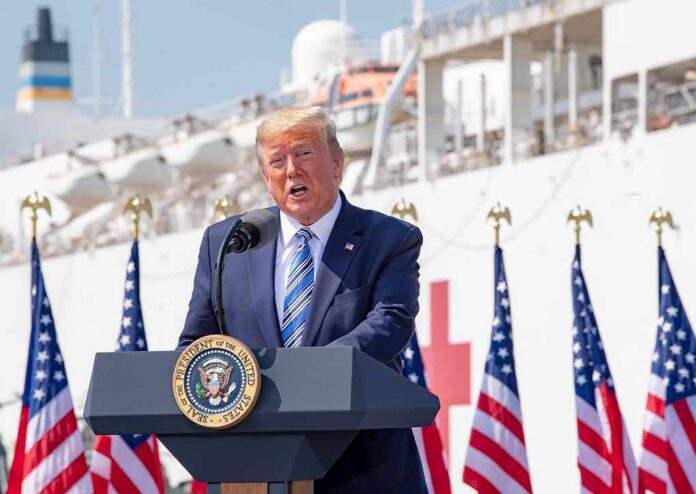
President Trump and Thai Prime Minister Anutin Charnvirakul put their names on a joint statement in Manila, laying out a framework for a reciprocal trade deal between the two nations. The Office of the United States Trade Representative confirmed the signing date in its official annual report, calling it a framework rather than a finished agreement.
Under the deal, Thailand promised to remove tariffs on roughly 99 percent of goods coming from the United States. That covers a wide range of products, from factory equipment to farm exports like meat and grain, according to the Trade Representative’s own fact sheet describing the agreement.
The Tariff Gap That Stays In Place
The United States is not matching that move dollar for dollar. Washington will keep a 19 percent tariff on most Thai imports, a rate first set under an April 2025 executive order. Only certain products will get a zero percent rate carved out, meaning most Thai goods entering America still face a real cost at the border.
That gap between what each side gives up could draw pushback. Thai officials pushed for broader tariff relief, and American importers who buy Thai goods may question why their side keeps paying while Thai buyers get a much bigger break. The framework does not explain which specific products will qualify for the zero percent carve-out.
Beyond Tariffs: Data, Streaming, And Phone Networks
The agreement reaches past tariffs into how both countries handle technology and services. It touches digital taxes, rules for moving data across borders, duties on electronic transmissions, film screen quotas, payment processing, and limits on foreign ownership in Thailand’s telecom sector. These details suggest American tech and media firms pushed hard for a seat at the table during negotiations.
The deal builds on a trade relationship that already had a formal channel. The two countries have used a 2002 Trade and Investment Framework Agreement to iron out disputes for more than two decades, giving this new framework an existing structure to plug into rather than starting from scratch.
A Framework, Not Yet A Finished Deal
Trade officials described this as a starting point, not a final product. The fact sheet says both countries will keep negotiating in the coming weeks to complete the actual Agreement on Reciprocal Trade. That means the tariff percentages and trade rules announced now could still shift before anything becomes legally binding.
Trade deals built this way, with one side cutting tariffs broadly while the other keeps a flat rate and carves out exceptions, have become common under the current administration’s approach to trade. It marks a departure from older free-trade agreements that aimed for matching tariff cuts on both sides, shifting instead toward deal-by-deal bargaining over specific sectors and products.
For everyday Americans and Thai businesses watching this unfold, the bottom line right now is simple: a framework exists, tariffs will shift on both sides, and the fine print on which products qualify for breaks is still being written. Whether this translates into cheaper goods or new jobs depends on what gets finalized in the weeks ahead.