Secretary of State Marco Rubio says Iran has “lost complete control” of the Strait of Hormuz, but Iranian officials say they still decide which ships can pass through it.
Quick Take
- Rubio claims oil flow through the Strait of Hormuz is nearly back to pre-war levels after U.S. military escorts and mine clearance operations.
- Iran’s own military command says no ship can cross the strait without Tehran’s permission, directly contradicting Rubio’s claim.
- Independent data from BBC and other outlets shows oil flow at 92% of pre-war levels, but with major changes in how oil moves.
- About 40% of regional oil now skips the strait entirely, using pipelines instead, up from just 17% before the war.
- Neither side’s claims are backed by independent international shipping authorities in the available record.
Rubio Declares Victory Over Iranian Control
Speaking in Athens on October 7, Rubio told reporters the Strait of Hormuz “is open” and that “there’s almost as much oil flowing out now as there was before this conflict began.” He added that Iran has “lost complete control” of the waterway, a vital passage that carries roughly a fifth of the world’s oil supply. Rubio has repeated versions of this claim for months, each time framing it as proof the U.S. military campaign worked.
Back in May, Rubio said the goal was to “restore freedom of navigation” through the strait, promising “no mines in the water, nobody paying tolls”. By September, he narrowed his claim, saying only “the southern lane” was open and that “the only blockade in the Hormuz Strait is the one we’ve imposed on Iran”. That shift matters. It suggests the full reopening he announced in October followed months of partial, contested access.
Iran Says It Still Controls the Chokepoint
Iran’s joint military command told Reuters that “no vessel could transit the Strait of Hormuz without Tehran’s permission”. Iranian state-linked outlets describe a toll-like system run by the Islamic Revolutionary Guard Corps, requiring ships to seek clearance before passing. A senior Guard commander, Ali Fadavi, said only three to four million barrels of oil per day move through the strait, calling that volume “negligible” compared to pre-war traffic.
These are two flatly opposite claims from the two sides actually fighting over the waterway. The United States says it broke Iran’s grip. Iran says it never lost its grip. No neutral shipping authority in the available record, like the International Maritime Organization, has stepped in to settle which version is accurate.
What the Oil Numbers Actually Show
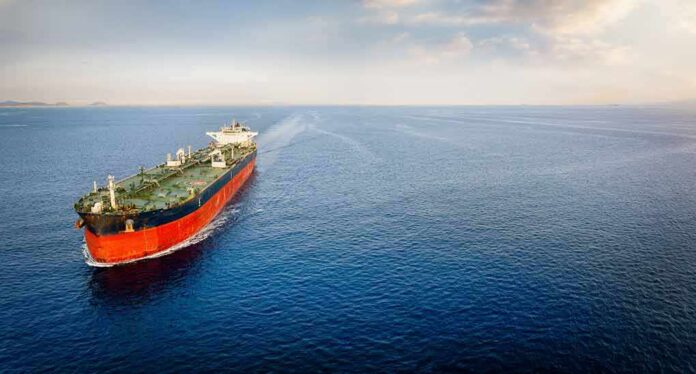
Market data offers a middle ground between the two claims. BBC reported that daily oil flow from the Middle East reached 92% of its pre-war baseline in late September, but roughly 40% of that oil now bypasses Hormuz entirely through overland pipelines, up from just 17% before the war. Average daily oil moving through the strait itself sat at 12 million barrels, below the pre-war baseline of 17 million.
That gap matters. It means global oil supply has recovered, but not because the strait reopened the way it used to work. Shippers rerouted around the danger instead of trusting it was gone. Separate tracking cited by CNBC found crude moving through the strait at 13.5 million barrels a day, closer to matching prewar numbers, while the wider region topped its old baseline.
Why Nobody Can Verify Either Side
Rubio has acknowledged operational limits on what the public gets to see. In May, he said escort details for ships moving through Hormuz would only be announced “after the fact, just for operational security purposes”. That means the public cannot check in real time whether a given ship moved freely or under military protection and specific conditions set by Washington.
No independent mine-clearance report, naval after-action summary, or maritime insurance data appears in the available record to confirm the scope of U.S. operations. The dispute plays out almost entirely through dueling press statements from Washington and Tehran, while actual tanker traffic data suggests a more complicated, partial recovery than either side’s rhetoric admits.
For a country already skeptical of official statements from any government, this standoff is a reminder that claims of victory and claims of control both deserve scrutiny. Global oil markets have stabilized somewhat, but the underlying fight over who actually commands one of the world’s most important waterways remains unresolved and unverified by any outside authority.
Sources:
youtube.com, wionews.com, freemalaysiatoday.com, news.sbs.co.kr, english.ahram.org.eg, aljazeera.com