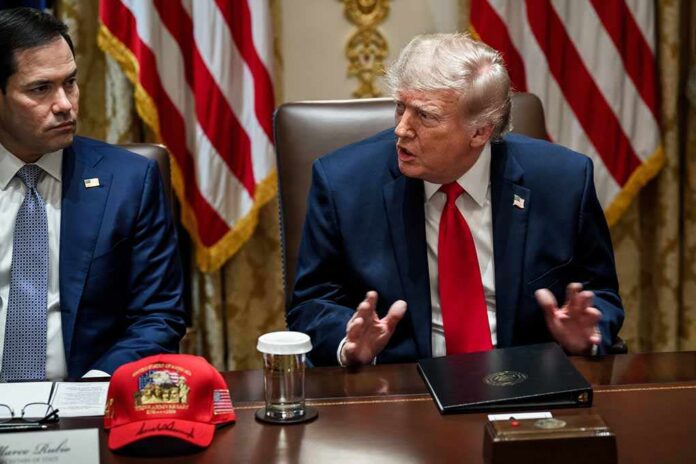
President Trump announced a $15 billion Iowa steel plant that the White House calls the largest in U.S. history, promising 1,750 permanent jobs and a major boost to domestic industry.
Story Highlights
- White House says a Minnesota company will build a $15 billion steel mill in Iowa.
- Plant aims for about 10 million tons of annual output and 1,750 permanent jobs.
- First-phase construction could support up to 6,000 jobs, officials said.
- Project ties to a new $2.5 billion iron ore mine in Minnesota to form a U.S. supply chain.
White House Announces Record-Scale Steel Investment
On September 28, the White House said President Trump would unveil plans for a new $15 billion steel mill in Iowa built by a Minnesota company, with officials calling it the largest steel plant in American history. The administration linked the project to its push for stronger domestic manufacturing and supply chains. Officials said the facility targets production of about 10 million tons per year and would create about 1,750 permanent jobs in the state, with production expected to start in 2030.
Administration aides framed the move as part of a national security and economic agenda to bring heavy industry back to American soil. The event lineup, as reported in advance, included senior officials and business leaders tied to commerce and export finance, reflecting the project’s scale and financing needs. Coverage linked the announcement’s timing to the fall political calendar, underscoring how marquee factory plans often become symbols of economic policy in election seasons.
Jobs, Construction, and Local Impact
Officials and reports said the project expects at least 1,750 permanent jobs once operations begin, with the first construction phase supporting up to 6,000 jobs. Those figures place the mill among the largest single-site industrial job creators of the decade. Reporters described the site as in eastern or southeastern Iowa, with several outlets pointing to Lee County, though detailed parcel and permit data were not included in initial coverage. Local leaders will likely focus next on housing, roads, and training needs to meet the hiring timeline.
Planners said operations would start in 2030, which means several years of engineering, site work, and equipment orders must move on schedule. Steel mills require specialized power, water, rail, and river access. Early work often includes long-lead procurement and utility upgrades. Iowa and local governments will face pressure to line up workforce programs and infrastructure plans fast. If the timeline holds, the project could anchor regional payrolls and supplier networks for decades.
Integrated Mine-to-Mill Supply Chain
The White House and several outlets said the Iowa plant would be fed by a new iron ore mine in Minnesota, estimated at $2.5 billion, creating an integrated United States supply chain from ore to finished steel. That structure can cut shipping costs, reduce import exposure, and steady input quality. It also spreads benefits across two states. Company leaders cited a plan consistent with this design, with the mill’s annual output paired to ore supply to support steady blast furnace or direct reduction operations, depending on the final process plan.
The administration spotlighted export finance and commerce officials at the announcement, signaling attention to equipment sourcing and credit backstops that often support mega-projects. Large mills mix private capital with vendor financing and, at times, public incentives. While the coverage did not publish final term sheets, it consistently tied the mine and mill as connected investments meant to deepen domestic control over strategic materials and finished steel for autos, energy, and construction.
Why This Matters Across the Political Divide
Supporters argue the plan answers a common demand from both right and left: make real things in America again. A White House spokesperson said the project shows efforts to revive the steel sector, lift local communities, and protect national security by tightening supply chains. For many families, the draw is clear. These are solid jobs with benefits, linked to training and skilled trades. The investment also signals that heavy industry can expand in the Midwest, not only on the coasts.
Trump’s Iowa steel announcement is a real project. The packaging around it is not.
The plant is a ~$15B Mesabi Metallics plan. First production is targeted for 2030. The White House’s $95B “economic impact” figure is not money arriving now — it is a projection covering…
— Lobachevsky (@vladlobachevsk2) September 28, 2026
Skeptics of big announcements often note that headline investment totals can blur what is new, what is repackaged, and what depends on policy or permits. Prior reporting on national investment claims suggests some tallies mix fresh spending with older plans, so clear public documents will matter as the project advances. Still, the Iowa mill and linked Minnesota mine, as described by the White House and major outlets, mark a large bet on American steel capacity with a specific job and timing target.
Sources:
redstate.com, abcnews.com, nbcnews.com, cnbc.com, pbs.org, yahoo.com, wfmd.com, foxsanantonio.com