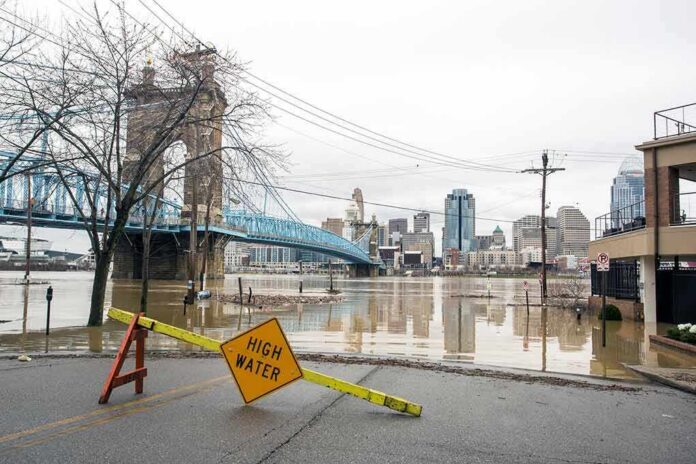
A strengthening nor’easter is set to pound the East Coast for days, with dangerous coastal flooding, strong winds, and major travel headaches already unfolding.
Story Highlights
- National Weather Service warns of prolonged coastal flooding, beach erosion, and strong winds.
- Impacts stretch from North Carolina to New England, with the worst near Massachusetts and Rhode Island.
- High-tide cycles could turn flooding from minor to moderate in vulnerable spots.
- Officials urge residents to prepare for power outages and travel delays through the weekend.
What Forecasters Say Will Happen
National Weather Service offices report a strong nor’easter offshore that will keep building into the weekend. Forecasters highlight a long stretch of onshore winds, heavy rain bands at times, and rough seas. Coastal Flood Warnings are active for parts of Massachusetts, where minor flooding with pockets of moderate flooding and prolonged beach erosion are possible. Coastal Flood Advisories cover the south coast of Rhode Island and Massachusetts for minor flooding and splashover during high tide cycles.
The Weather Channel and other outlets track impacts from the Mid-Atlantic to New England. They expect coastal flooding, high surf, and strong winds from North Carolina to Maine through the weekend. The risk will shift north with the storm’s slow movement, focusing on southern New England as the wind field tightens and tides run higher. The setup points to stubborn, repeated flooding in low-lying shore towns and barrier beaches.
Where And When It Hits Hardest
Forecasts call for the strongest winds and heaviest rain from Friday night through Saturday night in Rhode Island, central and eastern Massachusetts, parts of Connecticut, Long Island, southeastern New Hampshire, and the southern Maine coast. Power outages are possible where wind gusts top tree and line limits, and soaked soils reduce root hold. Coastal roads that flood at “king tides” may see repeated closures if wind-driven water stacks into back bays and rivers at high tide.
In New Jersey and Delaware, emergency briefings outline High Wind Warnings, marine Storm Warnings, and Gale Warnings for Delaware Bay. Coastal flood hazards run through Saturday night as persistent north to northeast winds push water toward the shore. Communities along the Atlantic coast and tidal rivers should expect dangerous surf, beach erosion, and water on streets during peak tides, with conditions worse near inlets and back bays that drain slowly.
Why Nor’easters Strain Coastal Towns
Nor’easters are common from fall through spring, but they still cause outsized damage. The risk grows when strong onshore winds overlap with high tides for several cycles. That is when dunes take a beating, beaches lose sand, and storm surge adds to heavy surf. Studies on risk messaging show that clear warnings and simple calls to act help people prepare. Emergency briefings and easy-to-read flood maps tend to move the needle on safety decisions.
4 AM Top-of-the-Hour News
The sound of gusty winds and an angry Atlantic Ocean as a strong Nor-easter hits the East Coast. It already has churned up rough surf from North Carolina to New England and is expected to cause heavy rain, flooding and beach erosion through the weekend.… pic.twitter.com/PP1FgoY11X
— Worldwide News Network (@WorldwideNNX) September 26, 2026
Local geography shapes outcomes. Barrier islands, back bays, and river mouths can trap water, making even “minor” flooding disruptive. That is why agencies highlight tide timing and neighborhood-level risk instead of big regional labels. The public often sees mixed early messages, but that reflects changing track and wind strength, not a lack of concern. The safest bet is to plan for repeats of flooding across multiple high tides until winds ease and water can drain.
What To Do Now
Residents in coastal zones should move cars off flood-prone streets, secure outdoor items, and charge devices. People who rely on medical equipment should check backup power plans. Drivers should avoid flooded roads and watch for detours near shore routes. Air and rail travelers should expect delays into Sunday as winds and rain shift along the corridor. Boaters should stay in port. Local alerts remain the fastest way to track changing tide and road conditions.
Sources:
yahoo.com, forecast.weather.gov