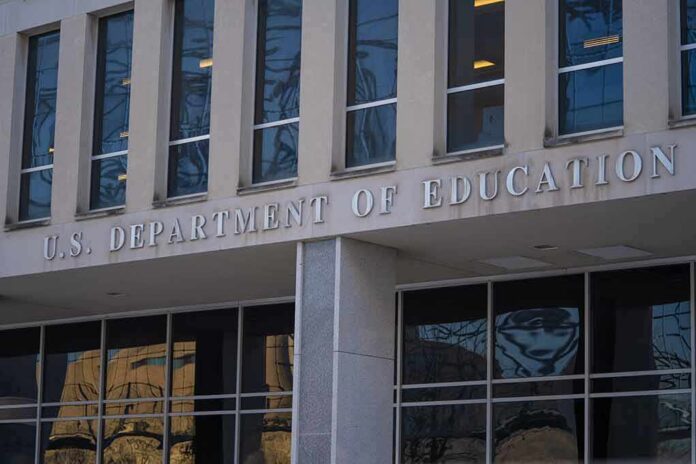
Federal education officials opened a student-privacy investigation into a Massachusetts district after reports that staff aided a teen’s social gender transition without telling the parents.
Story Snapshot
- The U.S. Education Department is probing two Massachusetts school systems over student-privacy concerns.
- The review focuses on possible violations of the Family Educational Rights and Privacy Act and the Protection of Pupil Rights Amendment.
- District leaders deny any “secret counseling” and pledge full cooperation with investigators.
- The case highlights a wider fight over what schools must share with parents about a child’s gender at school.
What Triggered the Federal Investigation
The U.S. Department of Education’s Student Privacy Policy Office opened an investigation into the Public Schools of Northborough and Southborough. The office said it would assess whether the district violated the Family Educational Rights and Privacy Act and the Protection of Pupil Rights Amendment after reports that officials helped a student socially transition without parental knowledge or consent. The department’s notice places the dispute within federal law, not culture-war headlines, and centers on records access and parental notice.
The Family Educational Rights and Privacy Act gives parents rights to access and review their child’s education records until age eighteen. Schools that receive federal funds must set procedures that make those records available to parents on request. The Protection of Pupil Rights Amendment requires districts to adopt policies and provide certain notices to parents about sensitive matters. The investigation aims to determine whether the district’s handling of the student’s name, pronouns, and counseling intersected with these duties.
How District Leaders Are Responding
Superintendent Gregory Martineau said the district “unequivocally denies” the claims raised in media reports. He said the district welcomes the federal review and will cooperate with any authority to provide a full factual record. In separate comments reported by local outlets, Martineau also rejected the idea that there was any “secret counseling” around the student’s gender identity at school. District leaders said they stand by their educators and administrators.
These statements underscore a common bind for schools: privacy rules limit what officials can share publicly about a minor’s case, even as accusations spread. That can fuel confusion and anger on all sides. The federal review offers a structured process to gather records, test claims against law, and decide if any policy or staff actions violated parental rights or student privacy protections under federal statutes.
Why This Fight Resonates Nationally
Parents across the political spectrum worry that schools sometimes hide major information. Many educators fear that forced disclosures could put some students at risk at home. Courts and agencies have issued mixed signals, leaving districts to navigate gray areas. In California, one judge said schools do not have to inform parents unless asked, while confirming parents get answers when they do ask. That split landscape makes federal privacy rules the key baseline in many disputes.
Trump Administration Investigates Algonquin Regional High School Over Alleged Secret Gender Transition
The Trump administration has launched an investigation into Northborough-Southborough schools over allegations that Algonquin Regional High School helped socially transition a… pic.twitter.com/rIE3gqQnt8
— New Boston Post (@NewBostonPost) September 21, 2026
For families, the stakes feel basic: who decides what adults know about a child’s identity at school, and when. For schools, the stakes are legal and human: how to protect a student, comply with law, and avoid overreach. For many citizens, this case taps a deeper fear that institutions bend rules, hide records, and answer to politics more than people. The federal probe will test process, paper, and policy—and show whether the system honors both student dignity and parental rights.
Sources:
zerohedge.com, queerdispatch.org, wbur.org, dailymail.com, presidentialprayerteam.org