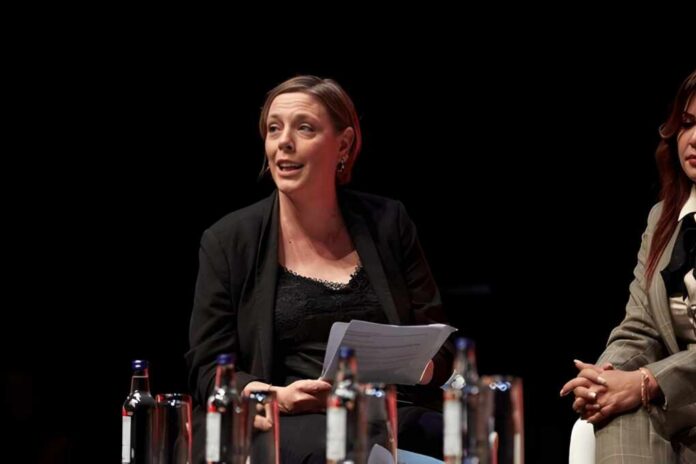
UK Labour Minister Jess Phillips resigns in blistering attack on Prime Minister Keir Starmer, exposing government stalls on scanning citizens’ phones for child abuse material—a move that alarms privacy advocates worldwide.
Story Highlights
- Phillips quits Cabinet role on May 12, 2026, accusing Starmer of blocking child safety legislation despite ready solutions from civil servants.
- Resignation amid coordinated Labour rebellion, with multiple ministers quitting or signaling intent, weakening Starmer’s leadership.
- Focus on phone scanning tech to detect CSAM and prevent children sharing nude images, reviving privacy vs. safety debates.
- Signals deep frustration within Labour over inaction on violence against women and girls (VAWG) promises.
Phillips’ Resignation Details
On May 12, 2026, Jess Phillips, UK Safeguarding Minister, submitted a resignation letter to Prime Minister Keir Starmer. She described him as a good man but criticized his government for stalling key child protection measures. Phillips highlighted delays in legislation to scan phones for child sexual abuse material (CSAM). Civil servants developed solutions, including tools to stop children sharing naked images, yet Starmer failed to act after a year of pressure. This marks the most senior quit in a growing rebellion.
Timeline of Labour Infighting
The evening of May 11 saw four ministers, led by the Home Secretary, meet Starmer at No. 10 Downing Street to urge a resignation timetable. On May 12 morning, a junior minister from Housing, Communities and Local Government resigned first. Phillips followed in the afternoon, with her letter publicized shortly after. Additional ministers signaled intent to quit. Starmer responded by vowing to get on with governing and held a Cabinet meeting where senior members stood by him. The government limps forward amid simmering unrest.
Phillips’ move stems from Labour’s 2024 election promises on VAWG and child safety. UK debates on phone scanning trace to the 2021-2023 Online Safety Act, which mandated platform detection of CSAM but avoided device scans due to privacy backlash, like Apple’s abandoned 2021 tool. Phillips, a long-time advocate since her 2015 MP election and prior VAWG charity work, amplified calls amid grooming gang scandals such as Rotherham.
Stakes in Phone Scanning Push
Phillips accused Starmer of blocking brilliant civil servants’ solutions, taking a year just to threaten legislation. Her letter cuts to the heart of Labour frustrations, including sector disappointment over grooming gang responses and a referenced Mandelson scandal forcing reactive changes. The push revives EU-style chat control proposals for scanning encrypted messages via CSAM hashes. Tech firms and privacy groups oppose it as backdoor surveillance, echoing 2021 WhatsApp threats to exit the UK.
Labour’s fragile majority heightens vulnerability. Backbenchers demand manifesto progress, viewing this as a rare opportunity squandered. Analysts call Phillips’ exit a painful loss for Starmer due to personal ties, encapsulating widespread MP frustration.
Broader Implications for Privacy and Government
Short-term, the resignations deliver a fresh blow to Starmer, boosting backbench pressure and elevating the scanning debate toward possible Online Safety Act amendments. Long-term, risks include Labour splits or early elections. Affected groups span child victims seeking gains, privacy advocates and tech firms opposing scans, and disillusioned Labour voters. Socially divisive, the issue pits safety against privacy rights. Globally, it influences CSAM fights, potentially aligning UK with EU models amid US scrutiny under President Trump’s America First priorities, where limited government resists elite-driven surveillance overreach.
This exposes elite failures across borders—governments promising protection while stalling on action or eroding freedoms. Americans wary of deep state overreach see parallels in phone scanning threats to individual liberty, a core conservative value rooted in the Fourth Amendment.