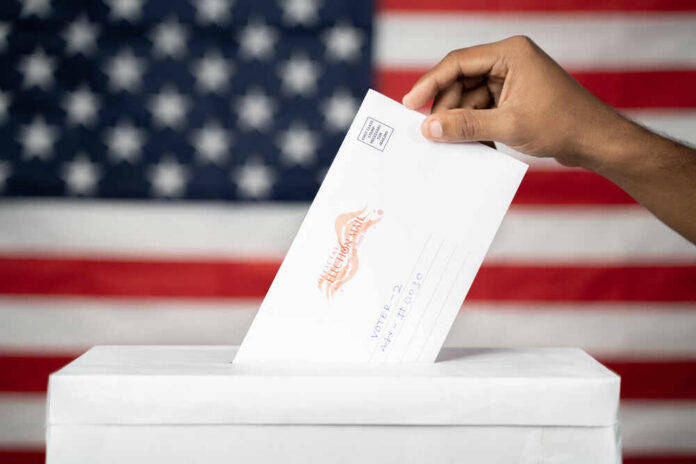
President Trump has renewed his commitment to eliminating mail-in voting as the Senate begins debate on the SAVE Act, which would require voter identification nationwide—a move that strikes at the heart of election integrity concerns that have frustrated conservatives since 2020.
Story Snapshot
- Trump announced lawyers are drafting an executive order to end mail-in ballots, calling them “the biggest fraud” ahead of 2026 midterms
- Senate debate on the SAVE Act requiring voter ID coincides with Trump’s renewed push for election security measures
- Constitutional experts note states control election administration, limiting federal executive authority over voting methods
- Republicans rally behind Trump’s call while Democrats claim voter suppression, deepening the partisan divide on election integrity
Trump’s Executive Action Plan Against Mail-In Voting
President Trump declared during an August 18, 2025 White House event that his administration is preparing an executive order to eliminate mail-in ballots nationwide. Speaking alongside Ukrainian President Volodymyr Zelenskyy, Trump called mail-in voting “corrupt” and claimed it prevents honest elections. He cited California as an example where multiple ballots allegedly arrive at addresses, though no evidence supports widespread fraud. Trump positioned the Republican Party as unified in opposition to mail-in ballots, framing the issue as essential to restoring election integrity before the 2026 midterm elections.
Constitutional Limits on Federal Election Authority
Election law experts emphasize that Trump’s executive order faces significant constitutional obstacles. States control election administration under the Constitution, meaning federal executives cannot unilaterally ban voting methods. Jessica Huseman from Votebeat confirmed no executive authority exists to eliminate mail-in voting, as this power resides with state legislatures. The decentralized nature of American elections, with each state establishing its own rules for absentee and mail-in ballots, creates a federalism barrier that protects state sovereignty. This constitutional structure means any nationwide changes would require congressional legislation or individual state-level reforms, not presidential decree alone.
SAVE Act Provides Legislative Path Forward
The Senate’s consideration of the SAVE Act offers Republicans a legislative avenue to address election security concerns that align with Trump’s priorities. This bill would mandate voter identification requirements nationwide, establishing federal standards for proving citizenship before casting ballots. Unlike Trump’s proposed executive order, congressional legislation carries constitutional weight to influence state election procedures through federal mandates. The SAVE Act represents a more viable path than executive action for implementing the election reforms conservatives have demanded since 2020. Republican lawmakers view this legislation as essential protection against potential fraud, while Democrats characterize it as unnecessary barriers that disproportionately affect minority and elderly voters.
Historical Context Behind Election Security Debate
Trump’s opposition to mail-in voting originated during the 2020 election when COVID-19 drove unprecedented expansion of absentee balloting. He filed numerous lawsuits challenging mail-in procedures, with courts dismissing over 60 cases for lack of evidence. Trump referenced the Carter-Baker Commission from 2005, though that bipartisan panel recommended safeguards like voter identification rather than outright bans on absentee voting. Mail-in ballots have served American voters for decades, particularly military personnel, disabled citizens, and rural residents who face challenges reaching polling places. The 2020 surge represented expansion of an existing system, not introduction of a novel vulnerability as Trump suggests.
#elections. Trump calls mail in voting corrupt as #Senate begins debate on #SAVE Act requiring voter ID. https://t.co/x8RUhQ0PH5
— #War_in_Ukraine #Facts #Opinions #Trends #Kharkiv (@HarZizn) March 18, 2026
The 2026 midterm elections now loom as a testing ground for competing visions of election administration. Trump’s renewed focus on mail-in voting signals Republicans intend to make election integrity a central campaign theme, mobilizing their base around concerns about ballot security. This strategic emphasis reflects conservative frustration with perceived vulnerabilities in America’s voting systems and determination to implement safeguards they believe essential for trustworthy elections. Whether through the SAVE Act or state-level reforms, Republicans are positioning election security as a defining issue that resonates with voters who share Trump’s skepticism about mail-in ballots and demand accountability in how America conducts its democratic processes.
Sources:
Trump Vows to End Corrupt Mail-In Ballots – Global News