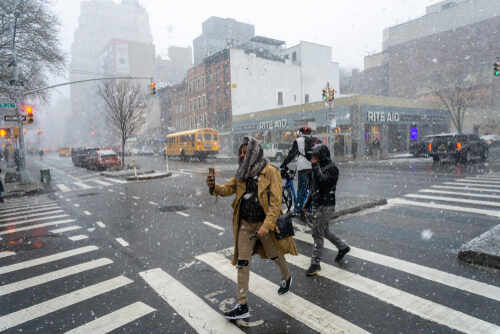
New York City is bracing for a rare convergence of spring thunderstorms and damaging winds that could transform an ordinary Monday evening into a weather event residents won’t soon forget.
Quick Take
- Wind gusts up to 55 mph expected Monday evening through early Tuesday morning, with a slight chance of isolated strong storms capable of producing even more damaging winds
- Rainfall of 1.0 to 1.1 inches forecast across NYC, with localized amounts reaching 1.25 inches in thunderstorm areas
- Evening commute period most affected, with peak impacts between 6 p.m. Monday and 2 a.m. Tuesday
- NYC Emergency Management has activated the Flash Flood Emergency Plan and urges residents to prepare for potential disruptions
- Strong cold front moving through the region creates conditions favorable for organized thunderstorm development
When Spring Weather Turns Serious
Spring in New York City typically brings unpredictable weather, but Monday’s forecast represents something more consequential than typical seasonal variability. The National Weather Service has identified a strong cold front moving through the Northeast that will collide with atmospheric conditions ripe for thunderstorm development. This isn’t merely rain in the forecast; it’s a specific meteorological setup that demands attention from residents and commuters alike. The timing couldn’t be worse for the evening rush hour, when hundreds of thousands of New Yorkers will be navigating streets, highways, and transit systems.
The Specifics: Wind, Rain, and Timing
NYC Emergency Management Commissioner Christina Farrell issued a formal weather alert detailing the expected conditions with precision. South to southeast winds will sustain between 15 and 22 miles per hour, but gusts reaching 55 miles per hour will occur as the cold front passes through during evening hours. Rainfall will total 1.0 to 1.1 inches across the city, though localized thunderstorm areas could receive up to 1.25 inches. Most rainfall rates will stay under 0.25 inches per hour, but heavier showers could briefly produce rates near one inch per hour. The wind advisory extends from 2 p.m. Monday through 4 a.m. Tuesday, with the most active period concentrated between 6 p.m. and 2 a.m.
These numbers matter because they define the severity threshold. Wind gusts of 55 miles per hour can topple trees, damage power lines, and create hazardous conditions for vehicles and pedestrians. For context, the region experienced the Blizzard of 2026 in February, which ranked as the ninth largest snowstorm in NYC history and produced wind gusts exceeding 80 miles per hour in some locations. While Monday’s winds will be less extreme, they still pose genuine risks to infrastructure and public safety.
Why the Evening Commute Becomes a Flashpoint
The timing of this weather system creates a compounding problem. Peak rainfall and wind gusts will occur precisely when most New Yorkers are traveling home from work. Visibility will be reduced by heavy rain and spray from passing vehicles. Wet roads will reduce tire traction. Debris blown by strong winds will create unpredictable hazards. Traffic signals may lose power. Public transportation could experience delays or service disruptions. The Flash Flood Emergency Plan activation reflects official recognition that localized flooding in low-lying areas, underpasses, and poorly drained locations poses real risks to motorists and pedestrians.
What Residents Should Actually Do
Commissioner Farrell’s statement provided clear guidance: prepare for potential impacts, allow extra travel time, and consider using public transportation instead of driving. The city has activated its Flash Flood Emergency Plan and encourages residents to sign up for Notify NYC alerts by texting NOTIFYNYC to 692-692 for real-time weather updates. This isn’t theatrical caution; it’s institutional experience speaking. Cities learn from weather events, and NYC’s emergency management apparatus has evolved through decades of spring storms, nor’easters, and unexpected atmospheric events.
The Slight Chance That Changes Everything
The National Weather Service characterizes the overall severe weather risk as low, but includes a critical caveat: there exists a slight chance of isolated strong storms capable of producing damaging wind gusts beyond the forecasted 55 miles per hour. This distinction matters enormously. It means forecasters identified conditions where specific thunderstorm cells could rotate and intensify, creating localized areas of extreme wind damage. Such isolated events, while unlikely, carry outsized consequences. A single derecho-like gust could fell multiple trees, damage buildings, or create dangerous flying debris.
Thunderstorms and 'damaging' wind gusts to rattle NYC on Monday https://t.co/hbc1Z3wjED pic.twitter.com/n0wQ5UJRxk
— New York Post (@nypost) March 16, 2026
New Yorkers have weathered far worse, but Monday’s forecast deserves respect. The convergence of timing, intensity, and geographic scope creates a genuine disruption event. The city’s proactive alert and emergency plan activation demonstrate institutional preparedness, but individual preparation matters equally. Allow extra time, monitor official weather updates, secure loose outdoor items, and consider alternative transportation. Spring weather in New York City operates according to its own logic, and Monday evening will test that logic thoroughly.
Sources:
NYC Emergency Management Issues Weather Alert for Rain and Thunderstorms on Monday
Strong Thunderstorms Expected in Parts of New York
Hold Onto Your Hats: NYC West Winds Whip the Five Boroughs