A fight over one public prayer event in London is quickly turning into a test of whether “tolerance” means equal rules for everyone—or enforced silence for anyone who questions the trend.
Quick Take
- Tory MP Nick Timothy drew heavy backlash after calling mass Muslim prayer in Trafalgar Square an “act of domination,” pointing to the adhan’s theological exclusivity.
- Prime Minister Keir Starmer used Parliament to demand Timothy be sacked, accusing Conservatives of having a “problem with Muslims,” intensifying partisan pressure.
- Supporters and critics clashed over whether the issue is free religious expression in public spaces or a political double standard on which views are “allowed.”
- Organizers and Muslim leaders said the event promoted unity, while opponents argued large-scale ritual prayer in a national landmark carries a different public message than cultural festivals.
What Happened in Trafalgar Square—and Why It Became National News
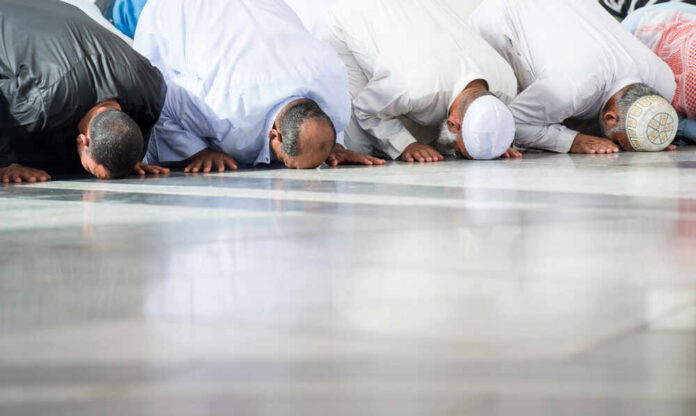
London’s Trafalgar Square hosted a large Open Iftar event during Ramadan, drawing roughly 3,000 people and including public prayers and the call to prayer. London Mayor Sadiq Khan attended and described the gathering as a message of unity against division. The setting mattered: Trafalgar Square is a symbolic civic space, and the scale of the event elevated a routine religious observance into a national political flashpoint.
Conservative MP Nick Timothy, the Shadow Justice Secretary, posted a video criticizing what he described as “mass ritual prayer in public places,” calling it an “act of domination” and “division.” According to recent coverage, Timothy’s critique focused on the adhan and its explicit religious claims, which he argued can be read as repudiating other faiths. He later emphasized he was not objecting to religious celebrations generally, but to large public prayer displays.
Starmer’s Demand for a Sacking Raises the Stakes
Prime Minister Keir Starmer publicly condemned Timothy and demanded Conservative leader Kemi Badenoch remove him from his role. Starmer framed the remarks as evidence the Conservatives have a recurring issue with Muslims, turning a dispute about one event into an attack line against the opposition. Labour MPs and allied voices echoed that framing, describing Timothy’s comments as prejudiced and harmful to social cohesion.
The political mechanics are straightforward: Timothy’s shadow cabinet position makes him visible and therefore vulnerable, while Starmer gains a high-profile confrontation that forces Badenoch to either discipline a senior figure or resist and absorb days of headlines. As of the latest information, Badenoch’s response was not confirmed, and there was no final resolution on Timothy’s position.
Is This About Equal Treatment—or Selective Outrage?
Critics of Timothy argued the backlash proves he singled out Muslims while other faith communities hold events in central London without similar condemnation. Independent MP Adnan Hussain highlighted comparisons to public celebrations tied to other religions, suggesting a double standard. Organizers and Muslim groups said Open Iftar events aim to build interfaith ties and that labeling worship as “domination” risks inflaming suspicion toward ordinary families participating in a public meal and prayer.
Supporters of Timothy, including figures from outside the Conservative Party, argued the comparison to other events is incomplete. They pointed to a distinction between cultural festivals and mass ritual prayer with a call to prayer in a national civic landmark. In Northern Ireland-related commentary cited in coverage, a supporter connected the optics of public religious assertions to historic experiences of sectarian pressure, underscoring that the dispute is partly about how majorities and minorities experience public space.
The Real Policy Question: Public Space Rules and Social Trust
No formal prohibition is described, and no evidence is provided that the event involved coercion beyond standard prayer practice. Still, the controversy highlights a policy dilemma that Western democracies keep revisiting—how governments and city leaders decide which religious expressions belong in shared civic spaces without either privileging one faith or chilling legitimate debate about integration.
For conservatives watching from the U.S., the lesson is familiar even when the setting is British: officials and media can move quickly from disagreement to demands for punishment, especially when a statement is framed as bigotry rather than contested civic judgment. When top leaders treat speech disputes as firing offenses, it narrows acceptable debate and encourages public institutions to pick winners and losers in cultural arguments instead of setting neutral, consistent rules.
Tory MP faces call to resign after saying Muslim public prayer is "act of domination"https://t.co/aXTwXZ4OXt
— Human Events (@HumanEvents) March 22, 2026
The next development to watch is practical, not rhetorical: whether party leadership responds with discipline, and whether London or Parliament faces renewed calls to regulate large religious events in iconic public locations. The episode stands as a case study in how quickly “pluralism” can become a power struggle over who is allowed to speak plainly.
Sources:
Backlash as Tory MP calls Ramadan prayers ‘an act of dominance’
‘Act of domination’: Top Tory MP criticised for attack on Muslims praying in Trafalgar Square
British MP stands by rebuke of Muslim prayer in Trafalgar Square