A rare senior resignation over the Iran war is exposing a fault line inside the America First coalition—and it’s forcing Washington to choose between disciplined national security policy and viral conspiracy politics.
Story Snapshot
- NCTC Director Joe Kent resigned March 17, 2026, saying he opposed the Trump administration’s war in Iran and arguing Iran posed “no imminent threat.”
- President Trump responded the same day, calling Kent’s exit “a good thing” and saying Kent was “very weak on security,” while reaffirming Iran as a threat.
- White House Press Secretary Karoline Leavitt rejected Kent’s claims that Israel “manufactured” the conflict, calling the allegation absurd and pointing to Trump’s long record of warning about Iran’s nuclear ambitions.
- Republicans and outside observers criticized Kent’s letter for leaning on anti-Israel conspiracies and antisemitic tropes, while the resignation spotlights an ongoing GOP split between hawks and non-interventionists.
Kent’s Resignation Puts the Iran War Dispute in Public View
Joe Kent resigned as director of the National Counterterrorism Center on March 17, 2026, after publicly breaking with the administration on the Iran conflict. In a social media letter addressed to President Trump, Kent argued Iran posed “no imminent threat” and urged a reversal of course. He also framed the war as the product of Israeli pressure and lobbying—claims that drew swift pushback and intensified scrutiny of his judgment in a counterterrorism role.
Kent’s departure is significant because he is described as the first senior Trump administration official to resign over the war. He had been confirmed in July 2025 on a 52–44 Senate vote, despite strong Democratic opposition centered on his political associations and past rhetoric. The resignation now leaves a leadership gap at NCTC, an agency responsible for integrating terrorism-related intelligence and threat analysis at a time when the U.S.-Iran confrontation is a central driver of security decisions.
Trump’s Response: “Good Thing That He’s Out”
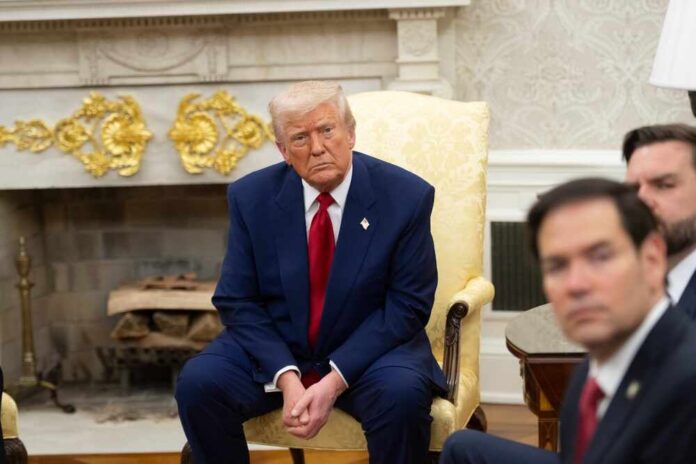
President Trump responded from the Oval Office the same day, saying it was a “good thing” that Kent was out and describing him as “very weak on security.” Trump also asserted that Iran is “universally” understood to be a threat, underscoring the administration’s position that the conflict is rooted in serious risk assessment rather than outside manipulation. That posture aligns with Trump’s long-standing public emphasis on preventing Iran from achieving a nuclear weapons capability.
Karoline Leavitt amplified that rebuttal on social media, rejecting Kent’s core narrative and describing his allegation that Israel duped or misled the president as absurd. Her message aimed to re-center the argument on the administration’s claimed evidence and Trump’s historical stance toward Iran, rather than on Kent’s political framing. The practical implication is clear: the White House is treating the resignation not as a warning, but as the removal of a senior official it views as unreliable.
Why Kent’s Claims Triggered Bipartisan Alarm
Several Republican figures criticized Kent’s framing, with some pointing directly to antisemitism concerns. Reporting on the fallout highlighted that Kent’s letter echoed themes that critics describe as antisemitic tropes—especially claims around pro-Israel lobbying controlling U.S. policy. Multiple accounts also note that Kent cited the death of his wife in a 2019 ISIS suicide bombing in Syria, but it indicates her death was not linked to Israel, undermining the emotional premise used to bolster his argument.
The record around Kent’s public profile has long been contentious. He is described as a former Green Beret with extensive deployments and CIA experience who later ran for Congress in Washington state and lost, while facing accusations of associations with far-right groups and conspiratorial claims about Jan. 6 and the 2020 election. Those prior controversies mattered during his confirmation and are resurfacing now, because the resignation letter moved from policy disagreement into claims that other officials say lack evidence.
What This Means for America First—and for Constitutional Governance
The resignation highlights an ongoing debate among conservatives about the proper shape of “America First” foreign policy. One side emphasizes restraint and skepticism of overseas entanglements; another stresses decisive action against state threats, especially regimes tied to terrorism and nuclear ambitions. The public nature of Kent’s exit adds a separate concern: national security decision-making depends on disciplined intelligence processes, and allegations of shadowy influence—without evidence—can erode public trust and fuel reckless division.
Trump Responds to Kent's Resignation: 'It's a Good Thing That He's Out'https://t.co/KhqV6lfKxA
— RedState (@RedState) March 17, 2026
No replacement for Kent was publicly identified, leaving open questions about continuity at NCTC and how the administration will manage internal dissent going forward. What is clear is that Trump and his team chose to treat this resignation as a net positive for security posture. For voters who want a strong executive that defends the country while avoiding the chaos of bureaucratic freelancing, the next test will be whether the administration fills the vacancy quickly and keeps counterterrorism analysis insulated from ideological infighting.
Sources:
https://jewishinsider.com/2026/03/joe-kent-resigns-iran-war-israel-conspiracies/