America’s war machine just turned its legal firepower inward, creating a leak-hunting task force that has both parties wondering who the government really sees as the enemy.
Story Snapshot
- Defense Secretary Pete Hegseth and the Justice Department formed a joint task force to find and prosecute people who leak sensitive defense information to the media.
- The Pentagon’s Office of General Counsel now has sweeping power to demand records from across the department, with a strict 48-hour deadline for responses.
- The move follows Justice Department subpoenas of New York Times reporters who wrote about security concerns surrounding President Trump’s new Qatar-donated plane.
- The crackdown revives old questions about how far government can go to stop leaks without crushing press freedom and public oversight.
Hegseth’s New Task Force And What It Will Do
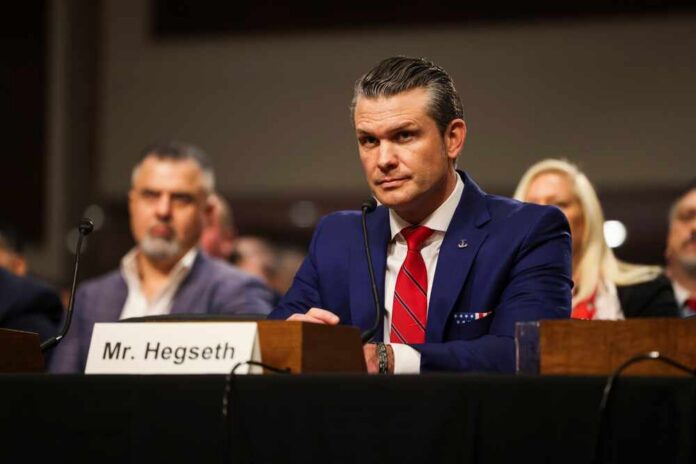
Defense Secretary Pete Hegseth announced that the Pentagon and the Department of Justice have set up a joint task force to investigate and prosecute leaks of sensitive national defense information to news outlets. In a video posted on X, he warned that unauthorized disclosures can cause “exceptionally grave damage” to national security and betray the men and women in uniform. The White House and Congress are not directly involved in the task force, but it operates inside a broader Trump-era push to tighten control over information leaks.
The new task force will bring together Pentagon lawyers, federal prosecutors, and other law enforcement officials to track down individuals who share restricted defense information with reporters. Officials say the goal is to protect military operations and personnel by stopping leaks that might reveal troop movements, war plans, or intelligence sources. Supporters argue this is not about silencing critics, but about stopping insiders who put lives at risk by breaking security rules. Critics, however, worry that “sensitive” can be stretched to include embarrassing or politically damaging facts.
Sweeping Powers For Pentagon Lawyers Inside The Building
Hegseth has delegated formal “tasking authority” to the Pentagon’s Office of General Counsel, the department’s top legal office. This authority lets those lawyers demand “all information, records, and support” from any part of the department tied to media leak investigations, from combat commands to intelligence offices. Every office must treat these requests as a top priority and provide a full response within 48 hours. That fast turnaround suggests the department wants real-time insight into who is talking to reporters and about what.
Giving Pentagon lawyers this kind of power shifts leak-hunting from scattered investigations to a single legal hub. The Office of General Counsel will now sit at the center of every media leak case, coordinating with the Department of Justice and the Federal Bureau of Investigation (FBI) when criminal charges are on the table. For people who already fear a “deep state” that protects itself, this looks like the system closing ranks. For those worried about foreign threats and cyber spies, it may look like long-overdue discipline inside a huge bureaucracy that has often failed to control sensitive data.
Why This Crackdown Is Happening Now
The announcement comes shortly after the Department of Justice issued rare subpoenas to several New York Times journalists who had reported on security problems with President Trump’s new plane, which was donated by Qatar. That reporting raised questions about safety and foreign influence, topics many Americans care deeply about. The subpoenas signaled that prosecutors are willing to force reporters into court to reveal their sources. The new task force now gives them a stronger pipeline back into the Pentagon to find those insiders.
Past leak cases show why officials argue this effort is needed. From the Pentagon Papers in the Vietnam era to more recent online document dumps, leaks have sometimes exposed government lies but have also revealed war plans and intelligence methods. Legal scholars note that United States law usually protects the press from criminal punishment unless a story is likely to cause serious and imminent harm to national security. The harder question is how far the government can go in chasing the leakers themselves, especially when their disclosures expose waste, corruption, or poor planning that both conservatives and liberals want to know about.
Leaks, Press Freedom, And A Failing System
Many Americans on the right and left now agree on one thing: they do not trust Washington to police itself. Some see leaks as dangerous betrayals that endanger troops and help enemies. Others see leaks as one of the few ways the public learns the truth about wars, surveillance, and deals with foreign powers. Ethics experts say leaks are most justified when they reveal illegal or unconstitutional actions and when the public benefit outweighs the harm. That is a hard line to draw, and officials and whistleblowers rarely agree on where it sits.
US Defense Secretary Pete Hegseth has launched a joint Pentagon-DOJ taskforce to aggressively prosecute media leaks, warning that those who expose sensitive data will face the 'full force of the law' https://t.co/cbbCVFwhfs
— Vinay Patel (@VinayPBPatel) July 14, 2026
This new task force sits right on that fault line. It targets “unauthorized” disclosures, a term that covers everything from selfish gossip to principled whistleblowing. If it mainly goes after people who leak troop locations or active war plans, many Americans will support it. If it is used to hunt down those who warn about safety problems, foreign influence, or abuse of power, it will feed the belief that the government cares more about protecting itself than serving the people. In a time when both sides worry about elites and the “deep state,” how this task force is used may tell us a lot about where the system’s loyalties really lie.
Sources:
military.com, washingtonpost.com, reuters.com, conservativeinstitute.org, democracynow.org, youtube.com, washingtonexaminer.com, scu.edu, wilmerhale.com, cps.gov.uk